Turkey Book Talk episode #67 – Jonathan Varjabedian on “My Dear Son Garabed: Kojaian Family Letters from Efkere/Kayseri to America (1912-1919)” (Histor Press).
The book is a collection of 88 letters written from the Anatolian village of Efkere to America between 1912 and 1919. They were sent to Garabed Kojaian and his father Harutian, who were among the many Ottoman Armenians migrating to America in the early 20th century.
Download the episode or listen below.
Subscribe to Turkey Book Talk : iTunes / PodBean / Stitcher / Acast / RSS

Here’s my review of the book from a few of weeks ago.
As mentioned in the episode, check out the website efkere.com, where Jonathan, the grandson of the late Garabed Kojaian, pieces together the lost history of the village.
Purchase the book (highly recommended) from Histor. Details on their Facebook page.
Support Turkey Book Talk by becoming a member. Membership gives you full transcripts in English and Turkish of every interview upon publication, transcripts of the entire Turkey Book Talk archive (over 60 conversations so far), and access to an exclusive 30% discount on over 200 Turkey/Ottoman History titles published by IB Tauris.
Turkey Book Talk episode #56 – Boğaziçi University Professor Edhem Eldem on “To Kill a Sultan: A Transnational History of the Attempt on Abdülhamid II” (Palgrave Macmillan), which he co-edited with Houssine Alloul and Henk de Smaele.
The book explores a deadly assassination attempt targeting the Ottoman sultan in Istanbul in 1905, and appears at a time when Abdülhamid II is the subject of a growing popular obsession among religious conservatives in Turkey.
Download the episode or listen below.
Here’s my review of the book at HDN.
Subscribe to Turkey Book Talk : iTunes / PodBean / Stitcher / Acast / RSS
As mentioned in the podcast, here’s a recent article from me in History Today on this Abdülhamid revisionism and comparisons between him and Erdoğan.

As also mentioned, stay tuned for details of a new membership system coming for Turkey Book Talk. As part of the system, paying subscribers will get access to a range of extra content and benefits. I will post more details in due course, hopefully by the time of the next episode in two weeks.
* SUPPORT *
Remember you can support the podcast, if you enjoy or benefit from it, by making a pledge to Turkey Book Talk via Patreon. Many thanks to current supporters Michelle Zimmer, Steve Bryant, Jan-Markus Vömel, Celia Jocelyn Kerslake, Aaron Ataman, Max Hoffman, Andrew MacDowall, Paul Levin, Ayla Jean Yackley, Burak Kodaz and Tan Tunalı.
Lora Sarı on the Istanbul-based Armenian publisher Aras
November 24, 2017
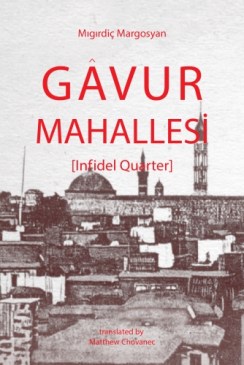
Turkey Book Talk episode #52 – LORA SARI on the Aras Publishing House, set up in Istanbul in 1993 as a “window onto Armenian literature.” We also discuss Mıgırdıç Margosyan’s “Infidel Quarter,” published this year as Aras’ first English-language title.
Download the episode or listen below.
Subscribe to Turkey Book Talk : iTunes / PodBean / Stitcher / Acast / RSS

Extras
- Episode of Turkey Book Talk from last year on Zabel Yessayan.
- Brief profile of Yetvart Tomasyan, one of Aras’ founding fathers.
- My review of Tuba Çandar’s biography of Hrant Dink in HDN.
- Interview with Tuba Çandar discussing that book and Hrant Dink’s life.
* SPECIAL OFFER *
You can support Turkey Book Talk by taking advantage of a 33% discount plus free delivery (cheaper than Amazon) on five different titles, courtesy of Hurst Publishers:
- ‘Jihad and Death: The Global Appeal of Islamic State’ by Olivier Roy
- ‘The Circassian: A Life of Eşref Bey, Late Ottoman Insurgent and Special Agent’ by Benjamin Fortna
- ‘The New Turkey and its Discontents’ by Simon Waldman and Emre Çalışkan
- ‘The Poisoned Well: Empire and its Legacy in the Middle East’ by Roger Hardy
- ‘Out of Nowhere: The Syrian Kurds in Peace and War’ by Michael Gunter
Follow this link to get that discount from Hurst Publishers.
Another way to support the podcast, if you enjoy or benefit from it: Make a pledge to Turkey Book Talk via Patreon. Many thanks to current supporters Michelle Zimmer, Steve Bryant, Jan-Markus Vömel, Celia Jocelyn Kerslake, Aaron Ataman, Max Hoffman, Andrew MacDowall, Paul Levin and Tan Tunalı.
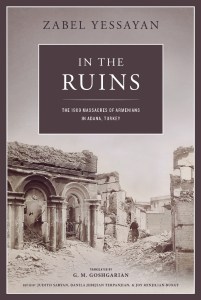
The latest podcast is with Judith Saryan, who edited a new English edition of Zabel Yessayan’s account of a trip to Adana in the aftermath of pogroms targeting Armenians there in 1909.
Download the podcast or listen below:
Subscribe: iTunes / PodBean / Stitcher / Facebook / RSS
Read my Hurriyet Daily News review of “In the Ruins: The 1909 Massacres of Armenians in Adana” (AIWA).
Here’s an interview from last year with translator Jennifer Manoukian, discussing Yessayan’s remarkable life and work.
Here’s another piece I wrote last year for Al Monitor from a crumbling station on the Armenian side of the closed Turkey-Armenia border. The immediate political dynamics have changed since then but it may still be an interesting read. View photos I took of the station here.

Finally, let me flag up my newly opened Patreon account – Through it you can support the Turkey Book Talk podcast by making a monetary donation, large or small, on a per episode basis. Check it out. Many thanks to my first supporter Sera Aleksandra Marshall.
From the Armenia-Turkey border
June 27, 2015
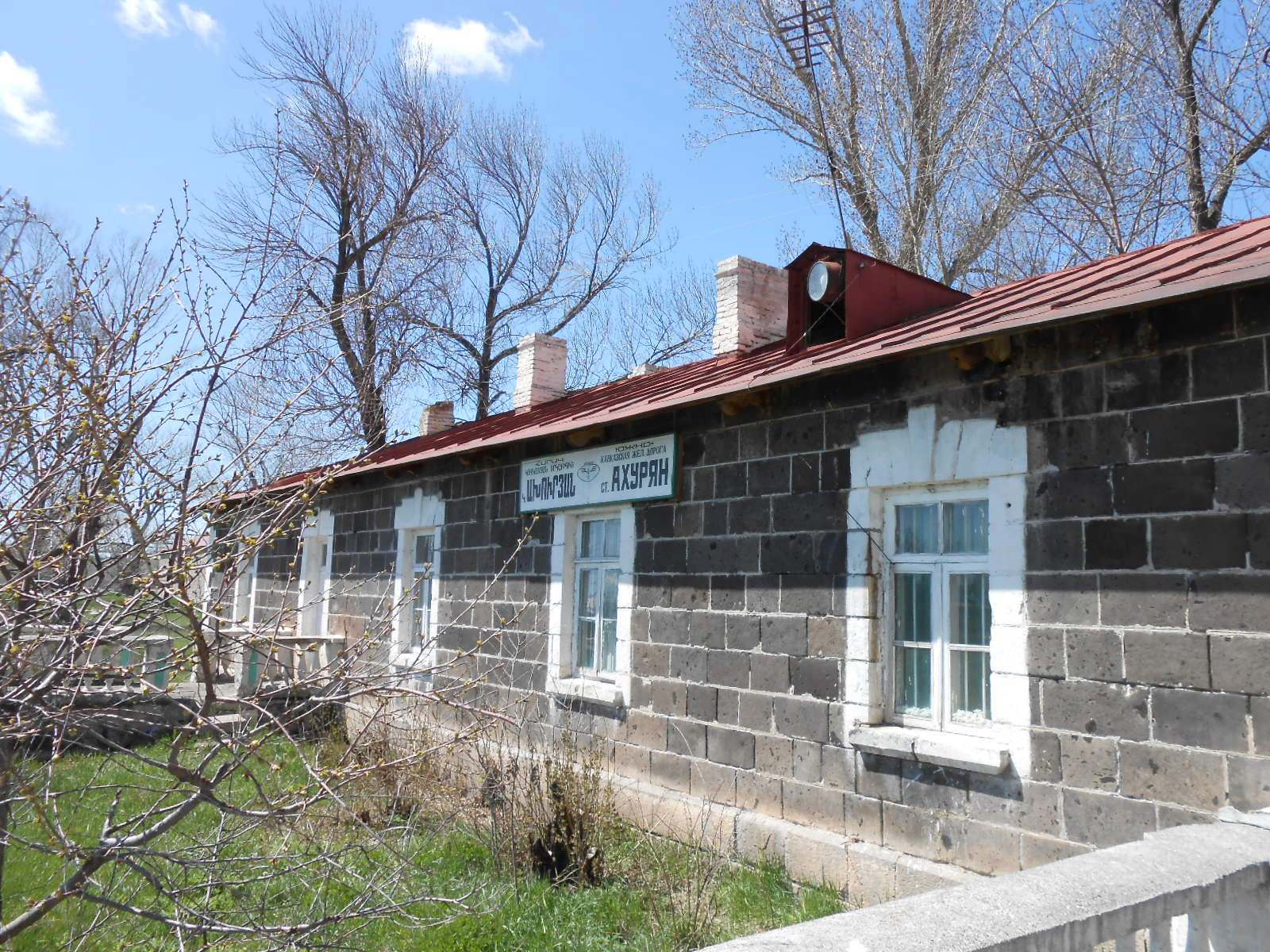
A couple of months ago I visited the Armenian side of the border with Turkey – specifically the Akhuryan train station, 2 km from the border and just outside Armenia’s second biggest city Gyumri.
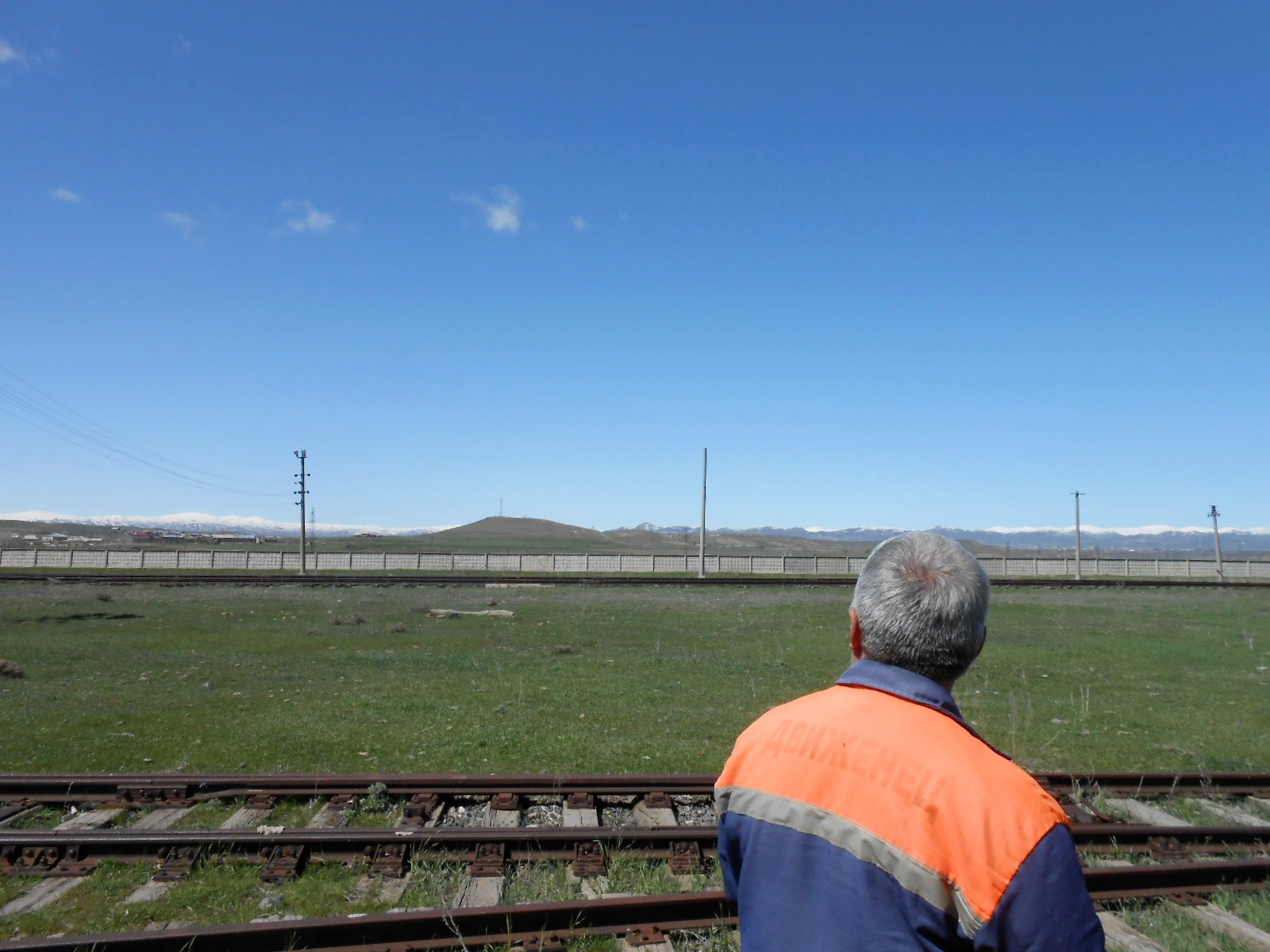
The station has been closed since 1993, when Turkey sealed the border amid the Nagorno-Karabakh War between Armenia and Azerbaijan. Ever since, former station conductor Hagop Kevorkian has stayed on as a guard, forlornly waiting for services to restart.
When we visited, Hagop was just sitting alone in the dark station office wearing his fading old Soviet-era uniform, midway through his 12-hour shift doing nothing. Another guard waits at the station on rotating days, but they have not seen trains for over two decades. The Akhuryan Station is thus a sad symbol of the human cost of the diplomatic impasse between Ankara and Yerevan.
I wrote an article for Al Monitor about the station and the slim chances for the border reopening.
Below are some of the photos I took of Hagop and the station.





Ahead of next week’s commemoration of the centenary of the Armenian genocide, I spoke to Carnegie Endowment scholar Thomas de Waal about his new book exploring relations between Turks and Armenians in the years since 1915.
And here’s my review of de Waal’s “Great Catastrophe: Armenians and Turks in the Shadow of Genocide.” 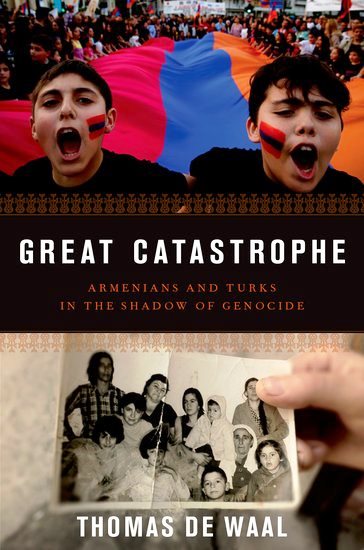 Unfortunately our conversation took place before Pope Francis’ remarks over the weekend. Neither could I ask de Waal about Kim Kardashian and Kanye West.
This week I spoke to Eugene Rogan, the author of an authoritative new history “The Fall of the Ottomans: The Great War in the Middle East, 1914-1920.”
Rogan is director of the Middle East Centre at the University of Oxford and also penned a major recent book on the history of the modern Arab world, so I was really happy to speak with him. The conversation was wide-ranging and stimulating, touching on some of the biggest issues around the war – resolved and unresolved – and the continued resonance of the Ottoman Empire’s collapse almost 100 years ago.

Click here to read the interview with Professor Rogan.
Read my review of the book here.
And here’s some footage of Istanbul in 1915 from the British Pathé archives, showing the historic peninsula and various warships heading up the Bosphorus:
PS. I hope my Turkey-based followers can see this post, as WordPress keeps being blocked and unblocked here.
Discussing the life of Zabel Yessayan with translator Jennifer Manoukian
February 14, 2015
My review this week was of “The Gardens of Silihdar,” Armenian feminist Zabel Yessayan’s (1878-1943) memoir of growing up in Ottoman Istanbul. Yessayan fled the city in 1915 after being included as the only woman on the Young Turk regime’s list of Armenian intellectuals targeted for detention and deportation. The book was first published in Soviet Armenia in the 1930s, shortly before Yessayan was arrested in Stalin’s purges and exiled to Siberia.
I caught up with translator Jennifer Manoukian to discuss Yessayan’s remarkable life and work. You can read the interview at the Hürriyet Daily News here.
Read my review of “The Gardens of Silihdar” here.

For those interested, both “The Gardens of Silihdar” and Yessayan’s novel “My Soul in Exile” were recently published in English translations by the small press of the Armenian International Women’s Association.
[I’ve started writing book reviews for the Hürriyet Daily News blog. I’ll be able to post them here a couple of weeks after they first appear on there (contractual yawn). This one went up on May 5, and can be found in original form here: http://www.hurriyetdailynews.com/literary-reflections-on-the-armenian-issue.aspx?pageID=500&eid=16]
Ece Temelkuran – Deep Mountain: Across the Turkish-Armenian Divide, Verso, 2010, 288pp
Fethiye Çetin – My Grandmother, Verso, 2008, 144pp
There’s a book, quite easily found in any reasonably-sized Istanbul bookshop, its name written in block capitals along the spine: ‘Ermeni Dosyası’ (The Armenian Dossier). Written by former Turkish diplomat Kamuran Gurun, and ominously subtitled ‘The Myth of Innocence Exposed’, it has been popular amongst Turkish readers ever since first being published in1983. Packed with imposing-looking graphs and statistics, its main thesis can be summarised thus: The numbers claimed by the Armenians as killed in the ‘events’ of 1915 is far too high and, in fact, Ottoman soldiers were themselves also killed in large numbers at the same time. In any case, the Armenian population was far from innocent, with large numbers rebelling against the empire and often colluding with the advancing Russian forces on the eastern Anatolian frontier. Essentially, the book implies, the Armenians got what they had coming to them. If you’re interested, a new English-language print run of the book came out only two months ago. I haven’t read it, nor do I ever intend to make that sacrifice, but – however questionable its scholarship – ‘The Armenian Dossier’ is unquestionably significant, if only because it represents what has been the official Turkish narrative for almost 100 years.
Encouragingly however, this isn’t the only story on the shelves any more. While they still may not attract the sales figures of more flattering histories, voices dissenting from the official line are being increasingly heard in today’s Turkey. Ece Temelkuran was once a columnist with daily newspaper Habertürk (ironically enough one of the mouthpieces of the nationalist establishment) and her ‘Deep Mountain’, published in English in 2010, is part of this new, questioning tendency.

Temelkuran set herself the ostensibly simple task of meeting Armenians, talking to them, listening to them, and reporting back for the Turkish audience. Eschewing the directly political, she preferred ‘to write about Armenians, not necessarily what happened in 1915’, and while this may seem like a modest undertaking to an outsider, in Turkey it was a brave and taboo-shaking exercise. Quite how perilous the path was can be judgedfrom the example ofthe Turkish-Armenian journalist Hrant Dink, to whom Temelkuran dedicates the book. Dink decried the politics of megaphone slogans and foreign parliamentary writs on the issue, and instead spent years trying to get the two sides talking to each other honestly about their shared history and common trauma. He was assassinated for his troubles in 2007 by an ultra-nationalist Turkish gang, outside the Istanbul office of his newspaper. Dink’s killing could have acted as either a spur to writing, or a warning against it, so – first and foremost – ‘Deep Mountain’ should be applauded as an act of bravery.
The book is divided into three parts, the first detailing Temelkuran’s encounters with the Armenians of Armenia itself, and the other two her meetings with the Armenian Diaspora communities in Franceand the United States. The picture painted of Armenian capital Yerevan is of a cultured but impoverished city of feeble opportunities and feeble ambitions, still yet to recover from the end of the Soviet Union and now crippled by the closed (since 1993) border with Turkey. Whilst bitter enmity for Turks exists, the Armenian Armenians are perhaps most concerned with the practical matter of getting the border open again, and with it securing an economic lifeline. The French and American Armenians, however, have come to adopt the genocide as the essential, irreducible feature of what it means to be ‘Armenian’. Meeting numerous community leaders, academics, artists, and businesspeople, Temelkuran describes the trajectory that emerges again and again in the Diaspora: How the first generation of Armenian migrants to Europe and America were most concerned with ‘getting on’ and fitting into the adopted culture, and how it is only with the second and third generation – threatened by the identity-engulfing vortex of a new homeland – that the genocide has been revisited and latched on to as an unshakable, almost pathological core.
As one of the Los Angeles Armenians revealingly says: ‘you need to create an identity, something to hold on to both culturally and individually. Turkey’s refusal to recognise the genocide is what binds those of us in the Diaspora. Were the genocide to be recognized, it would probably be the end of us’. Pain has become ‘the pillar propping up the home’, and to release that pillar means oblivion. Similarly, many Turks – afraid of losing their country and seeing recognition as threatening their own oblivion – cling just as fast to their own selective amnesia. In a striking phrase, the author at one point describes it as a ‘huge industry. Not just politics and money; a psychological industry too, for both sides. An industry of anguish’. The most sympathetic portraits in the book are thus reserved for those who are able to understand this identity paralysis and rise above such acrimony, recognising the absurdity of an official political ‘debate’ that doesn’t go much deeper than one side screaming ‘It was genocide!’ while the other responds ‘No it wasn’t!’
Perhaps inevitably, the book occasionally lapses into worthiness,though not nearly as often as you fear when you read the following meaningless fluff early on: ‘If an Armenian were to lose their way one day anywhere in the world, they’d be able to locate the capital of Armenia by consulting the map of their heart. They would navigate toward it by reference to the coordinates of pride and fear, of mourning and loss’. Worse, when she moves on to Los Angeles, Temelkuran can’t help butoffer a steady stream of unhelpful anti-American swipes. These come off as stale, predictable, and not a little immature (constant sneering about cigars and McDonalds, really?!) But these are minor criticisms, and should not detract from the more important qualities of a book that is sensitive, honest and ‘engaged’ in the best sense of the word.
Another modern voice with little time for the official Turkish narrative is Fethiye Çetin, a human rights lawyer currently representing the deceased’s family in the grimly ongoing Hrant Dink case. Çetin spent her whole youth believing she was of ‘pure’ Turkish stock, until one day her aging grandmother, Seher, took her aside. Seher revealed that she had been born an Armenian Christian, originally named Heranuş, and was plucked from a death march in 1915 by a Turkish gendarme commander, who went on to raise her with his wife as a Muslim Turk. Translated into English in 2008, ‘My Grandmother’ is Çetin’s elegiac description of this story.

The first section of the book contents itself with gentle, sepia-tinged descriptions of a rural upbringing with her family in the eastern Turkish province of Elazığ: her beautiful sisters; her grandfather, whose mood always depended on how full his stomach was; her grandmother, the charismatic matriarch of the family, powerful but taciturn, somehow never able to bring herself to sing, as if always harbouring the secret that would one day be revealed to Fethiye. The central revelation doesn’t come until midway through the book, but when it does Çetin writes that what she heard ‘did not fit with anything I knew. It turned the known world on its head, smashing my values into a thousand pieces’. Seher, or Heranuş, was one of the kılıç artığı, the ‘leftovers of the sword’ of that traumatic period; only one of her sisters was also spared, while the rest of the family – including uncles, aunts, cousins, and her mother – was killed. The second part of the novel consists of Çetin trying to digest this heritage, and also trying to forge a reunion of the two sides of a family which now – like so many Armenian families – is ‘scattered like pomegranate seeds’ across the world.
It’s a quietly powerful book, modest but courageous. There are no unnecessary fireworks or forced emotions. In a way, it could be seen as a manifestation of the very thing Temelkuran advocates in ‘Deep Mountain’, a kind of picking up of the baton. There’s little in the way of direct politics and no recriminations: I don’t think the word ‘genocide’ is mentioned once in the entire book (and that’s not because of Turkish laws against these things). It’s simply a human story, told in an unshowy, humane way.
Both Temelkuran and Çetin manage to address the vexed Armenian issue with admirable clarity, concerning themselves with the personal and the human as a kind of riposte to the debilitating rancour of the official, political dispute. Both try to chart a precipitous course between two entrenched sides that long ago stopped listening to each another; neither condemn anything other than this wilful deafness. In the years to come, one can only hope there are more books published like these two, and less like ‘The Armenian Dossier’.
Europe, Turkey and historical amnesia
April 2, 2012
[Published on openDemocracy (27th March 2012): http://www.opendemocracy.net/william-armstrong/europe-turkey-and-historical-amnesia]
“In the first years after the war … Europeans took shelter behind a collective amnesia.” – Hans-Magnus Enzensberger.
In his robust case for a liberal Euro-scepticism, ‘A Grand Illusion?’ (1996), Tony Judt robustly debunked an oft-repeated myth about the post-war rebuilding project in western Europe. From the very start, rather than being part of a carefully planned attempt to reshape the continent by deliberately sabotaging nation-states from above, (with the eventual goal being to unite the entire continent under one umbrella European super-state), initial moves after the Second World War towards greater European cohesion were, in fact, the logical result of quite distinct national concerns. These concerns only converged in shared European projects by force of convenience. As Judt points out, post-war European cooperation was “a fortuitous outcome of separate and distinctive electoral concerns, economic interests, and national political cultures, it was made necessary by circumstance and rendered possible by prosperity.” In particular, the war of 1939-45 had the lasting consequence of giving the continent something else in common: “a shared recent memory of war, civil war, occupation, and defeat […] The shared experience of defeat points to another common European wartime experience: the memory of things best forgotten […] Hitler’s lasting gift to Europe was thus the degree to which he and his collaborators made it impossible henceforth to dwell with comfort on the past.”
Almost every European participant emerged from the Second World War having lost. The shared perception of a necessity for deliberate historical amnesia in post-war Europe, for forgetting the traumatic recent past, was thus one of the most significant points of convergence between nation states that helped legitimate the new European project. Cooperation was imperative, and part of this cooperation was the tacit agreement between nations as to the importance of ignoring their own roles in the madness of the war that had just ended. At the very most, if not forcibly ignoring, countries tended (or still tend) to absolve themselves of as much responsibility as possible, to trumpet exaggerated national myths of resistance to fascism. The phenomenon is observable in France, (formerly West) Germany, Belgium, Poland, Italy: such methods were considered something like an existential necessity, necessary in order for states to get over the Second World War as cohesive units. It is only since 1989 and the end of the Cold War that a more complex, honestly realistic picture of the European inheritance has emerged, and even now it’s clear that many countries are still far from willing to look their own troubled histories directly in the eye. The official French line, for example, shared by a majority of the French people, continues to exaggerate the significance and size of the French Resistance, and underestimate the completeness of Vichy France’s submission to fascism, and its horrendous consequences. There’s a salutary lesson to be taken from a charmed visit to Paris: its state of flawless architectural continuity was paid for at the price of submission to the Nazis.
In its capacity as a candidate country of the European Union, Turkey’s apparent refusal to come to terms with the Armenian “events” of 1915 is often cited as a clear example of why the country is unsuitable for membership. However, the opposite could well be true. Far from having to recognise these events as “genocide” in order to adhere to established European norms of historical account-settling, Turkey’s continued denial of the Armenian “events” should rather be seen as an advantage, recommending it as an entirely suitable European candidate. Following classic post-war European form, perhaps Turkey’s historical amnesia should be seen as one of the key criteria that it fulfils in its wish to be defined as an authentic European state!
The ‘anti-Armenian Genocide denial’ bill & Franco-Turkish cynicism
February 2, 2012
On Jan. 24 the French Senate passed a bill to criminalise denial that the killings of Armenians by the Ottoman Turks in 1915-16 amounted to genocide. The law has caused Franco-Turkish relations to plunge to an unprecedented nadir. The car crash was obvious long in advance, which only made it – and the predictable reaction that followed – all the more painful to watch. France had already officially “recognised” the genocide in 2001, but the new law goes one step further, making it illegal for a French citizen to publicly question the events. The signatures of enough French lawmakers have since been collected to challenge the bill in the French constitutional court, which is where it sits now. But if it ends up passing that test and going into the statute books, those found guilty will be landed with a maximum 45,000 euro fine and one year in jail. In the days leading up to the vote, thousands of French-Turks demonstrated in the streets of Paris to protest the law, and on the day of the vote rival groups of Turks and Armenians – separated by police – gathered outside the French Senate, waving flags and blowing whistles.
Some expressed quiet surprise at the apparent “moderation” of the Turkish response, although if that was “moderate” one wonders what the “extreme” reaction would look like. Prime Minister Recep Tayyip Erdoğan railed furiously against the bill and threatened strong concrete measures – including economic sanctions and recalling the Turkish ambassador from Paris – if it wasn’t revoked: “This is politics based on racism, discrimination and xenophobia. This is using Turkophobia and Islamophobia to gain votes, and it raises concerns regarding these issues not only in Francebut all Europe.” According to Erdoğan, the vote disturbingly echoes the “footsteps of fascism.” “The votes in the French Parliament and the proposal that has been adopted are an open demonstration of discrimination and racism and amount to a massacre of free thought,” he said. “This bill has removed the atmosphere of free discussion [inFrance]. The principles of liberty, fraternity and equality, which form the basis of the French Revolution, have been trampled on.” Other Turkish politicians and diplomats have also revelled in casting themselves as defenders of the liberal European ideal. Vice chairman of the ruling Justice and Development Party (AKP), Ömer Çelik, took to twitter to claim: “Sarkozy is turningFranceinto Bastille Prison step by step.” Chief Turkish EU negotiator, Egeman Bagis, similarly tweeted: “I celebrate 40,000 Turks marching against the bill to defend the French Revolution’s values.”
The prospect of Turkish politicians posing as modern day Voltaires, protesting in defence of the principles of the French Revolution must be irresistible for the satirist. Such a stance might appear more sincere if Article 301 of Turkey’s own constitution didn’t make it punishable by law to “insult Turkishness.” It might also if there weren’t currently more journalists locked up in Turkish jails than there are in China (95 at the last count); or if Turkey didn’t rank 148th out of 178 countries in the Reporters Without Borders (RSF) World Press Freedom Index; or if Turkey wasn’t by far the worst violator of human rights among the 47 signatory states of the European Convention on Human Rights; or if that same court hadn’t received nearly 9,500 complaints against Turkey for breaches of press freedom and freedom of expression in 2011 (compared with 6,500 in 2009). A distinct tendency towards authoritarianism has been unmistakably creeping into the AKP’s rule of late, perhaps giving some perspective to this most recent outburst in defence of European liberalism.
And the French defence? There isn’t much to be said. Before the vote, President Sarkozy claimed: “The genocide of Armenians is a historic reality that was recognised by France. Collective denial is even worse than individual denial […] We are always stronger when we look our history in the face, and denial is not acceptable.” Nevertheless, the law is widely understood to be a cynical piece of electioneering, the ruling Union for a Popular Movement (UMP) having bowed to the active and well-organised Armenian lobby in Paris, and seeking to secure the 500,000 French-Armenian votes ahead of this spring’s French Presidential election. The move will also doubtless serve to further paralyse Turkey’s already-moribund EU accession bid, which Sarkozy repeatedly makes clear he opposes. There may also be some truth in the accusation that the UMP is seeking to curry favour with France’s populist right-wing, with a move targeted at a Muslim minority.
The question of whether national governments should legislate on how historical events are remembered is probably an unanswerable one. But that won’t stop both sides attempting an answer to fit their own national political agendas. Do you think those 40,000 angry Turks were protesting on the streets of Paris out of earnest concern for Enlightenment values and in sincere defence of free speech? Such lofty protestations are mere fig leaves. Whether it’s Sarkozy opportunistically chasing votes in return for laws, or the Turks spuriously invoking the French Revolution and defending some destructive, nebulous idea of “national honour,” both sides are cynically invoking the high-minded language of moral righteousness to pursue squalid political ends.
Gentrification in Tarlabaşı, Istanbul
September 28, 2011
The noise of Tarlabaşı never stops. Street cats cry incessantly during the day and fight each other at night; street hawkers struggle with creaky wooden carts around the winding alleyways, crying out their wares of breakfast poğaças or carrying wooden boards full of fresh simits on their head; housewives call out of windows to the nearest greengrocer and lower baskets on string for goods, in summer groups of them in floral headscarves sit out all day gossiping on the pavement; children don’t sleep until the early hours, screaming as they play hop-scotch or kick footballs around; during Ramadan traditional drummers and singers pass every building, waking everyone up to break the fast before sunrise; for me, the chaotic street market each Sunday is one of the most colourful parades of human activity Istanbul has to offer. Taksim Square – with its shiny malls, modern cinemas, and thronging restaurants and bars – is considered the commercial and cultural “heart” of the city, but it takes just two minutes to pass down from the smart pedestrian boulevard of Istiklal Caddesi, cross the six-lane duel-carriageway Tarlabaşı Boulevard, and arrive in the impoverished backstreets of Tarlabaşı itself. In two minutes it feels like you’ve crossed into a different world. With the Turkish economy booming and Istanbul developing at such a rapid pace, it’s a world coming under serious threat.
Tracing the history of Tarlabaşı illustrates the fluctuating fortunes of Istanbul’s minorities over the past 200 years. Situated on the European side of the city, across the Golden Horn from the old town, the area was originally home to prosperous non-Muslims. The sturdy stone houses were built for Greeks and Armenians – lower-middle class artisans, small tradesmen, and merchants – whose economic prospects waxed even as the Ottoman Empire’s waned over the course of the nineteenth century. Istanbul’s Armenians were largely untouched by the tragedy engulfing their eastern Anatolian kin during the First World War, and its Greeks were exempt from the wholesale population exchanges that took place between the states of Greece and Turkey during the 1920s, but the situation of minorities became increasingly precarious during the republican years of the twentieth century. Official discouragement found expression in the punitive “Varlık Vergisi” (Wealth Tax) aimed at Turkey’s minority groups in 1942, and in the 1950s pogroms were organised against the Greeks of Istanbul, after which the vast majority moved swiftly away. Many of Tarlabaşı’s grand buildings were left empty and unaccounted for, and an area that was already going to seed went into accelerated decline. At the same time, rapid industrialization meant that significant numbers of Turks were moving into urban areas, and many found homes in the unoccupied but decaying townhouses of Tarlabaşı. In 1990, further waves of migration took place, this time of Kurds from eastern Anatolia – fleeing economic deprivation and the intensifying civil war in Turkey’s south-east. Thus, right in the centre of Istanbul, something of the atmosphere of an Anatolian village has been recreated in Tarlabaşı. But that isn’t the whole of it – alongside Kurdish migrants can be found Arab and African refugees, Roma (gypsies), Zaza-speaking Kurds, itinerant foreign language teachers living on the cheap, and even pockets of transsexuals (many of whom ply a trade in the seedy brothels along Tarlabaşı Boulevard). At a time when most of Turkey has become a state-sponsored monoculture, Tarlabaşı seems to reclaim something of the anarchically multicultural heritage of Anatolia.
“Gentrification” has taken place in all major cities striving to modernise, (it seems as inevitable as the carbon-copy Starbucks cafes popping up everywhere), and it’s already happened in many areas of Istanbul. Hard to believe now, but thirty years ago Istiklal Caddesi itself was a down-at-heel backwater; only relatively recently has it been pedestrianised, tidied up, reintroduced to its picturesque “nostalgic” tram line, and lined with the gleaming chain stores. There have been murmurings of tension in nearby Tophane, where the traditional inhabitants find themselves surrounded by growing numbers of small art gallerys, boutiques, and fashionable bars. Cihangir, on the opposite side of Istiklal, has become a chic enclave for expats and young professionals. Such examples follow a more typical, ‘organic’ process of gentrification; that planned for Tarlabaşı, however, is exactly that – planned. In 2005, an ‘Urban Renewal Act’ (Law 5366) passed through the Turkish parliament authorizing municipalities to work with private building companies to ‘regenerate’ areas of Istanbul. The historic Roma district of Sulukule, also on the European side, was one of the first declared an ‘Urban Renewal Area’. Eventually almost 1000 families were evicted from their homes and given new – unaffordable for most – apartments 45km away. The majority of these people have since become homeless and the area’s historic fabric has been ripped out, gradually replaced by more faceless modern apartment blocks. In 2006 Tarlabaşı was also chosen as a renewal area, and the contract for the project was awarded to GAP Inşaat, a subsidiary of Çalık Holding, the CEO of which is the son-in-law of the Turkish Prime Minister. Plans were soon released for the redevelopment of a 20,000 m2 area, a total of nine “building islands”. The website for the project (www.tarlabasiyenileniyor.com) is full of “before” and “after” pictures: photos of out-at-elbows back streets teeming with scruffy children and shady-looking men (the present Tarlabaşı), are contrasted with digitally-generated images of urbane, be-suited couples strolling down spotless, wholesome avenues (the projected Tarlabaşı). It must all look rather seductive to the prospective flat-buyer, but two major concerns persist: will the area’s historical character be preserved? and – perhaps more pressingly – will current residents go the way of Sulukule’s?
Tarlabaşı is an incredibly charismatic place. Its buildings are unique examples of late nineteenth century Ottoman Levantine architecture, elegant four and five storey stone townhouses with slim bay windows jutting out above the street. Clearly most haven’t been touched since being built – the majority are filthy, stained black with dirt, and some are now nothing more than shells, thick carpets of weeds and stumps of struggling trees behind a crumbling façade. Sanitary conditions in many places are primitive. It’s obvious that the area desperately needs improvement, but GAP Inşaat’s project goes beyond simple renovation, to what looks like a radical reimagining of the entire area’s fabric. A four-storey underground car park is planned, and whilst the developers insist that most buildings will be preserved, questions remain about what form this preservation will take. Many fear that Tarlabaşı’s unique historical character will be irredeemably destroyed by the changes. Mücella Yapıcı, from the Union of Chambers of Turkish Engineers and Architects, claims that “the cultural and historical heritages of Tarlabaşı are going to be sacrificed to financial benefits of some people or companies.” Appeals have been made to UNESCO and the European Court of Human Rights, but look unlikely to halt developments that are, ultimately, in the hands of the elected municipality. Whatever happens, current residents will undoubtedly be priced out by the new plans. In August 2010 the holding company claimed that agreements for purchase had been reached with 70% of the owners of houses in the area, and that apartments are being offered in a brand new suburban development to those evicted from Tarlabaşı. This development is almost two hours away by public transport in a little–known satellite city, Kayabaşı. Aside from the cultural jolt of having to move from Tarlabaşı to alien high-rise apartment blocks, miles away from where some have worked for years, it’s unlikely that many could afford the 1000TL upfront price and 309TL monthly mortgage payments for the cheapest apartments anyway, (let alone commuter costs).
It’s easy to sentimentalise from a distance. The fact is that amongst Istanbullus, Tarlabaşı is a no-go area, notorious for crime, poverty, violence, illiteracy, and overcrowding. At night the women leave their spots on the pavement and organized gangs move in. These problems won’t be solved by the municipality’s plans, but they will be moved elsewhere, which is probably what is wanted. My neighbour, Ozan, has lived with his family in the same building (which he owns) for 40 years and is under no illusions, “you have to be careful,” he says, “there are thieves all around here at night, life isn’t perfect.” But he’s tied to the area, working twelve hours a day, six days a week in a cheap restaurant just a five minute walk away, “our life is here, where else could we go?” Many people have already left, and a lot of the seedy bars, shops and brothels along Tarlabaşı Bulvarı have already closed down, making it look even more forlorn than before. Significant numbers have decided to stay on anyway, despite their houses being sold and expropriation procedures being threatened. The municipality has given no clear updates since last year, and a project that was due to be completed in 2010 rolls on without any end in sight. Threat of eviction hangs over the area like the sword of Damocles, but right now it’s difficult to see how it could be entirely vacated without the use of force, as – make no mistake – Tarlabaşı still teems. I’ve lived there for over a year, and if anything the population has increased in that time. I write this on a sultry weekday afternoon and the street outside my flat is as raucous as it has ever been. As Ozan says simply: “we don’t want to go anywhere.” Whether they want to or not, the decision may well be out of their hands, but – for the time being at least – Tarlabaşı remains stubbornly defiant.


 Turkey Book Talk