Cemil Aydin on the illusion of the Muslim world
May 5, 2017
CEMIL AYDIN, associate professor of history at the University of North Carolina at Chapel Hill, speaks to Turkey Book Talk about “THE IDEA OF THE MUSLIM WORLD: A GLOBAL INTELLECTUAL HISTORY” (Harvard University Press).
It is a bracing book. Aydin argues that the idea there is a discreet “Muslim world” with a set of shared essential, civilisation-defining characteristics is little more than “ahistorical romanticism,” a fantastical illusion that has never existed.
Download the episode or listen below.
My review will be published in the coming weeks in the Times Literary Supplement, so keep your eyes peeled for that.
Subscribe to Turkey Book Talk : iTunes / PodBean / Stitcher / Acast / RSS

*SPECIAL OFFER*
You can support Turkey Book Talk by taking advantage of a 33% discount plus free delivery (cheaper than Amazon) on five different titles, courtesy of Hurst Publishers:
- ‘Jihad and Death: The Global Appeal of Islamic State’ by Olivier Roy
- ‘The Circassian: A Life of Eşref Bey, Late Ottoman Insurgent and Special Agent’ by Benjamin Fortna
- ‘The New Turkey and its Discontents’ by Simon Waldman and Emre Çalışkan
- ‘The Poisoned Well: Empire and its Legacy in the Middle East’ by Roger Hardy
- ‘Out of Nowhere: The Syrian Kurds in Peace and War’ by Michael Gunter
Follow this link to get that discount from Hurst Publishers.
Another way to support the podcast, if you enjoy or benefit from it: Make a donation to Turkey Book Talk via Patreon. Many thanks to current supporters Michelle Zimmer, Steve Bryant, Celia Jocelyn Kerslake and Aaron Ataman.
Brand new Turkey Book Talk episode.
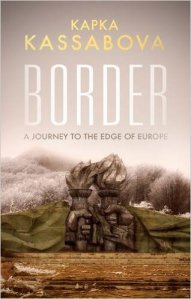
KAPKA KASSABOVA joins the pod to discuss her book “BORDER: A JOURNEY TO THE EDGE OF EUROPE” (Granta), on the troubled past and present of the border between Turkey, Greece and Bulgaria.
Download the episode or listen below.
Listen out for a cameo appearance by my cat at around the 23:09 mark.
Here’s my review of the book at HDN.
Subscribe to Turkey Book Talk : iTunes / PodBean / Stitcher / Acast / RSS
Follow on Facebook or Twitter.
*SPECIAL OFFER*
You can support Turkey Book Talk by taking advantage of a 33% discount plus free delivery (cheaper than Amazon) on five different titles, courtesy of Hurst Publishers:
- ‘Jihad and Death: The Global Appeal of Islamic State’ by Olivier Roy
- ‘The Circassian: A Life of Eşref Bey, Late Ottoman Insurgent and Special Agent’ by Benjamin Fortna
- ‘The New Turkey and its Discontents’ by Simon Waldman and Emre Çalışkan
- ‘The Poisoned Well: Empire and its Legacy in the Middle East’ by Roger Hardy
- ‘Out of Nowhere: The Syrian Kurds in Peace and War’ by Michael Gunter
Follow this link to get that discount from Hurst Publishers.
Another way you can support is by making a donation to Turkey Book Talk via Patreon. Many thanks to current supporters Özlem Beyarslan, Steve Bryant, Celia Jocelyn Kerslake and Aaron Ataman.
Benjamin Fortna on the controversial life of Eşref Kuşçubaşı
February 10, 2017
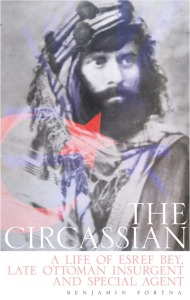
University of Arizona Professor Benjamin Fortna discusses “The Circassian: A Life of Eşref Bey, Late Ottoman Insurgent and Special Agent” (Hurst).
Eşref Kuşçubaşı was a secret service operative in the final years of the Ottoman Empire, who later turned his back on the resistance forces of Mustafa Kemal during the War of Independence and ended up in exile for almost 30 years. Fortna’s biography is the most detailed account of Eşref’s contentious life, based on exclusive access to previously unexamined papers.
Download the episode or listen below.
Subscribe to Turkey Book Talk : iTunes / PodBean / Stitcher / Acast / RSS
Follow on Facebook or Twitter.
As mentioned in the episode, Turkey Book Talk listeners can get a 33% discount plus free delivery on this and three other titles published by Hurst – “The New Turkey and its Discontents” by Simon Waldman and Emre Çalışkan, “The Poisoned Well: Empire and its Legacy in the Middle East” by Roger Hardy, and “Out of Nowhere: The Syrian Kurds in Peace and War” by Michael Gunter. Follow this link to get that discount.
If you enjoy or benefit from the podcast and want to support it, click here to make a donation to Turkey Book Talk via Patreon!
Many thanks to my current supporters Özlem Beyarslan, Steve Bryant, Celia Jocelyn Kerslake and Aaron Ataman.
Hale Yılmaz on social transformation in Turkey, yesterday and today
January 27, 2017
In this new Turkey Book Talk episode Southern Illinois University associate professor of history Hale Yılmaz speaks about her book “Becoming Turkish: Nationalist Reforms and Cultural Negotiations in Early Republican Turkey, 1923-1945” (Syracuse University Press).
Download the episode or listen below.
Subscribe to Turkey Book Talk : iTunes / PodBean / Stitcher / Acast / RSS
Follow on Facebook or Twitter.

Background reading:
- Alexandros Lamprou discusses his book on the People’s Houses: “Nation-Building in Modern Turkey: The People’s Houses, the State and the Citizen”.
- A visit to Mahmut Makal on the 60th anniversary of his autobiographical book “Bizim Köy” (Our Village), describing the tough life of a village teacher in early republican Turkey.
If you enjoy or benefit from the podcast and want to support it, click here to make a small or large donation to Turkey Book Talk via Patreon.
Many thanks to my current supporters Özlem Beyarslan, Steve Bryant, Celia Jocelyn Kerslake and Aaron Ataman.
Roger Hardy on empire and its legacy in the Middle East
December 9, 2016
Roger Hardy’s speaks to the Turkey Book Talk podcast talk about “The Poisoned Well: Empire and its Legacy in the Middle East” (Hurst).
Download the episode or listen below.
Subscribe to Turkey Book Talk : iTunes / PodBean / Stitcher / Facebook / RSS
And here’s my Hürriyet Daily News review of the book.
By the way I’ve belatedly set up a Twitter account dedicated to the podcast. Do follow. Cheers!

If you’re a fan of this podcast and want to support independent podcasting, click here to make a small or large monetary donation to Turkey Book Talk via Patreon.
Many thanks to current supporters Özlem Beyarslan, Steve Bryant, Celia Jocelyn Kerslake and Aaron Ataman.
Ali Yaycıoğlu on the Ottoman Empire in the ‘age of revolutions’
September 30, 2016
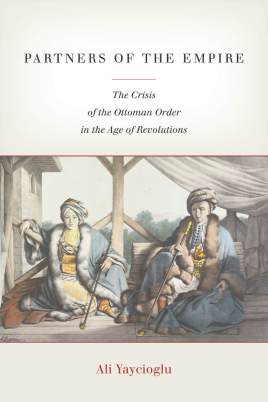
Ali Yaycıoğlu joins Turkey Book Talk to discuss “Partners of the Empire: The Crisis of the Ottoman Order in the Age of Revolutions” (Stanford University Press), examining the extraordinary upheavals in the Ottoman Empire at the turn of the 18th and 19th centuries.
In the conversation he talks about the long-term effects of these upheavals and what the period can tell us about contemporary Turkey’s turbulent political landscape.
Download the podcast or listen below:
Subscribe to Turkey Book Talk : iTunes / PodBean / Stitcher / Facebook / RSS
Here’s my review of the book.
Many thanks to current supporters Özlem Beyarslan, Steve Bryant, Andrew Cruickshank and Aaron Ataman.
Cem Emrence on ‘remapping the Ottoman Middle East’
July 15, 2016
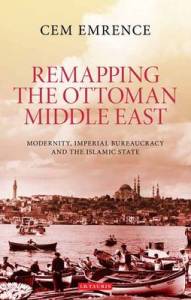
Cem Emrence speaks to Turkey Book Talk about his book “Remapping the Ottoman Middle East: Modernity, Imperial Bureaucracy and Islam” (IB Tauris).
The book looks at Ottoman modernization through the 19th and early 20th centuries using an original model of “three-trajectories”: The coast, the interior, and the frontier, which each followed distinct paths to modernity.
Download the episode or listen below.
Subscribe to Turkey Book Talk: iTunes / PodBean / Stitcher / Facebook / RSS
Here’s my review of the book at Hürriyet Daily News.
If you like Turkey Book Talk and want to support independent podcasting, you can make a small or large monetary donation to the show via Patreon. Many thanks to current supporters Özlem Beyarslan, Steve Bryant and Andrew Cruickshank.
The latest podcast is with Judith Saryan, who edited a new English edition of Zabel Yessayan’s account of a trip to Adana in the aftermath of pogroms targeting Armenians there in 1909.
Download the podcast or listen below:
Subscribe: iTunes / PodBean / Stitcher / Facebook / RSS
Read my Hurriyet Daily News review of “In the Ruins: The 1909 Massacres of Armenians in Adana” (AIWA).
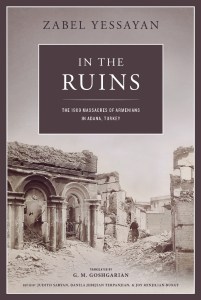
Here’s an interview from last year with translator Jennifer Manoukian, discussing Yessayan’s remarkable life and work.
Here’s another piece I wrote last year for Al Monitor from a crumbling station on the Armenian side of the closed Turkey-Armenia border. The immediate political dynamics have changed since then but it may still be an interesting read. View photos I took of the station here.

Finally, let me flag up my newly opened Patreon account – Through it you can support the Turkey Book Talk podcast by making a monetary donation, large or small, on a per episode basis. Check it out. Many thanks to my first supporter Sera Aleksandra Marshall.
Şakir Dinçşahin on the life and times of Niyazi Berkes, 1908-1988
February 20, 2016
Here’s my conversation with Şakir Dinçşahin about his book on the life and times of Turkish intellectual Niyazi Berkes.
Download the podcast, or listen below:
You can also now subscribe to the Turkey Book Talk podcast on Stitcher. Alternatively subscribe via iTunes or via PodBean.
Here’s my review of “State and Intellectuals: The Life and Times of Niyazi Berkes” (Rowman) at the Hürriyet Daily News.

If the issues discussed are your thing, check out this interview from last year with Andros Lamprou, who wrote an interesting book on the People’s Houses.
Also worth plugging this piece I wrote a couple of years ago on Mahmut Makal and his book “Bizim Köy” (Our Village), on his experiences as a teacher at a Village Institute in the 1940s.
Nilgün Önder on the economic transformation of Turkey since 1980
December 12, 2015
This week’s podcast is with Nilgün Önder of the University of Regina, who joined to discuss her new book “The Economic Transformation of Turkey: Neoliberalism and State Intervention” (IB Tauris).
It’s a great and detailed book on some of the paradoxes of the economic reforms passed after Turkey’s military coup of 1980 – rather than rolling back, the authority of the state was substantially deepened by the reforms.
Download the podcast here. Or listen/subscribe via PodBean.
Here’s a transcript of the interview at Hürriyet Daily News.
And here’s my review of the book.

Subscribe to the Turkey Book Talk podcast via iTunes, PodBean, or Soundcloud.
Thanks for listening!
Lastly, apologies for the dodgy sound quality in these first few podcasts. I’ve got a new mic in the post so that should go some way to sorting it out.
Markus Dressler on the ‘making of Turkish Alevi Islam’
November 28, 2015
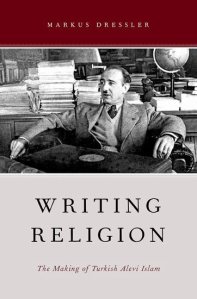
This week’s interview/podcast is with Markus Dressler, author of the book “Writing Religion: The Making of Turkish Alevi Islam.” The book examines how the idea of Alevism is an almost entirely modern concept, formed towards the end of the Ottoman Empire as part of efforts to integrate disparate Anatolian religious groups into the Turkish and Muslim nation.
Download a podcast of our conversation.
Here’s a transcript of the interview at the Hürriyet Daily News.
Here’s my review of the book.
Subscribe to the Turkey Book Talk podcast via iTunes, PodBean, or Soundcloud.
NB – I’ve also just created a Facebook page for the podcast, where I’ll be posting new episodes. Check it out here.
Cengiz Şişman on the Dönmes of Turkey
November 14, 2015
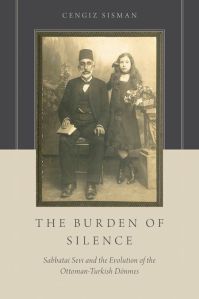
This week I spoke to Cengiz Şişman about his new book on the history of the Dönmes, a crypto-religious sect that first developed around Jewish messiah Sabbatai Sevi in cities around the Ottoman Empire in the 17th century.
Download a podcast of our conversation. Or listen below:
Subscribe to the Turkey Book Talk podcast via iTunes, PodBean, or Soundcloud.
Read an edited transcript of the interview at the Hürriyet Daily News.
And read my review of Şişman’s book, “The Burden of Silence: Sabbatai Sevi and the Evolution of the Ottoman-Turkish Dönmes.”


 Turkey Book Talk