Cem Emrence on ‘remapping the Ottoman Middle East’
July 15, 2016
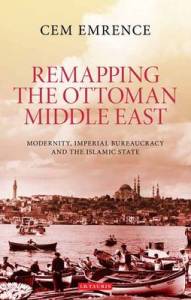
Cem Emrence speaks to Turkey Book Talk about his book “Remapping the Ottoman Middle East: Modernity, Imperial Bureaucracy and Islam” (IB Tauris).
The book looks at Ottoman modernization through the 19th and early 20th centuries using an original model of “three-trajectories”: The coast, the interior, and the frontier, which each followed distinct paths to modernity.
Download the episode or listen below.
Subscribe to Turkey Book Talk: iTunes / PodBean / Stitcher / Facebook / RSS
Here’s my review of the book at Hürriyet Daily News.
If you like Turkey Book Talk and want to support independent podcasting, you can make a small or large monetary donation to the show via Patreon. Many thanks to current supporters Özlem Beyarslan, Steve Bryant and Andrew Cruickshank.
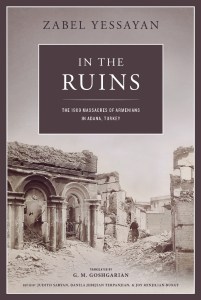
The latest podcast is with Judith Saryan, who edited a new English edition of Zabel Yessayan’s account of a trip to Adana in the aftermath of pogroms targeting Armenians there in 1909.
Download the podcast or listen below:
Subscribe: iTunes / PodBean / Stitcher / Facebook / RSS
Read my Hurriyet Daily News review of “In the Ruins: The 1909 Massacres of Armenians in Adana” (AIWA).
Here’s an interview from last year with translator Jennifer Manoukian, discussing Yessayan’s remarkable life and work.
Here’s another piece I wrote last year for Al Monitor from a crumbling station on the Armenian side of the closed Turkey-Armenia border. The immediate political dynamics have changed since then but it may still be an interesting read. View photos I took of the station here.

Finally, let me flag up my newly opened Patreon account – Through it you can support the Turkey Book Talk podcast by making a monetary donation, large or small, on a per episode basis. Check it out. Many thanks to my first supporter Sera Aleksandra Marshall.
Şakir Dinçşahin on the life and times of Niyazi Berkes, 1908-1988
February 20, 2016
Here’s my conversation with Şakir Dinçşahin about his book on the life and times of Turkish intellectual Niyazi Berkes.
Download the podcast, or listen below:
You can also now subscribe to the Turkey Book Talk podcast on Stitcher. Alternatively subscribe via iTunes or via PodBean.
Here’s my review of “State and Intellectuals: The Life and Times of Niyazi Berkes” (Rowman) at the Hürriyet Daily News.

If the issues discussed are your thing, check out this interview from last year with Andros Lamprou, who wrote an interesting book on the People’s Houses.
Also worth plugging this piece I wrote a couple of years ago on Mahmut Makal and his book “Bizim Köy” (Our Village), on his experiences as a teacher at a Village Institute in the 1940s.
Nilgün Önder on the economic transformation of Turkey since 1980
December 12, 2015
This week’s podcast is with Nilgün Önder of the University of Regina, who joined to discuss her new book “The Economic Transformation of Turkey: Neoliberalism and State Intervention” (IB Tauris).
It’s a great and detailed book on some of the paradoxes of the economic reforms passed after Turkey’s military coup of 1980 – rather than rolling back, the authority of the state was substantially deepened by the reforms.
Download the podcast here. Or listen/subscribe via PodBean.
Here’s a transcript of the interview at Hürriyet Daily News.
And here’s my review of the book.

Subscribe to the Turkey Book Talk podcast via iTunes, PodBean, or Soundcloud.
Thanks for listening!
Lastly, apologies for the dodgy sound quality in these first few podcasts. I’ve got a new mic in the post so that should go some way to sorting it out.
Markus Dressler on the ‘making of Turkish Alevi Islam’
November 28, 2015
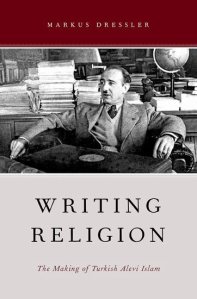
This week’s interview/podcast is with Markus Dressler, author of the book “Writing Religion: The Making of Turkish Alevi Islam.” The book examines how the idea of Alevism is an almost entirely modern concept, formed towards the end of the Ottoman Empire as part of efforts to integrate disparate Anatolian religious groups into the Turkish and Muslim nation.
Download a podcast of our conversation.
Here’s a transcript of the interview at the Hürriyet Daily News.
Here’s my review of the book.
Subscribe to the Turkey Book Talk podcast via iTunes, PodBean, or Soundcloud.
NB – I’ve also just created a Facebook page for the podcast, where I’ll be posting new episodes. Check it out here.
Cengiz Şişman on the Dönmes of Turkey
November 14, 2015
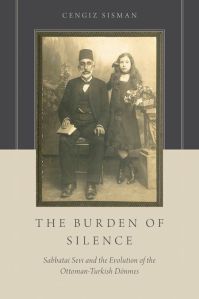
This week I spoke to Cengiz Şişman about his new book on the history of the Dönmes, a crypto-religious sect that first developed around Jewish messiah Sabbatai Sevi in cities around the Ottoman Empire in the 17th century.
Download a podcast of our conversation. Or listen below:
Subscribe to the Turkey Book Talk podcast via iTunes, PodBean, or Soundcloud.
Read an edited transcript of the interview at the Hürriyet Daily News.
And read my review of Şişman’s book, “The Burden of Silence: Sabbatai Sevi and the Evolution of the Ottoman-Turkish Dönmes.”
Ozan Özavcı on liberalism in Turkey
October 10, 2015
This week I spoke to Ozan Özavcı about his book “Ahmet Ağaoğlu and the Genealogy of Liberalism in Turkey” (Brill), on the life of one of the most prominent intellectuals bridging the late Ottoman/early republican years.
Download the podcast of the interview here.
Subscribe to the Turkey Book Talk Podcast via iTunes, via Podbean, or via Soundcloud.
Here’s an edited version of the interview at HDN.
And here’s my review of the book.
If you’re interested in the subject, here’s my interview with Ankara University’s Alexandros Lamprou from earlier this year, discussing social engineering in the early Turkish Republic.

Finally, a shout out to my brother James Armstrong, who has designed the terrific icon for my podcast above. Follow him on Twitter and check out his great work at his website.
From the Armenia-Turkey border
June 27, 2015
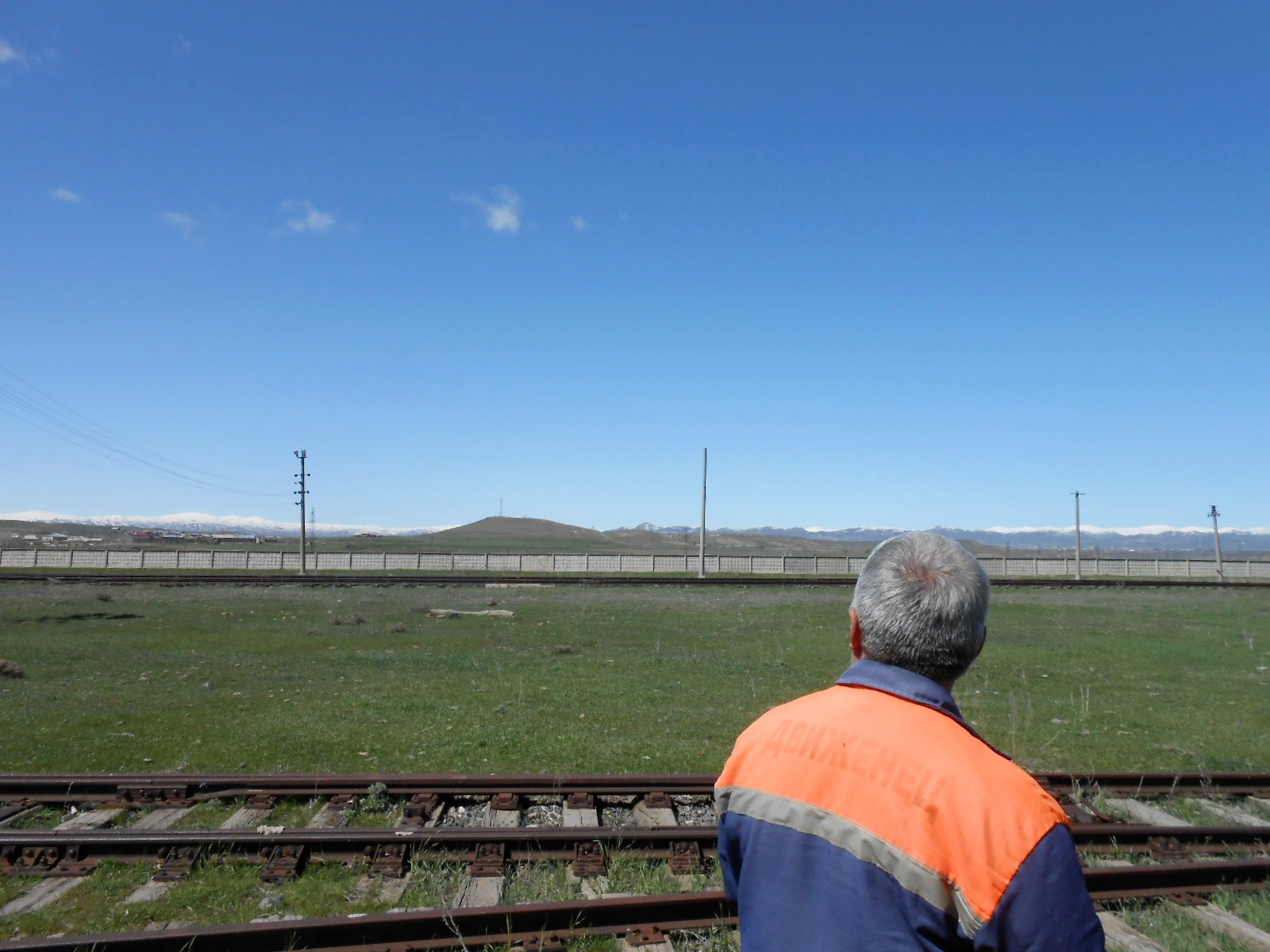
A couple of months ago I visited the Armenian side of the border with Turkey – specifically the Akhuryan train station, 2 km from the border and just outside Armenia’s second biggest city Gyumri.
The station has been closed since 1993, when Turkey sealed the border amid the Nagorno-Karabakh War between Armenia and Azerbaijan. Ever since, former station conductor Hagop Kevorkian has stayed on as a guard, forlornly waiting for services to restart.
When we visited, Hagop was just sitting alone in the dark station office wearing his fading old Soviet-era uniform, midway through his 12-hour shift doing nothing. Another guard waits at the station on rotating days, but they have not seen trains for over two decades. The Akhuryan Station is thus a sad symbol of the human cost of the diplomatic impasse between Ankara and Yerevan.
I wrote an article for Al Monitor about the station and the slim chances for the border reopening.
Below are some of the photos I took of Hagop and the station.






Social engineering in Turkey from Atatürk to Erdoğan
May 30, 2015
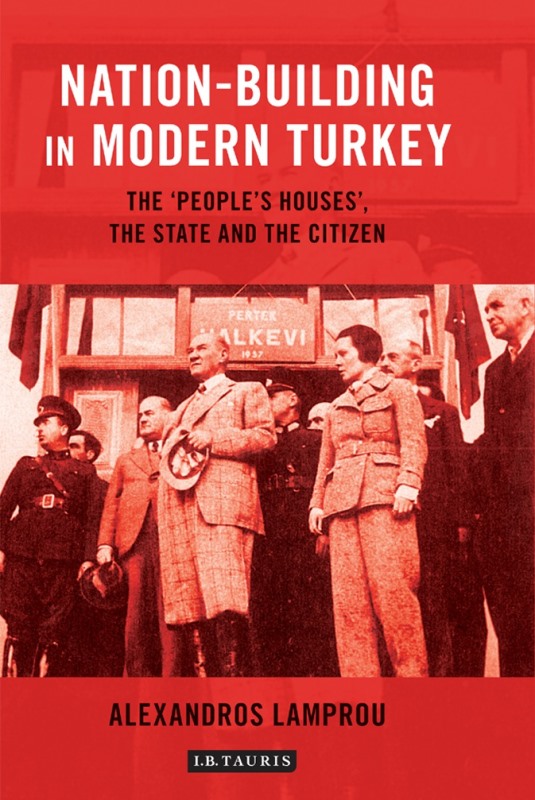
This week I spoke to Alexandros Lamprou, discussing his new book “Nation-Building in Modern Turkey: The People’s Houses, the State and the Citizen.”
The People’s Houses (Halkevleri) were established in 1932 by Turkey’s single-party regime to plant roots for modernising and secularising reforms in towns across the country. Almost 500 Houses were opened until their closure in 1951, and the traditional view has tended to see them as homogeneous institutions propagating reforms strictly according to Kemalist state ideals. Lamprou’s research showed a far more ambiguous picture, with diverse local conditions across Turkey profoundly altering the work of the People’s Houses.
Here’s the interview with Lamprou in the Hürriyet Daily News.
And here’s my review of the book, in which I explore the limits of such social engineering campaigns – from the early Turkish Republic to today.
For those interested in these things, here’s a link to my interview from last year with Mahmut Makal in Bülent Journal. Makal worked as a teacher in a central Anatolian Village Institute, which like the People’s Houses were opened to accelerate the modernization of traditional society. Makal’s books on life as a village teacher describe the uphill struggle to spread reforms in the harsh conditions of rural Turkey in the 1950s, and he was actually jailed by the authorities at the time for painting too bleak a picture.

As a final note, the publisher I.B. Tauris have provided a discount code for online purchases of Lamprou’s book. Details are at the bottom of the review and the interview.
The Sivas Massacre is a ‘19 year lie’: Yeni Akit
July 27, 2012
The massacre that took place in the Central Anatolian town of Sivas in 1993 is one of the darkest episodes in modern Turkish history. On the morning of July 2, a large group of radical Sunni Islamists descended on the Madımak Hotel in Sivas town center, protesting its hosting of an Alevi cultural festival. The mob attacked and set fire to the hotel, which resulted in the deaths of 37 people. Autopsies at the time concluded that the deceased had either died of burns or smoke inhalation.
Radical Islamist daily Yeni Akit’s July 23, 2012 front page carried a large headline declaring “The 19 Year Lie,” accompanied by two photos tastefully showing the morgue full of corpses from the massacre. Aside from the pleasure the paper obviously derived from showing off the photos on its front page once again, the ostensible reason the story was to expose what it called the “lie” that those in the hotel had been killed by the flames. In one of the pictures, a young girl lying on a morgue table, Belkıs Çakır, bears what the paper says is “clearly” a gunshot wound in the chest. This apparently proves that most of the deceased actually killed each other inside the hotel.Unfortunately for Akit, closer inspection reveals that the “blood” from Çakır’s “bullet wound” is simply a braid of hair hanging down from her head.

Akit’s charming July 23 front page
Akit’s piece aroused immediate opprobrium from a number of other Turkish dailies. The next day’s Taraf responded with the headline: “Akit sets fire to Madımak again,” Cumhuriyet said: “One more black publication from Akit,” while leftist-nationalist Yurt bluntly stated on its front page: “A Bigoted Lie.” All included the dismayed reactions from the families of those who died in the tragic incident, as well as their representatives.
Akit said the morgue photos had been hidden for 19 years before passing into their hands, but lawyer Şenal Sarıhan explained to Taraf that the photos were in fact included in a book on the event written by herself, “Madımak Yangını Sivas Davası.” “This book was published in 2002, and it had its third print run in 2011. Akit’s reporter Murat Alan clearly has it. The photos are included on page 97, 100, and 102. To claim that this is the first time they have been seen is completely untrue,” Sarıhan said. Çakır’s original autopsy, she added, was conducted at Sivas’s Numune Hospital, under strict observation. It unambiguously concluded that she had died of burns and from carbon monoxide poisoning. “The definite cause of death was burns and smoke inhalation. There is no dispute on this subject … Neither bullet wounds nor knife wounds can be seen in the photos,” Sarıhan said, adding that the only two people who died of bullet wounds on the day were shot outside the hotel by the demonstrators.
Zeynep Altıok, daughter of the poet Metin Altıok who was killed in the Madımak attack, was quoted as saying that the news did not come as a surprise from Akit. “They have written similar things before. They used to say it was the work of the [outlawed Kurdistan Workers’ Party] PKK. Their aim is to distort the truth. Before, they said it was the PKK, now they’ve gone in completely the opposite direction. I can’t take it seriously.”
Unfortunately, it’s not easy to reason with fanatical Islamists, and Akit’s July 24 front page headline followed on from the previous day, declaring: “Let the autopsies be conducted again”! On July 25, following the condemnations that the earlier pieces had aroused, the paper retreated into comforting victimhood,complaining that the other newspapers constituted a “dirty alliance against Akit … a panicking cartel.”
Yeni Akit is notorious in Turkey as the most vitriolic of the country’s Islamist newspapers. It was established in 2010 after its forerunner, “Anadolu’da Vakit,” was closed down following its failure to pay a fine incurred in 2003 for a piece deemed “insulting to the Turkish Armed Forces” (still officially a crime). Sane-minded observers view Akit with a mixture of incredulity and contempt, and think of it as not much more than a marginal voice on the lunatic fringe. Nevertheless, the fact that it enjoys significantly higher circulation figures than a number of far more respected newspapers must be chastening indeed!
[Hürriyet Daily News (15th June 2012): http://www.hurriyetdailynews.com/ataturk-an-intellectual-biography.aspx?pageID=500&eid=101]
M. Şükrü Hanioğlu – Atatürk: An Intellectual Biography, Princeton University Press, 2011, 280pp
One of the first things guaranteed to strike any newcomer to Turkey is the inescapability of Mustafa Kemal Atatürk – the statues, the portraits in every shop, the street names, the fact that every bookshop has an “Atatürk section,” the fact that every classroom has an “Atatürk Corner.” Whatever truth there is in the concern amongst secular Turks that the founder of the Turkish Republic’s memory is being eroded by a new religious order, it certainly – at least superficially – doesn’t feel that way to the Turkey neophyte.

Of course though, if that neophyte is going to stay for a longer stretch of time, he or she will sooner or later have to get a firmer handle on the Atatürk fundamentals, and Professor M. Şükrü Hanioğlu of Princeton University is the latest to take on the daunting task of producing a biography on the man. As Hanioğlu himself says in the preface to the book, it’s daunting because in Turkey: “For many years, the scholar who aspired to portray Atatürk as he really was resembled the pre-modern historian rash enough to attempt a depiction of the historical Jesus.” Though restricted in scope to the influences that shaped the “intellectual” character of its subject, (rather than filling in details of the personal life story), “Atatürk: An Intellectual Biography” is a sane, fair-minded primer to the ideological forces that shaped the “Father of the Turks.” Unlike so many titles in that “Atatürk section” of the local bookshops, it is resolutely a biography – not a hagiography.
The first step to challenging any holy text is to read it as a product of its historical context. The major objective of this book is to do the same with Atatürk, presenting him as an intellectual and social product of the late nineteenth and early twentieth century Ottoman Empire. The influences affecting the elites of the late Ottoman period are thus given ample space, demonstrating the essential continuity that Mustafa Kemal represented. Even though politically he was to become the symbolic figurehead of the sudden rupture between the old imperial order and the new republic, in crucial respects Atatürk was simply the inheritor of the late Ottoman reformist legacy. This historical continuity is one of the central themes that emerges from almost all serious contemporary historical writing on the period. Hanioğlu summarises:
“it is imperative to realize that Mustafa Kemal emerged from within a specific social milieu … many of the radical ideas destined to become central planks in his reform program were widely held in intellectual circles at the turn of the century … Despite the radical changes that it brought about, the Turkish transformation led by Atatürk was not a rupture with the Late Ottoman past but, in important respects, its continuation.”
While official Turkish historiography considers the founder of the TurkishRepublica kind of omniscient leader for all times, untrammelled by the age in which he emerged, this book paints a convincing alternative picture.
In this respect, the discussion of nineteenth century German military theorist Colmar van der Goltz’s idea of “the Nation in Arms” is particularly illuminating. Goltz held that a state’s military elite should be afforded an exalted role as the ultimate guide of society, a “superior position” being “the natural due of officers as a class.” Such ideas found fertile ground in the lateOttoman Empire, and Goltz was chosen to lead a restructuring of the Ottoman Royal Military in 1883-84. His theories had an obvious effect on the Committee of Union and Progress, (the group of military officers later known as the Young Turks), which swept to power in 1908, and were clearly significant in justifying the military’s later elite position in the Turkish Republic. Equally important to Ottoman thinking of the time – and consequently to Atatürk – was another German import, the concept of Vulgarmaterialismus:
“a vulgarized version of the doctrine of materialism, fusing popular notions of materialism, scientism, and Darwinism into a simplistic creed that upheld the role of science in society. The late Ottoman version of this materialism was a further simplification of the German original and a medley of highly disparate ideas.”
Hanioğlu remarks on the inherent irony of the self-contradictory, one-dimensional worship of scientific materialism by the era’s elites, a secular creed held on to with as much unquestioning zeal as the most pious of religious believers. The early republican fetish for the all-encompassing power of science was clearly a direct inheritance from this late Ottoman tendency.
Such oversimplification also gave rise to some of the more eccentric, often troubling republican intellectual predilections. The scientistic cult logically led to scientific racism and theories of exclusivist Turkish racial superiority, (the body of 16th century imperial Ottoman architect Mimar Sinan was exhumed in 1925 to confirm the brachycephalic shape of his skull, in order to prove beyond all doubt that he was, indeed, an ethnic Turk). It also fed into the aberration of the various Turkist language theories – which resulted in the brutal purging of all “foreign elements” in order to form a new “purified” Turkish language, with artificial replacements dredged up from ancient Turkic languages. In the words of Geoffrey Lewis, the reforms were a “catastrophic success,” and meant that Atatürk’s famous 36-hour speech of 1926 had already become unintelligible and had to be rendered into modern usage by 1963. There was also the new Turkish history thesis that found its way into official Turkish textbooks, which involved a comprehensive effort to prove that all ancient civilisations, including Greece and Rome, came from a central Asian Turkish wellspring. Despite obviously being nonsense, this revisionist interpretation of human history was seductive because it served a number of practical purposes. Firstly, it helped bypass the awkwardly religious Ottoman past; secondly, it helped pre-empt claims by rival nationalisms that Turks were latecomers to Anatolia; and thirdly, in the Turks’ mission civilisatrice, it also sought to solidify Turkey’s position as an integral part of the West, (although even this may have been a step down for some, with one contemporary text claiming that “Turks lived clothed during the stone age in 12000 BC, while Europeans reached that stage 5,000 years later.”) Atatürk never feels further from the figure of the high Enlightenment – and closer to his own, authoritarian age – than when we read of these quixotic social engineering projects. (I was struck recently when my neighbourhood plumber, Ali, while repairing some piping in my bathroom, began expounding something that sounded suspiciously close to the “Sun Language Theory.” I used to think of such things as being not much more than an eccentric footnote, representing the lunatic fringe of the early republican age, but perhaps I was being too generous.)
Nevertheless, despite the fact that it was personally one of his central intellectual pillars, Atatürk tended not to emphasise the more esoteric expressions of his Turkism until the future of the republic had been properly secured. Until this time, Hanioğlu stresses, Atatürk displayed an often underappreciated pragmatism as a politician. This is especially the case with regard to religion, which is far from the black and white picture that is often assumed. Atatürk was never averse to invoking Islam, particularly early on, when seeking to mobilise the masses in the struggle against the Allies and the non-Muslim populations, which were seen as a mortal threat to the very independence of the nation. Despite his contempt for communism, he also made use of a “purely rhetorical Socialism,” largely aiming to maintain the young republic’s alliance of convenience with theSoviet Union. “This pattern of dissimulation,” Hanioğlu writes:
“was undoubtedly part of a deliberate strategy to align the nationalists with the most powerful and broad-based ideologies of resistance, while obfuscating the exclusionary objectives of the movement. This ideological mishmash was crucial to Mustafa Kemal as he performed his difficult role as political leader, diplomat, and supreme military commander.”
Although he was the leading figure behind the abolition of the Ottoman Sultanate and, soon after, the Islamic Caliphate, this too was achieved in an extremely careful, gradualist way. As is often the case, what seems now like a sudden jolt and break with the past can, in many senses, be seen as merely the logical culmination of tendencies that had been developing for decades.
Westerners tend to view the Turkish adoration of Atatürk in rather narrow, technocratic terms, without understanding that the emotional resonance his image has across Turkish society couldn’t possibly be accounted for by his intellectual convictions alone. Like all icons, his image is still powerful in today’s Turkey because it has been effectively divested of all meaning, and the viewer can invest it with whatever symbolism he or she wishes to. As in any personality cult, Atatürk’s image must necessarily mean different things to different people. Depending on the context, Hanioğlu says, Atatürk “may be invoked in support of ideas that are étatist or liberal, nationalist or socialist, religious or scientistic, elitist or populist.” A westernised Turk on the Aegean coast might revere him for his secularizing, modernising vision, whilst a religious conservative in Central Anatolia can selectively ignore this, and instead place the emphasis elsewhere – perhaps instead respecting the strongman who successfully defended his homeland and gave the West a bloody nose. He probably sees no contradiction at all in praying five times a day while also passionately admiring Atatürk.
Shared by both caricatures is a veneration for the redeemer of the nation, and it is this aspect more than anything else that lends Atatürk the emotional impact needed to endure. This is the reason why detached and technical books like this, while welcome, can really only ever have a minor impact. The majority are guided by impulses rather less rational and rather more emotional. Atatürk himself understood that, even though it is this paradox that perhaps ultimately illustrates the limits of his ultra-rational, positivist intellectual convictions.
[Published on openDemocracy (20th June 2012): http://www.opendemocracy.net/william-armstrong/turkey-as-test-case-in-multipolar-post-cold-war-order]
Much is made of Turkey’s ‘difference’ in the Middle East. Why is it being identified an inspiration to the region? Why is there talk of Turkey as a model for Egypt, and not the other way around? In a recent interview with Turkish Policy Quarterly, historian Bernard Lewis makes much of Turkey’s republican history of independence and self-criticism since the Ottoman era, which he says accounts for the country’s regional pre-eminence today. Whilst these differences are indeed significant, a reasonable case can be made that they were not nearly so pronounced as Lewis claims. In fact, after the Second World War, Turkey was no more immune to the hard choices that had to be made in a bipolar world order than other Eastern European and Middle Eastern states. As such, like many others, it was only ever nominally independent.The difference between Turkey and the other countries in the region, however, is that it was able to emerge much more quickly in the post-Cold War era, when states previously under Soviet influence became independent, and the ‘protection’ of those under U.S. sway was rendered unnecessary. This emergence can be ascribed to Turkey’s higher economic, educational, industrial and institutional development, as well as its important narrative of national sovereignty and proud republican history. Its regional pre-eminence today is therefore closely linked to its status as a pioneer of the new, multi-polar post-Cold War era. The sense that the country is now defining itself, as opposed to being defined by outsiders, is a crucial psychological hurdle.
For the duration of the Cold War, the Middle East was an object region acted upon by outside forces, rather than a subject acting for itself. In practice, this meant states being pulled into the influence of either the U.S. or the Soviet Union. Turkey was no different in this sense, and was considered by Washingtonan essential bulwark against communism on the south-eastern fringe of Europe. In order to anchor Turkey to the west, the U.S. bankrolled the Turkish military through the Truman Doctrine in the post-war era, and it was made a full member of NATO in 1952 (at the same time as Greece, the other subject state of the Truman Doctrine). U.S. support – tacit or otherwise – was crucial in the three military coups of 1960, 1971, and 1980, all of which helped to maintain the status quo order. Like so many others, during the Cold War period Turkey was barely democratic, with its western allies preferring a stable, reliable partner to one that genuinely reflected its people’s unpredictable wishes. The 1980 coup is particularly instructive, being seen by the U.S. at the time as necessary to prevent any danger of the country sliding towards communism, as the Turkish left was extremely mobilised throughout the 1970s. CIA Ankara station chief at the time, Paul Henze, is on record as saying that he cabled Washington – shortly after the coup had been carried out by the Turkish military – to say ‘our boys did it’. Gossip perhaps, but illuminating gossip.
The 1980 coup therefore illustrates the old Turkish model, and its similarities with the systems that have also characterised the Arab world in the recent past: U.S./western support for an essentially non-democratic state, in return for the guarantee of stability. Turgut Özal, who became Prime Minister in 1982, could therefore be seen as a kind of non-military Turkish version of General Pinochet. Coming to power shortly after an American-backed coup, Özal was pro-U.S., anti-communist, and neo-liberal – significantly opening up the Turkish economy to international market forces with U.S. support. It’s an interesting irony that in many ways it was these very reforms that helped prepare Turkey to develop economically in the post-Cold War era.
After the Soviet Union collapsed, it also – perhaps paradoxically – became increasingly clear that the old U.S.-dominant model had also become redundant, with much of the previous justification for U.S. support to stable but undemocratic regimes having been lost. Slowly, it became possible for new, popular movements to emerge in the region, and this goes some way to explaining both the revolts sweeping across the Arab world today as well as Turkey’s (less violent) development of a strongly independent government representing popular will. There are, however, significant differences that may legislate against post-Cold War Arab countries following the same trajectory as Turkey. Not least of these is the multi-ethnic, multi-linguistic, multi-confessional nature of most of these countries – none can really be considered ‘nation states’ in anything like the organically-evolving western European sense of the world. Turkey’s own early 20th century nation-building project relied on an enormous amount of violently imposed state-directed social reorganisation, essentially imitating the western model, (in terms of the uniform cultural, ethnic, linguistic, religious cohesiveness that was stressed). On its own terms, the Turkish model of modernisation was successful – taking a multi-linguistic, multi-ethnic population and forging out of it a unitary, monolingual, officially mono-cultural state. In the modern nation states of the Arab world, with their fragmented and multifarious social, ethnic, religious, linguistic, sectarian structures, it is difficult to see how the same results can be achieved in the early 21st century – or even how such results would be desirable. The new Middle East is perhaps more likely to be one where – instead of two great outside powers seeking to impose their influence and maintain an unthreatening stability – a regional struggle will play out between multiple competing local forces. This struggle will be based on old fissures that the old Cold War order had previously kept an uneasy lid on.


 Turkey Book Talk