I should say that the two things in the title are unrelated.
My interview this week was with Toni Alaranta of the Finnish Institute of International Affairs, discussing his new book “National and State Identity in Turkey: The Transformation of the Republic’s Status in the International System” (Rowman). In the book, Alaranta traces how the entrenchment in power of authoritarian political Islam in Turkey after 2002 was critically aided by the West’s misguided search for a “moderate Muslim democracy” after the end of the Cold War and the 9/11 terror attacks.
Read the interview at the Hürriyet Daily News here.
And read my review of the book here.
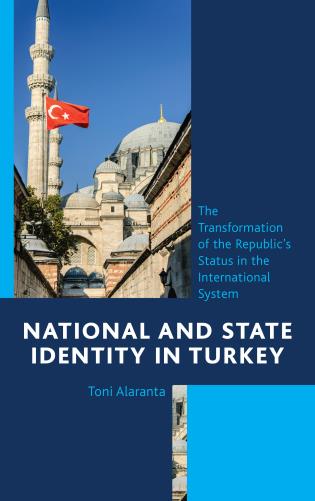
This also marks my first step into the world of podcasting. From now on I’ll be publishing these author interviews in audio as well as written form, through my new podcast “Turkey Book Talk.” The podcast will include some extra parts that didn’t make the written edit, as well as some fancy music, etc.
Click here to listen to the first episode (a work in progress as I’m still figuring out the best host, player, etc).
To subscribe to the feed, visit my PodBean page.
Please spread the word to anyone you think may be interested, and do get in touch with any suggestions on how I can improve the podcast!
Turkey’s LGBT crackdown
July 31, 2015
I’ve been walking in north Wales so haven’t had chance to post this piece I wrote on Turkey’s nervous LGBTIs and the “perils of visibility.” Clouds have darkened in recent weeks for LGBTIs in Turkey after last month’s police crackdown on the annual Pride March and a broader uptick in violent incidents and homophobic rhetoric.
The paradox I try to explain in the article is that this has accompanied an increasingly vocal LGBT rights activism that has flourished in the country over the past couple of decades:
“Yeşim Başaran, who works at LGBTI rights group Lambda Istanbul, agrees that a ‘conservative resistance’ has arisen in response to the campaign for recognition. ‘The two things have happened at the same time. The issue of LGBTI rights has become more visible in the media and activists have become more vocal. Opposition parties have nominated gay candidates in elections and have LGBTI people working in their party organizations. That would not have happened a few years ago,’ she says. ‘Life for LGBTIs in Turkey was never easy. They already were subject to attacks in public and within their families. They were at risk of being fired from their jobs or committing suicide. But in the last few weeks it has become more concrete.'”
Read the whole piece at Balkanist.

Istanbul’s 2013 Pride March, in happier times. Source: Wikipedia Commons.
It was particularly interesting to meet the pro-Erdoğan AK-LGBTI group. Many people assumed they were trolls, but I can confirm that they are serious and in the process of becoming a legally recognised “dernek” (association). Turkey is certainly full of surprises.
Turkey and the PKK at another crossroads
July 25, 2015
This week saw some of the worst clashes between Turkish security forces and the Kurdistan Workers’ Party (PKK) since the (now ended?) peace process officially started over two years ago.
As a result my interview and review this week are sadly topical. I spoke to Cem Emrence, who co-authored a new title on the history of the Turkey-PKK conflict, “Zones of Rebellion: Kurdish Insurgents and the Turkish State.” It is a slim but rich book, elaborating a complex theory of path dependence that has limited the options of both the Turkish state and the PKK over three decades and ultimately led to stalemate.
Read the Q&A with Emrence in Hürriyet Daily News here.
And read my review of the book from earlier this week here.

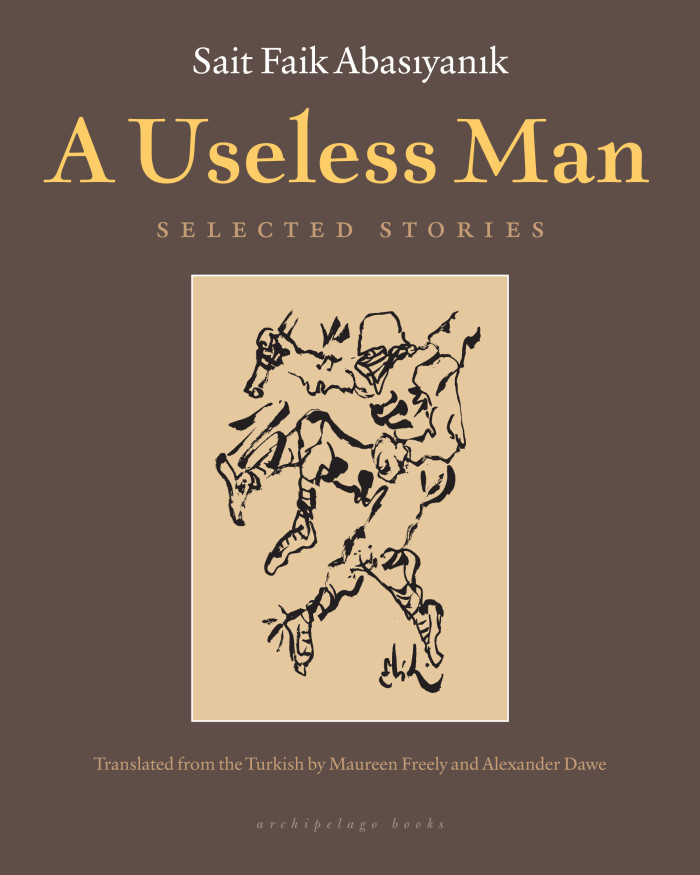
And something completely different: In next week’s Times Literary Supplement I review a new English selection of the great Sait Faik’s stories. It’s only available in print form so you’ll have to seek out an actual real physical copy of the TLS if you’re interested in reading it.
From the Armenia-Turkey border
June 27, 2015
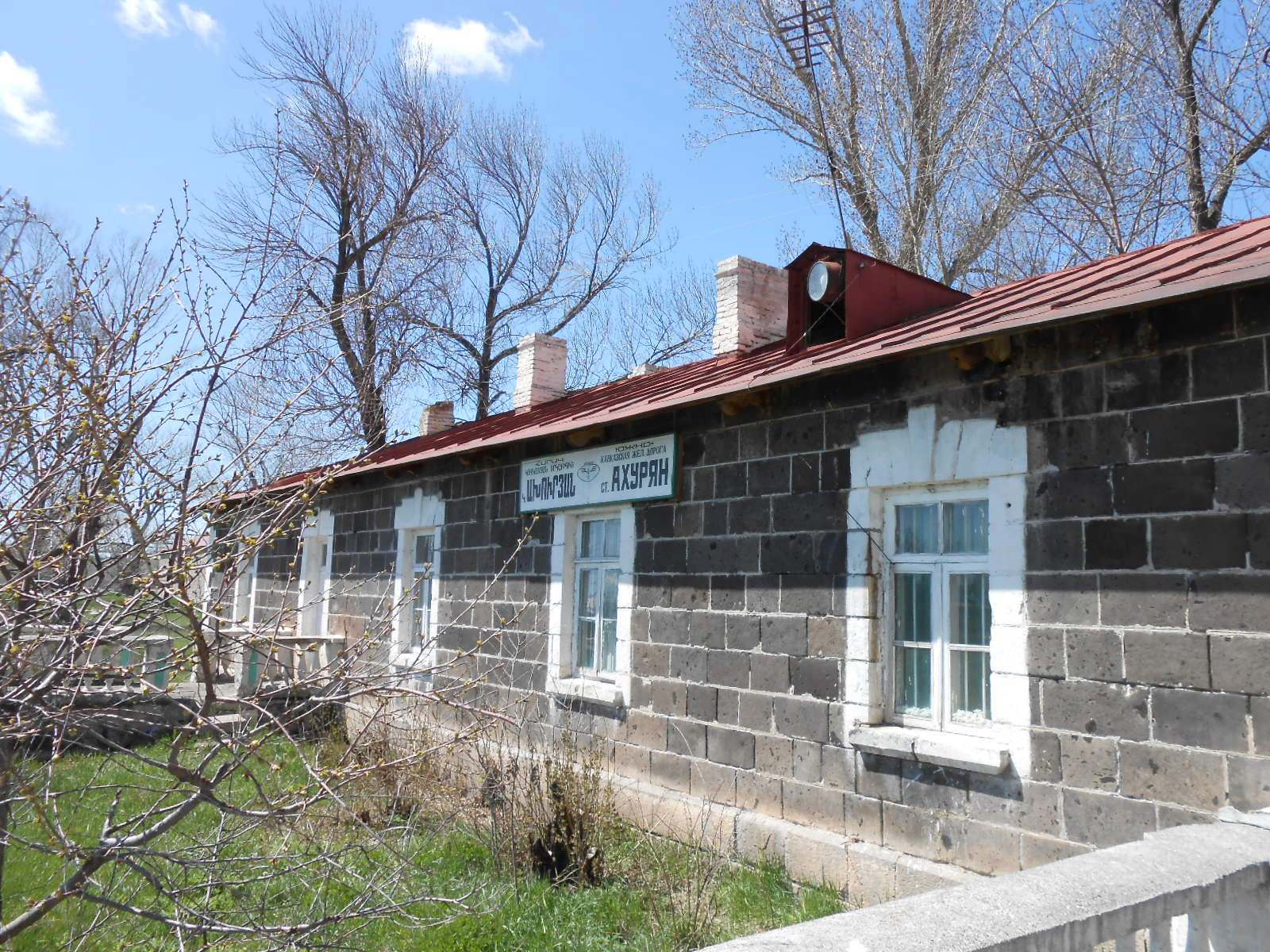
A couple of months ago I visited the Armenian side of the border with Turkey – specifically the Akhuryan train station, 2 km from the border and just outside Armenia’s second biggest city Gyumri.
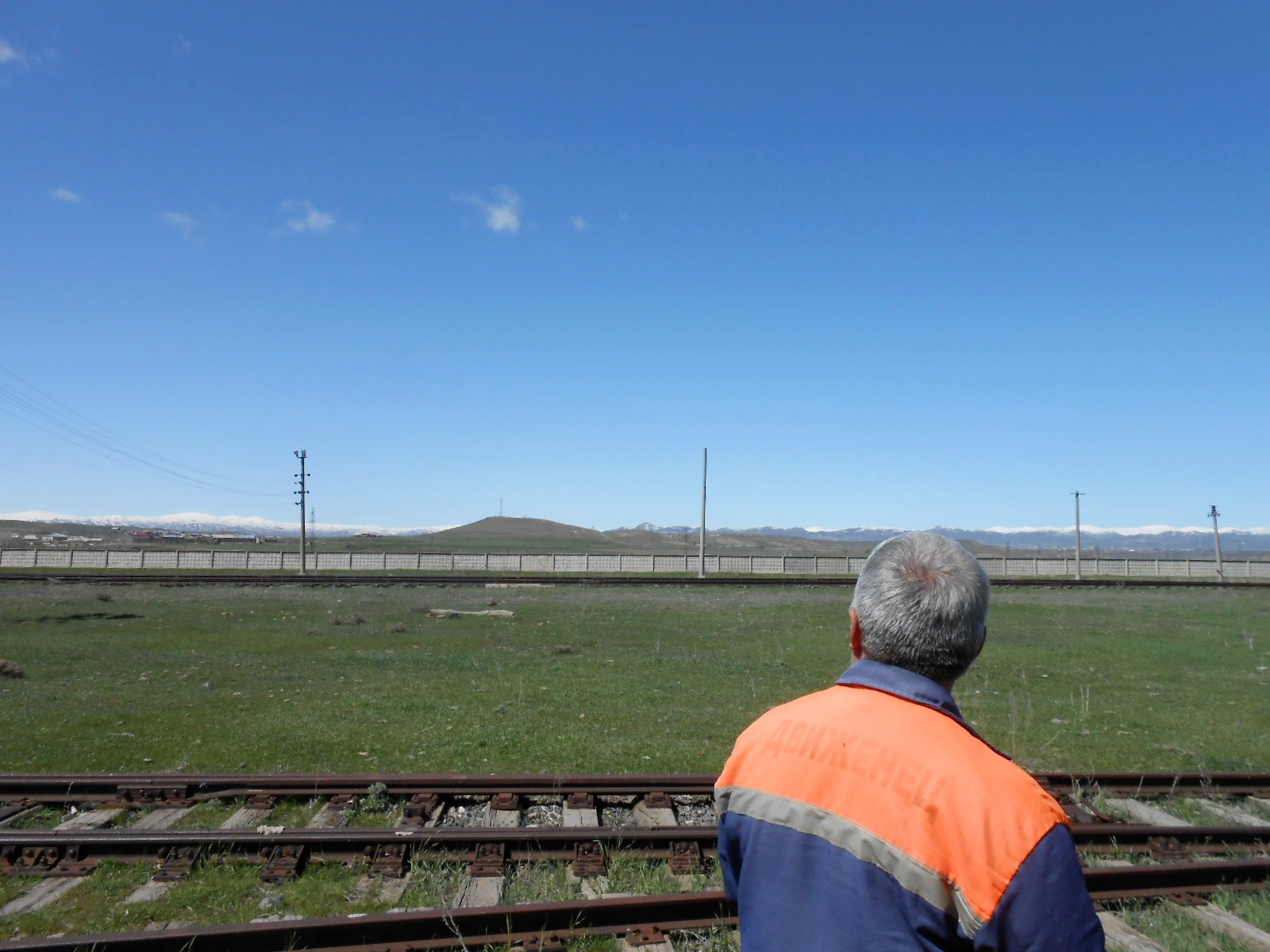
The station has been closed since 1993, when Turkey sealed the border amid the Nagorno-Karabakh War between Armenia and Azerbaijan. Ever since, former station conductor Hagop Kevorkian has stayed on as a guard, forlornly waiting for services to restart.
When we visited, Hagop was just sitting alone in the dark station office wearing his fading old Soviet-era uniform, midway through his 12-hour shift doing nothing. Another guard waits at the station on rotating days, but they have not seen trains for over two decades. The Akhuryan Station is thus a sad symbol of the human cost of the diplomatic impasse between Ankara and Yerevan.
I wrote an article for Al Monitor about the station and the slim chances for the border reopening.
Below are some of the photos I took of Hagop and the station.





I’ve written a piece for Politico about Turkey’s critical general election. Specifically, the article looks at the shift by President Erdoğan and the government in recent months from emphasising economic competence to peddling bombastic conspiracy theories:
“While signs of this paranoiac shift have long been evident, the AKP’s earlier years in power mostly focused on making an economy-based pitch to voters. Economic competence and extending services to the poorer sections of society – along with an appeal to the conservative religious values held by many Turkish citizens – proved a winning combination for a string of crushing election victories. But while the party still pledges to spur development, its rhetoric leading up to Sunday’s election has tilted decisively in favor of a combination of conspiracy theories laced with historic posturing about reconnecting Turkey with the glory of the Ottoman Empire. When you’re on a glorious path, the AKP’s leaders suggest, you will inevitably have enemies.”
Read the whole thing over at Politico.

Social engineering in Turkey from Atatürk to Erdoğan
May 30, 2015
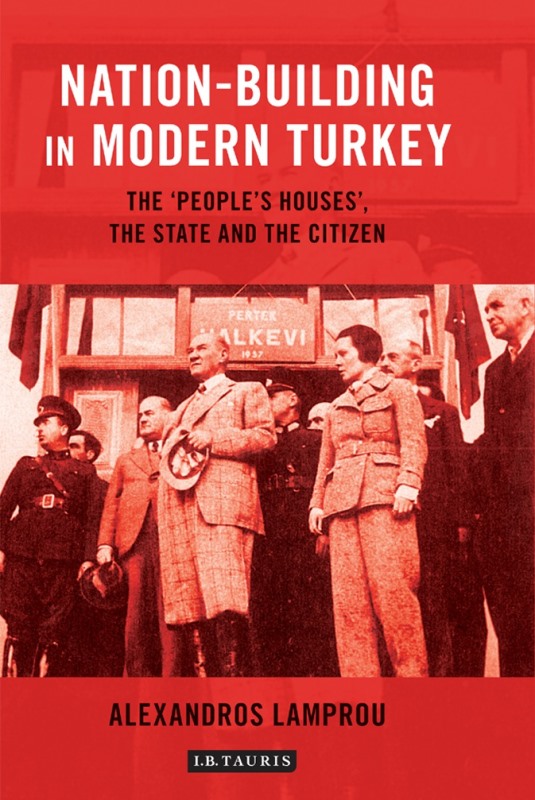
This week I spoke to Alexandros Lamprou, discussing his new book “Nation-Building in Modern Turkey: The People’s Houses, the State and the Citizen.”
The People’s Houses (Halkevleri) were established in 1932 by Turkey’s single-party regime to plant roots for modernising and secularising reforms in towns across the country. Almost 500 Houses were opened until their closure in 1951, and the traditional view has tended to see them as homogeneous institutions propagating reforms strictly according to Kemalist state ideals. Lamprou’s research showed a far more ambiguous picture, with diverse local conditions across Turkey profoundly altering the work of the People’s Houses.
Here’s the interview with Lamprou in the Hürriyet Daily News.
And here’s my review of the book, in which I explore the limits of such social engineering campaigns – from the early Turkish Republic to today.
For those interested in these things, here’s a link to my interview from last year with Mahmut Makal in Bülent Journal. Makal worked as a teacher in a central Anatolian Village Institute, which like the People’s Houses were opened to accelerate the modernization of traditional society. Makal’s books on life as a village teacher describe the uphill struggle to spread reforms in the harsh conditions of rural Turkey in the 1950s, and he was actually jailed by the authorities at the time for painting too bleak a picture.

As a final note, the publisher I.B. Tauris have provided a discount code for online purchases of Lamprou’s book. Details are at the bottom of the review and the interview.
The Circassian diaspora in Turkey
May 9, 2015
This week I interviewed Zeynel Abidin Besleney, the author of a new book on the history of Circassian political activism in Turkey. The book is probably the most detailed available title on what is a pretty obscure subject, and I learnt plenty from it.
Here’s a link to the interview with Besleney at the Hürriyet Daily News.
And here’s my review of the book.

Ahead of next week’s commemoration of the centenary of the Armenian genocide, I spoke to Carnegie Endowment scholar Thomas de Waal about his new book exploring relations between Turks and Armenians in the years since 1915.
And here’s my review of de Waal’s “Great Catastrophe: Armenians and Turks in the Shadow of Genocide.” 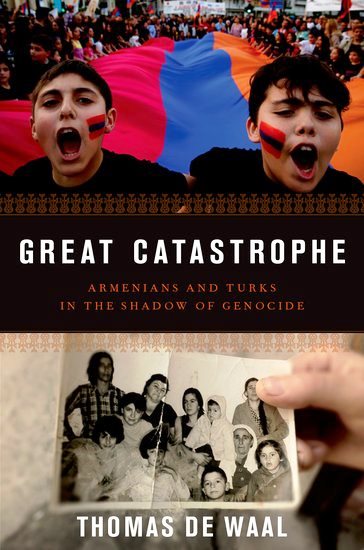 Unfortunately our conversation took place before Pope Francis’ remarks over the weekend. Neither could I ask de Waal about Kim Kardashian and Kanye West.
This week I spoke to Eugene Rogan, the author of an authoritative new history “The Fall of the Ottomans: The Great War in the Middle East, 1914-1920.”
Rogan is director of the Middle East Centre at the University of Oxford and also penned a major recent book on the history of the modern Arab world, so I was really happy to speak with him. The conversation was wide-ranging and stimulating, touching on some of the biggest issues around the war – resolved and unresolved – and the continued resonance of the Ottoman Empire’s collapse almost 100 years ago.

Click here to read the interview with Professor Rogan.
Read my review of the book here.
And here’s some footage of Istanbul in 1915 from the British Pathé archives, showing the historic peninsula and various warships heading up the Bosphorus:
PS. I hope my Turkey-based followers can see this post, as WordPress keeps being blocked and unblocked here.
A brief history of Central Bank independence in Turkey
March 19, 2015
I’ve written a short piece taking a longer view of the ongoing tug-of-war between the government and Turkey’s Central Bank.
The piece argues that current speculation about the Bank’s independence should not be seen in isolation, but considered within the context of the government’s long-flagging enthusiasm for the economic reforms passed after the meltdown of Turkey’s financial sector in 2000-01. The jettisoning of long-term economic planning is one side effect of President Erdoğan’s bid to centralise all power in his own hands, and could herald a period of severe economic turbulence in the country.
Click here to read the whole thing on the Hürriyet Daily News.
The rise of political Islam in Turkey
March 7, 2015
My review/interview double-header this week was based on “The Rise of Political Islam in Turkey: Urban Poverty, Grassroots Activism and Islamic Fundamentalism” by Kayhan Delibaş, who works at Kent University and Turkey’s Adnan Menderes University.
The book is well worth reading for anyone looking for a deeper look into the political context of the emergence of Islamist parties in Turkey in the 1980s and 1990s. While it’s true that political Islam is an intrinsically transnational phenomenon, it’s always worth remembering the specific conditions that have facilitated it’s emergence, which of course differ everywhere.
Here’s my review of the book in the Hurriyet Daily News.
And here’s my conversation with its author Kayhan Delibaş.

Discussing the life of Zabel Yessayan with translator Jennifer Manoukian
February 14, 2015
My review this week was of “The Gardens of Silihdar,” Armenian feminist Zabel Yessayan’s (1878-1943) memoir of growing up in Ottoman Istanbul. Yessayan fled the city in 1915 after being included as the only woman on the Young Turk regime’s list of Armenian intellectuals targeted for detention and deportation. The book was first published in Soviet Armenia in the 1930s, shortly before Yessayan was arrested in Stalin’s purges and exiled to Siberia.
I caught up with translator Jennifer Manoukian to discuss Yessayan’s remarkable life and work. You can read the interview at the Hürriyet Daily News here.
Read my review of “The Gardens of Silihdar” here.

For those interested, both “The Gardens of Silihdar” and Yessayan’s novel “My Soul in Exile” were recently published in English translations by the small press of the Armenian International Women’s Association.


 Turkey Book Talk