Turkey Book Talk episode #64 – JOHN MCMANUS, post-doctoral fellow at the British Institute at Ankara, on “WELCOME TO HELL? IN SEARCH OF THE REAL TURKISH FOOTBALL” (W&N), a colourful exploration of what the beautiful game can tell us about a football-mad society and Turkey’s modern history.
Download the episode or listen below.
Subscribe to Turkey Book Talk : iTunes / PodBean / Stitcher / Acast / RSS
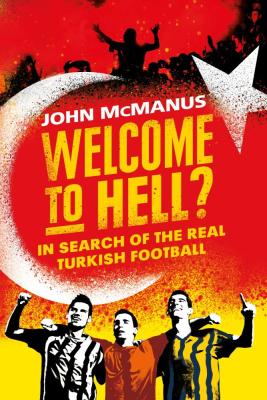
Here’s my review of the book from last week.
Support Turkey Book Talk by becoming a member. Membership gives you full transcripts in English and Turkish of every interview upon publication, transcripts of the entire Turkey Book Talk archive, and access to an exclusive 30% discount on over 200 Turkey/Ottoman History titles published by IB Tauris.
Mehmet Kentel on the world of Ottoman caricaturist Yusuf Franko
February 20, 2018
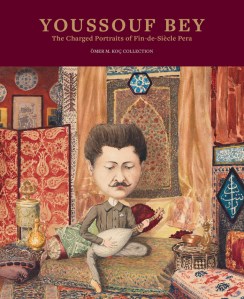
Turkey Book Talk episode #58 – Mehmet Kentel on the life and work of Yusuf Franko, an obscure Ottoman bureaucrat who lived a remarkable double life as a caricaturist depicting Istanbul’s cosmopolitan late 19th century high society.
Kentel is a PhD Candidate in Near and Middle Eastern Studies at the University of Washington, and was adviser to the exhibition “The Characters of Yusuf Franko: An Ottoman Bureaucrat’s Caricatures” at the Koç University Research Center for Anatolian Civilizations.
Download the episode or listen below.
Here’s the great website where you can view all of Yusuf Franko’s remarkable pictures and read the essays in “Youssouf Bey: The Charged Portraits of Fin-de-Siecle Pera,” the catalogue accompanying the exhibition.
And here’s my review of that book in Hurriyet Daily News.
Subscribe to Turkey Book Talk : iTunes / PodBean / Stitcher / Acast / RSS
Follow on Facebook or Twitter.

Consider supporting Turkey Book Talk and get extra content by becoming a member. Members get full transcripts (in English and Turkish) of every interview upon publication, transcripts of the entire Turkey Book Talk archive (in English) and access to an exclusive 30% discount on over 200 Turkey/Ottoman History titles published by IB Tauris.
Turkey Book Talk episode #56 – Boğaziçi University Professor Edhem Eldem on “To Kill a Sultan: A Transnational History of the Attempt on Abdülhamid II” (Palgrave Macmillan), which he co-edited with Houssine Alloul and Henk de Smaele.
The book explores a deadly assassination attempt targeting the Ottoman sultan in Istanbul in 1905, and appears at a time when Abdülhamid II is the subject of a growing popular obsession among religious conservatives in Turkey.
Download the episode or listen below.
Here’s my review of the book at HDN.
Subscribe to Turkey Book Talk : iTunes / PodBean / Stitcher / Acast / RSS
As mentioned in the podcast, here’s a recent article from me in History Today on this Abdülhamid revisionism and comparisons between him and Erdoğan.

As also mentioned, stay tuned for details of a new membership system coming for Turkey Book Talk. As part of the system, paying subscribers will get access to a range of extra content and benefits. I will post more details in due course, hopefully by the time of the next episode in two weeks.
* SUPPORT *
Remember you can support the podcast, if you enjoy or benefit from it, by making a pledge to Turkey Book Talk via Patreon. Many thanks to current supporters Michelle Zimmer, Steve Bryant, Jan-Markus Vömel, Celia Jocelyn Kerslake, Aaron Ataman, Max Hoffman, Andrew MacDowall, Paul Levin, Ayla Jean Yackley, Burak Kodaz and Tan Tunalı.
Lora Sarı on the Istanbul-based Armenian publisher Aras
November 24, 2017
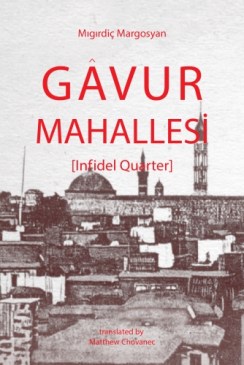
Turkey Book Talk episode #52 – LORA SARI on the Aras Publishing House, set up in Istanbul in 1993 as a “window onto Armenian literature.” We also discuss Mıgırdıç Margosyan’s “Infidel Quarter,” published this year as Aras’ first English-language title.
Download the episode or listen below.
Subscribe to Turkey Book Talk : iTunes / PodBean / Stitcher / Acast / RSS

Extras
- Episode of Turkey Book Talk from last year on Zabel Yessayan.
- Brief profile of Yetvart Tomasyan, one of Aras’ founding fathers.
- My review of Tuba Çandar’s biography of Hrant Dink in HDN.
- Interview with Tuba Çandar discussing that book and Hrant Dink’s life.
* SPECIAL OFFER *
You can support Turkey Book Talk by taking advantage of a 33% discount plus free delivery (cheaper than Amazon) on five different titles, courtesy of Hurst Publishers:
- ‘Jihad and Death: The Global Appeal of Islamic State’ by Olivier Roy
- ‘The Circassian: A Life of Eşref Bey, Late Ottoman Insurgent and Special Agent’ by Benjamin Fortna
- ‘The New Turkey and its Discontents’ by Simon Waldman and Emre Çalışkan
- ‘The Poisoned Well: Empire and its Legacy in the Middle East’ by Roger Hardy
- ‘Out of Nowhere: The Syrian Kurds in Peace and War’ by Michael Gunter
Follow this link to get that discount from Hurst Publishers.
Another way to support the podcast, if you enjoy or benefit from it: Make a pledge to Turkey Book Talk via Patreon. Many thanks to current supporters Michelle Zimmer, Steve Bryant, Jan-Markus Vömel, Celia Jocelyn Kerslake, Aaron Ataman, Max Hoffman, Andrew MacDowall, Paul Levin and Tan Tunalı.
Turkey Book Talk reaches its 50th episode – FİKRET ADAMAN, a professor of economics at Istanbul’s Boğaziçi University on “Neoliberal Turkey and its Discontents: Economic Policy and the Environment under Erdoğan” (IB Tauris).
Download the episode or listen below.
Here’s my review of the book at Hürriyet Daily News. (Also the archive of all my HDN reviews has moved and can now be found here.)
Subscribe to Turkey Book Talk: iTunes / PodBean / Stitcher / Acast / RSS

As mentioned in the episode, here’s a related episode from back in July with Esra Gürakar on crony capitalism in Turkey.
** SPECIAL OFFER **
Remember you can support Turkey Book Talk by taking advantage of a 33% discount plus free delivery (cheaper than Amazon) on five different titles, courtesy of Hurst Publishers:
- ‘Jihad and Death: The Global Appeal of Islamic State’ by Olivier Roy
- ‘The Circassian: A Life of Eşref Bey, Late Ottoman Insurgent and Special Agent’ by Benjamin Fortna
- ‘The New Turkey and its Discontents’ by Simon Waldman and Emre Çalışkan
- ‘The Poisoned Well: Empire and its Legacy in the Middle East’ by Roger Hardy
- ‘Out of Nowhere: The Syrian Kurds in Peace and War’ by Michael Gunter
Follow this link to get that discount from Hurst Publishers.
Another way to support the podcast, if you enjoy or benefit from it: Make a pledge to Turkey Book Talk via Patreon. Many thanks to current supporters Michelle Zimmer, Steve Bryant, Jan-Markus Vömel, Celia Jocelyn Kerslake, Aaron Ataman, Max Hoffman, Andrew MacDowall and Paul Levin.
Ekin Oklap on ‘The Red-Haired Woman’ and translating Orhan Pamuk
September 29, 2017
Turkey Book Talk episode #48 – EKIN OKLAP on translating Orhan Pamuk into English and the release of “THE RED-HAIRED WOMAN” (Faber), the second novel she has worked on with Pamuk.
Download the episode or listen below:
Here’s my review of the book at HDN.
Subscribe to Turkey Book Talk : iTunes / PodBean / Stitcher / Acast / RSS

As mentioned in the episode, here is an earlier episode with Pamuk’s previous translator, Maureen Freely, discussing the tragic life of Sabahattin Ali and her translation of his classic 1943 novel “Madonna in a Fur Coat”:
* DON’T FORGET SPECIAL OFFER *
You can support Turkey Book Talk by taking advantage of a 33% discount plus free delivery (cheaper than Amazon) on five different titles, courtesy of Hurst Publishers:
- ‘Jihad and Death: The Global Appeal of Islamic State’ by Olivier Roy
- ‘The Circassian: A Life of Eşref Bey, Late Ottoman Insurgent and Special Agent’ by Benjamin Fortna
- ‘The New Turkey and its Discontents’ by Simon Waldman and Emre Çalışkan
- ‘The Poisoned Well: Empire and its Legacy in the Middle East’ by Roger Hardy
- ‘Out of Nowhere: The Syrian Kurds in Peace and War’ by Michael Gunter
Follow this link to get that discount from Hurst Publishers.
Another way to support the podcast, if you enjoy or benefit from it: Make a pledge to Turkey Book Talk via Patreon. Many thanks to current supporters Michelle Zimmer, Steve Bryant, Jan-Markus Vömel, Celia Jocelyn Kerslake, Aaron Ataman, Max Hoffman, Andrew MacDowall and Paul Levin.
Cenk Özbay on male prostitution in Istanbul and LGBT rights in Turkey
September 15, 2017
Turkey Book Talk episode #47 – CENK ÖZBAY on his book “QUEERING SEXUALITIES IN TURKEY: GAY MEN, MALE PROSTITUTES AND THE CITY” (IB Tauris).
The book delves into the murky world of male prostitution in Turkey in the 2000s, which allowed Özbay to explore assumptions about class, local and global culture, and masculine behavior. In the conversation we also address the troubled state of LGBT rights in Turkey at the moment and the general trajectory of the country over the past 15 or so years.
Download the episode or listen below.
Keep your ears peeled for two music clips – The first (after 10:23) is “Çile Bülbülüm” performed by Bülent Ersoy. The second (after 20:42) is “İmkansız” performed by Zeki Müren
Here’s my review of the book at HDN.
Subscribe to Turkey Book Talk : iTunes / PodBean / Stitcher / Acast / RSS

A piece I wrote a couple of years ago for Balkanist – LGBT Crackdown in Turkey: The Perils of Visibility
* DON’T FORGET SPECIAL OFFER *
You can support Turkey Book Talk by taking advantage of a 33% discount plus free delivery (cheaper than Amazon) on five different titles, courtesy of Hurst Publishers:
- ‘Jihad and Death: The Global Appeal of Islamic State’ by Olivier Roy
- ‘The Circassian: A Life of Eşref Bey, Late Ottoman Insurgent and Special Agent’ by Benjamin Fortna
- ‘The New Turkey and its Discontents’ by Simon Waldman and Emre Çalışkan
- ‘The Poisoned Well: Empire and its Legacy in the Middle East’ by Roger Hardy
- ‘Out of Nowhere: The Syrian Kurds in Peace and War’ by Michael Gunter
Follow this link to get that discount from Hurst Publishers.
Another way to support the podcast, if you enjoy or benefit from it: Make a pledge to Turkey Book Talk via Patreon. Many thanks to current supporters Michelle Zimmer, Steve Bryant, Jan-Markus Vömel, Celia Jocelyn Kerslake, Aaron Ataman, Max Hoffman, Andrew MacDowall and Paul Levin.
Suzy Hansen on viewing America from Turkey
September 1, 2017
Turkey Book Talk episode #46 – SUZY HANSEN on “NOTES ON A FOREIGN COUNTRY: AN AMERICAN ABROAD IN A POST-AMERICAN WORLD” (Farrar, Straus and Giroux).
She has reported from Turkey for 10 years for outlets including the New York Times magazine, Vogue and the LRB. Her reporting has tackled issues such as Syrian refugees in Istanbul, the Soma mining disaster, the Erdoğan-Gülen power struggle, and the post-coup attempt crackdown (links below the picture).
Download the episode or listen below.
Here’s my review of the book at HDN.
Subscribe to Turkey Book Talk : iTunes / PodBean / Stitcher / Acast / RSS

Articles mentioned in the episode
Inside Turkey’s Purge – New York Times Magazine, April 2017
The Erdoğan Loyalists and the Syrian Refugees – New York Times Magazine, July 2016
The Mine Disaster that Shook Turkey – New York Times Magazine, November 2014
Whose Turkey Is It? – New York Times Magazine, February 2014
* DON’T FORGET SPECIAL OFFER *
You can support Turkey Book Talk by taking advantage of a 33% discount plus free delivery (cheaper than Amazon) on five different titles, courtesy of Hurst Publishers:
- ‘Jihad and Death: The Global Appeal of Islamic State’ by Olivier Roy
- ‘The Circassian: A Life of Eşref Bey, Late Ottoman Insurgent and Special Agent’ by Benjamin Fortna
- ‘The New Turkey and its Discontents’ by Simon Waldman and Emre Çalışkan
- ‘The Poisoned Well: Empire and its Legacy in the Middle East’ by Roger Hardy
- ‘Out of Nowhere: The Syrian Kurds in Peace and War’ by Michael Gunter
Follow this link to get that discount from Hurst Publishers.
Another way to support the podcast, if you enjoy or benefit from it: Make a pledge to Turkey Book Talk via Patreon. Many thanks to current supporters Michelle Zimmer, Steve Bryant, Jan-Markus Vömel, Celia Jocelyn Kerslake, Aaron Ataman, Max Hoffman and Andrew MacDowall.
Ulaş Tol on Turkey’s Alevis
February 24, 2017
Ulaş Tol joins to discuss his report “Urban Alevism and Young Alevis’ Search for Identity,” written for the PODEM think tank.
Download the episode or listen below.
Subscribe to Turkey Book Talk : iTunes / PodBean / Stitcher / Acast / RSS
Follow on Facebook or Twitter.

Download the report for free in English or in Turkish.
Turkey Book Talk listeners can get a 33% discount plus free delivery on four titles published by Hurst – “The Circassian: A Life of Eşref Bey, Late Ottoman Insurgent and Special Agent” by Benjamin Fortna, “The New Turkey and its Discontents” by Simon Waldman and Emre Çalışkan, “The Poisoned Well: Empire and its Legacy in the Middle East” by Roger Hardy, and “Out of Nowhere: The Syrian Kurds in Peace and War” by Michael Gunter. Follow this link to get that discount.
Finally, if you enjoy or benefit from the podcast and want to support it, click here to make a donation to Turkey Book Talk via Patreon!
Many thanks to my current supporters Özlem Beyarslan, Steve Bryant, Celia Jocelyn Kerslake and Aaron Ataman.
Kaya Genç on rage and revolution in modern Turkey
November 25, 2016
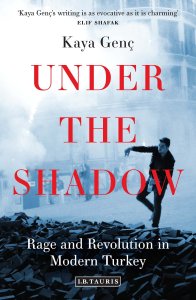
Kaya Genç returns to the Turkey Book Talk podcast. This time he joins to discuss his new book “Under the Shadow: Rage and Revolution in Modern Turkey,” which profiles young Turks from across the political spectrum.
Download the episode or listen below:
Subscribe to Turkey Book Talk : iTunes / PodBean / Stitcher / Facebook / RSS
My review of the book will be appearing in the next couple of weeks in the Times Literary Supplement so keep your eyes peeled for that.
Here’s the episode from earlier this year with Kaya discussing “An Istanbul Anthology”, which he edited:
NB: If you like this podcast and want to support independent podcasting, click here to make a small or large monetary donation to Turkey Book Talk via Patreon.
Many thanks to current supporters Özlem Beyarslan, Steve Bryant, Celia Jocelyn Kerslake and Aaron Ataman.
Özge Samancı on ‘Dare to Disappoint: Growing up in Turkey’
October 12, 2016
Özge Samancı talks to Turkey Book Talk about her bestselling graphic memoir “Dare to Disappoint: Growing up in Turkey” (Farrar Straux Giroux). It’s a charming book and everyone I know who has read it raves about it.
Download the podcast episode or listen below.
Subscribe to Turkey Book Talk : iTunes / PodBean / Stitcher / Facebook / RSS
Here’s my review of the book from a few months ago.

Many thanks to current supporters Özlem Beyarslan, Steve Bryant, Andrew Cruickshank and Aaron Ataman.
Post-coup attempt
August 6, 2016
I’m currently on holiday, but posted below are a couple of things I wrote on the coup attempt and its aftermath.
The view from Taksim Square – Times Literary Supplement.
I also spoke on the TLS podcast about that piece. Listen here (my bit is from 30.22). I wouldn’t have framed the whole thing as the presenters do, but they’re not the only ones who got the balance wrong in the aftermath of the coup, as I describe here:
Turkey and the West are heading for a breakup – War on the Rocks.

I took this photo in Taksim Square at around midnight on the night of July 15/16, just before anti-coup protesters started to amass.
I’ll be posting the next Turkey Book Talk podcast in two weeks. Thanks for your patience.


