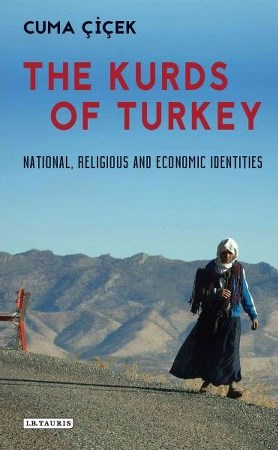
CUMA ÇIÇEK joins to discuss his book “THE KURDS OF TURKEY: NATIONAL, RELIGIOUS AND ECONOMIC IDENTITIES” (IB Tauris).
Download the episode or listen below.
Subscribe to Turkey Book Talk : iTunes / PodBean / Stitcher / Acast / RSS
Follow on Facebook or Twitter.
You may also be interested in an earlier episode with Mustafa Gurbuz discussing his book “Rival Kurdish Movements in Turkey: Transforming Ethnic Conflict” (Amsterdam University Press):
*SPECIAL OFFER* – Turkey Book Talk listeners can get a 33% discount plus free delivery on four titles published by Hurst – “The Circassian: A Life of Eşref Bey, Late Ottoman Insurgent and Special Agent” by Benjamin Fortna, “The New Turkey and its Discontents” by Simon Waldman and Emre Çalışkan, “The Poisoned Well: Empire and its Legacy in the Middle East” by Roger Hardy, and “Out of Nowhere: The Syrian Kurds in Peace and War” by Michael Gunter. Follow this link to get that discount from Hurst Publishers.
Finally, if you enjoy or benefit from the podcast and want to support it, click here to make a donation to Turkey Book Talk via Patreon!
Many thanks to my current supporters Özlem Beyarslan, Steve Bryant, Celia Jocelyn Kerslake and Aaron Ataman.
Cenk Özbay and Ayşecan Terzioğlu on the making of neoliberal Turkey
December 21, 2016
Cenk Özbay and Ayşecan Terzioğlu, editors of “The Making of Neoliberal Turkey,” join for the latest episode of Turkey Book Talk.
Download the episode or listen below.
Subscribe to Turkey Book Talk : iTunes / PodBean / Stitcher / Acast / Facebook / RSS
Here’s the article on the Erdoğan-supporting LGBT group I mentioned during the conversation.
Also, here’s another heads up for the new Twitter account, which wants/needs followers @TurkeyBookTalk.

If you enjoy or benefit from this podcast and want to support independent podcasting, click here to make a small or large monetary donation to Turkey Book Talk via Patreon.
Many thanks to my current supporters Özlem Beyarslan, Steve Bryant, Celia Jocelyn Kerslake and Aaron Ataman.
Roger Hardy on empire and its legacy in the Middle East
December 9, 2016
Roger Hardy’s speaks to the Turkey Book Talk podcast talk about “The Poisoned Well: Empire and its Legacy in the Middle East” (Hurst).
Download the episode or listen below.
Subscribe to Turkey Book Talk : iTunes / PodBean / Stitcher / Facebook / RSS
And here’s my Hürriyet Daily News review of the book.
By the way I’ve belatedly set up a Twitter account dedicated to the podcast. Do follow. Cheers!

If you’re a fan of this podcast and want to support independent podcasting, click here to make a small or large monetary donation to Turkey Book Talk via Patreon.
Many thanks to current supporters Özlem Beyarslan, Steve Bryant, Celia Jocelyn Kerslake and Aaron Ataman.
Özge Samancı on ‘Dare to Disappoint: Growing up in Turkey’
October 12, 2016
Özge Samancı talks to Turkey Book Talk about her bestselling graphic memoir “Dare to Disappoint: Growing up in Turkey” (Farrar Straux Giroux). It’s a charming book and everyone I know who has read it raves about it.
Download the podcast episode or listen below.
Subscribe to Turkey Book Talk : iTunes / PodBean / Stitcher / Facebook / RSS
Here’s my review of the book from a few months ago.

Many thanks to current supporters Özlem Beyarslan, Steve Bryant, Andrew Cruickshank and Aaron Ataman.
Ali Yaycıoğlu on the Ottoman Empire in the ‘age of revolutions’
September 30, 2016
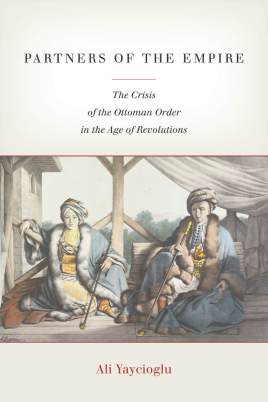
Ali Yaycıoğlu joins Turkey Book Talk to discuss “Partners of the Empire: The Crisis of the Ottoman Order in the Age of Revolutions” (Stanford University Press), examining the extraordinary upheavals in the Ottoman Empire at the turn of the 18th and 19th centuries.
In the conversation he talks about the long-term effects of these upheavals and what the period can tell us about contemporary Turkey’s turbulent political landscape.
Download the podcast or listen below:
Subscribe to Turkey Book Talk : iTunes / PodBean / Stitcher / Facebook / RSS
Here’s my review of the book.
Many thanks to current supporters Özlem Beyarslan, Steve Bryant, Andrew Cruickshank and Aaron Ataman.
Michael Wuthrich on the history of elections in Turkey and the future of Turkish democracy
September 17, 2016
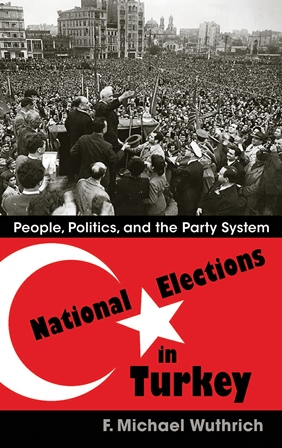
New Turkey Book Talk episode with Michael Wuthrich, chatting about “National Elections in Turkey: People, Politics and the Party System” (Syracuse University Press).
This really is an excellent book that overhauls much conventional wisdom about Turkish politics shared by right and left.
Unlike the deceptively boring title of the book, this episode’s title is stupidly ambitious. But we do cover a lot of ground. I’m really pleased with it – hope you enjoy/learn from it.
Download the episode or listen below.
Subscribe to Turkey Book Talk : iTunes / PodBean / Stitcher / Facebook / RSS
Here’s my review of the book in HDN.
Many thanks to current supporters Özlem Beyarslan, Steve Bryant, Andrew Cruickshank and Aaron Ataman.
Bilge Yeşil on the Turkish media, past and present
August 20, 2016
Turkey Book Talk is back after a one month hiatus.
We return with a good one: Bilge Yeşil speaks about her book “Media in New Turkey: The Origins of an Authoritarian Neoliberal State” (University of Illinois Press).
Download the episode or listen below:
Subscribe to Turkey Book Talk: iTunes / PodBean / Stitcher / Facebook / RSS
Here’s my review of the book.

If you like Turkey Book Talk and want to support independent podcasting, you can make a small or large monetary donation to the show via Patreon. Many thanks to current supporters Özlem Beyarslan, Steve Bryant, Andrew Cruickshank and Aaron Ataman.
Cem Emrence on ‘remapping the Ottoman Middle East’
July 15, 2016
Cem Emrence speaks to Turkey Book Talk about his book “Remapping the Ottoman Middle East: Modernity, Imperial Bureaucracy and Islam” (IB Tauris).
The book looks at Ottoman modernization through the 19th and early 20th centuries using an original model of “three-trajectories”: The coast, the interior, and the frontier, which each followed distinct paths to modernity.
Download the episode or listen below.
Subscribe to Turkey Book Talk: iTunes / PodBean / Stitcher / Facebook / RSS
Here’s my review of the book at Hürriyet Daily News.
If you like Turkey Book Talk and want to support independent podcasting, you can make a small or large monetary donation to the show via Patreon. Many thanks to current supporters Özlem Beyarslan, Steve Bryant and Andrew Cruickshank.
Ryan Gingeras on the fall of the Ottoman sultanate
May 14, 2016
A welcome return to the pod to Ryan Gingeras, who joins to talk about his new book “The Fall of the Sultanate: The Great War and the End of the Ottoman Empire, 1908-1922” (Oxford University Press).
Download the podcast or listen below.
Subscribe: iTunes / PodBean / Stitcher / Facebook / RSS
Here’s my review of the book at HDN.

This is Ryan’s second appearance on the Turkey Book Talk podcast. Click here to listen to him discussing his recently published biography of Atatürk: “Mustafa Kemal Atatürk: Heir to an Empire.”
Support the podcast via Patreon. Many thanks to current supporters Özlem Beyarslan, Steve Bryant and Andrew Cruickshank.
Nilgün Önder on the economic transformation of Turkey since 1980
December 12, 2015
This week’s podcast is with Nilgün Önder of the University of Regina, who joined to discuss her new book “The Economic Transformation of Turkey: Neoliberalism and State Intervention” (IB Tauris).
It’s a great and detailed book on some of the paradoxes of the economic reforms passed after Turkey’s military coup of 1980 – rather than rolling back, the authority of the state was substantially deepened by the reforms.
Download the podcast here. Or listen/subscribe via PodBean.
Here’s a transcript of the interview at Hürriyet Daily News.
And here’s my review of the book.

Subscribe to the Turkey Book Talk podcast via iTunes, PodBean, or Soundcloud.
Thanks for listening!
Lastly, apologies for the dodgy sound quality in these first few podcasts. I’ve got a new mic in the post so that should go some way to sorting it out.
Michael M. Gunter on the Kurds of Syria in peace and war
October 24, 2015
My interview this week was with Professor Michael M. Gunter, author of “Out of Nowhere: The Kurds of Syria in Peace and War” (Hurst).

The slim book charts the Syrian Kurds’ rise to international profile since 2011, taking in their modern history under Ba’athist oppression, their development of “national conscience,” and ties between the PYD in northern Syria and the PKK in Turkey.
Download the interview in podcast form.
Please subscribe to the Turkey Book Talk Podcast via iTunes, via Podbean, or via Soundcloud.
Here’s the text of the interview at HDN.
And here’s my review.
Social engineering in Turkey from Atatürk to Erdoğan
May 30, 2015
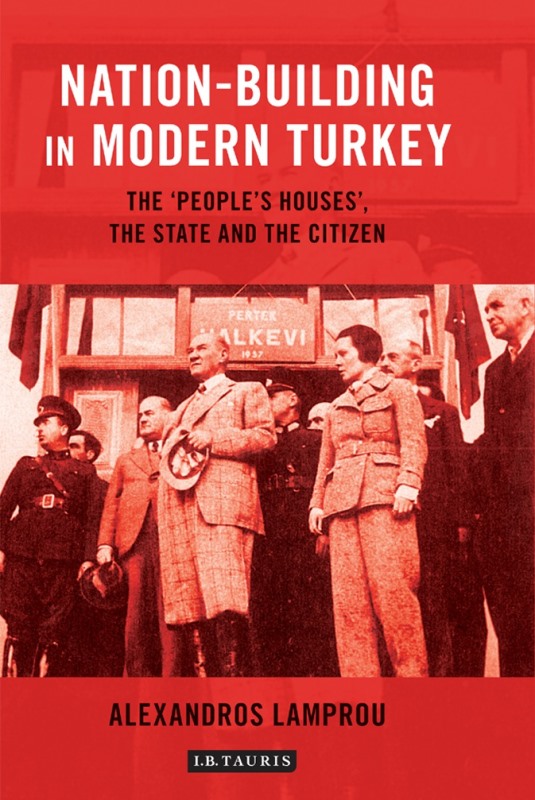
This week I spoke to Alexandros Lamprou, discussing his new book “Nation-Building in Modern Turkey: The People’s Houses, the State and the Citizen.”
The People’s Houses (Halkevleri) were established in 1932 by Turkey’s single-party regime to plant roots for modernising and secularising reforms in towns across the country. Almost 500 Houses were opened until their closure in 1951, and the traditional view has tended to see them as homogeneous institutions propagating reforms strictly according to Kemalist state ideals. Lamprou’s research showed a far more ambiguous picture, with diverse local conditions across Turkey profoundly altering the work of the People’s Houses.
Here’s the interview with Lamprou in the Hürriyet Daily News.
And here’s my review of the book, in which I explore the limits of such social engineering campaigns – from the early Turkish Republic to today.
For those interested in these things, here’s a link to my interview from last year with Mahmut Makal in Bülent Journal. Makal worked as a teacher in a central Anatolian Village Institute, which like the People’s Houses were opened to accelerate the modernization of traditional society. Makal’s books on life as a village teacher describe the uphill struggle to spread reforms in the harsh conditions of rural Turkey in the 1950s, and he was actually jailed by the authorities at the time for painting too bleak a picture.

As a final note, the publisher I.B. Tauris have provided a discount code for online purchases of Lamprou’s book. Details are at the bottom of the review and the interview.


