Discussing the life of Zabel Yessayan with translator Jennifer Manoukian
February 14, 2015
My review this week was of “The Gardens of Silihdar,” Armenian feminist Zabel Yessayan’s (1878-1943) memoir of growing up in Ottoman Istanbul. Yessayan fled the city in 1915 after being included as the only woman on the Young Turk regime’s list of Armenian intellectuals targeted for detention and deportation. The book was first published in Soviet Armenia in the 1930s, shortly before Yessayan was arrested in Stalin’s purges and exiled to Siberia.
I caught up with translator Jennifer Manoukian to discuss Yessayan’s remarkable life and work. You can read the interview at the Hürriyet Daily News here.
Read my review of “The Gardens of Silihdar” here.

For those interested, both “The Gardens of Silihdar” and Yessayan’s novel “My Soul in Exile” were recently published in English translations by the small press of the Armenian International Women’s Association.
Talking Turkey
January 31, 2015
Just a quick post to say I’m going to be doing author interviews to accompany my book reviews in the Hürriyet Daily News. The interviews won’t be appearing every week, but if that week’s book is new, interesting, and the author is available, the conversation should be appearing shortly after the review. As the latter are published on Thursdays, that means either Friday or Saturday. I’ll be using the opportunity to discuss the main arguments in the book with the author, as well as some of the issues that I haven’t managed to address in the review.
Things got off to a good start a couple of weeks ago, when I spoke to Aaron Stein about his new book, “Turkey’s New Foreign Policy: Davutoğlu, the AKP and the Pursuit of Regional Order” (Routledge). Read the review here, and my chat with Aaron here.

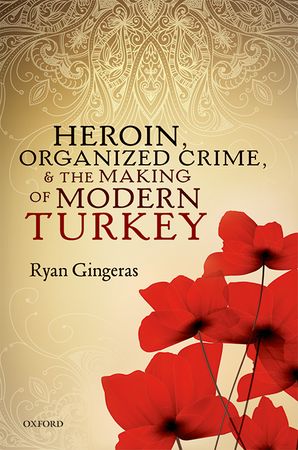
This week, I spoke to Ryan Gingeras about his book “Heroin, Organized Crime, and the Making of Modern Turkey” (OUP). Here’s the review, and here’s the interview.
Henceforth I’ll try to post links to both the reviews and the interviews here on the weekend after they come out.
Rift with Gülen movement exposes rise of ‘Erdoğanist’ media
December 16, 2013
The spat between Prime Minister Recep Tayyip Erdoğan and the movement of Islamic preacher Fethullah Gülen has seen tension between erstwhile allies in the Turkish media boil over into open hostility. Among many other things, the public drawing of swords – ostensibly over the closure of private examination schools (dershanes) – has exposed the extent to which PM Erdoğan has successfully built himself a support network of personally loyal media outlets. This network was already clear to see, but its guns have never before been so openly turned on the Gülenists.
Of particular note is the staunchly pro-Erdoğan line taken these days by daily Akşam, which was among the assets seized from Çukurova Holding by the state-run Savings Deposit and Insurance Fund (TMSF) over debt issues in May. After the seizing of Akşam, former editor-in-chief İsmail Küçükkaya was fired and the TMSF appointed a former Justice and Development Party (AKP) deputy in his place, while major changes were also made to the paper’s wider editorial team. Its previously centrist tone changed immediately, and Akşam became one of the most reliable supporters of the government throughout the summer’s Gezi Park protests. After the prep school polemic exploded, Akşam again rallied behind Erdoğan, taking its place alongside Sabah, Star, Türkiye, Yeni Şafak, Yeni Akit, Takvim, and Habertürk, in the ranks of pro-government newspapers launching unprecedented attacks on the Gülen movement. As with the others, this is clear simply from the number of front page headlines repeating whatever belligerent words the prime minister said on the subject on the previous day.

Echoing Erdoğan: “No step back from dershane reform”
Although the new editorial board shifted Akşam’s position months ago, it was actually only sold to businessman Ethem Sancak last month, (along with TV station SkyTürk360, also seized from Çukurova Holding). Sancak once described himself as being “lovesick for the prime minister,” and openly declared that he had “entered the media sector to support Erdoğan.” He previously bought daily Star and news station Kanal TV back in 2006, transforming them into firmly pro-AKP voices before selling them on soon afterwards. Both processes resemble the way that Sabah, one of Turkey’s top-selling newspapers, was sold to the prime minister’s son-in-law in 2007, since when it has taken perhaps the most unswervingly pro-Erdoğan line of all mainstream newspapers. Through such moves, Erdoğan has gradually built up a media base completely loyal to himself, without which he would never have been able to achieve a position of such authority in the country. It has been a conscious effort; the bitter power struggles that have marked Erdoğan’s political career have convinced him of the need for a reliant and disciplined media support network, and the intertwining interests of business and political elites in Turkey allowed this network to be cultivated. This new, rigidly “Erdoğan-ist” media base has been more apparent than ever during the row with the Gülen movement.
The AKP government has sought to take the sting out of the dershane issue, announcing that the “transformation” of prep schools into private schools doesn’t have to be completed until September 2015 (conveniently after the three upcoming elections). The electoral effects of the Erdoğan-Gülen rift are still being speculated on, but it’s clear that although a detente has been declared for now, the knives will be even sharper when they inevitably come out again.
[Hürriyet Daily News (21st May 2012): http://www.hurriyetdailynews.com/the-bridge-a-journey-between-orient-and-occident-.aspx?pageID=500&eid=53]
Geert Mak – The Bridge: A Journey Between Orient and Occident, Random House UK, 2010, 160pp
The Galata Bridge is one of the more obvious metaphors for all those oppositions that Istanbul is famously caught between: Occident and Orient; east and west; tradition and modernity. The half-kilometre stretch across the Golden Horn connects the “historic” old Stamboul – with the imperial mosques, palaces and bazaars – to the “modern” Galata and Pera – originally settled by Genoese merchants and later the quarter of European ambassadors, diplomats, traders and artists. Geert Mak roamed the entire European continent for his impressionistic 2004 travelogue “In Europe,” but this book offers a complete contrast in terms of scale.
As Mak himself wryly states, “The Bridge” is “a travelogue covering 490 metres,” his focus having infinitely narrowed to one bridge, in one corner of the old continent. The book is subtitled “A Journey Between Orient and Occident,” but I suspect that’s a marketing decision from the publisher, rather than from the author. Mak is wise to the cliché, and he makes sure not to labour it. Instead, his book mainly focuses on the vicissitudes of today’s bridge-dwellers, and in this it is a triumph of understated sensitivity.

Over the years a total of five bridges have been built on the site: two wooden, two iron, and one (today’s) concrete (“not a pretty sight”, Mak laconically observes). Istanbul, he says, “is a classic city […] poverty has pitched its tent in the heart of the old city, the middle classes, ring after ring, live further and further away from [it].” As the city’s breakneck modernisation continues apace, this old arrangement is coming under increasing pressure, but it still largely holds true. In a sense, the Galata Bridge is the centre of this pitched tent, so much of the book concerns itself with giving the reader a vivid sense of the consequences that an urban hand-to-mouth existence, (“an economy of spare change”), has on those who spend their lives on the bridge. “The lives of the tea seller, the cigarette boys and the insole vendor are set against the backdrop of a remarkable corner of the globe, but precious little good that does them,” Mak suggests.
To anyone who has crossed the Galata Bridge recently, or got trapped in one of those underground shopping tunnels that take you across the roads on either side, the sights described in the book will be familiar. Those knock-off children’s action figurines crawling mechanically in the lids of cardboard boxes; the fake perfumes; the fake mobile phones; the cheap sets of pens; the cheap tea; cheap shoes; jeans; umbrellas; insoles; shoelaces; smuggled cigarettes; condoms. However, I doubt anyone has stopped to take such an interest in the people behind these items as Mak, and this is where “The Bridge” is a revelation. We are introduced to the drifters selling those petty goods, as well as the indefatigable fishermen dangling rods (with steadily diminishing returns) over the bridge’s rails, the lottery ticket sellers, glue-sniffers, and pickpockets. Most are displaced migrants, having come to Istanbul from somewhere in eastern Anatolia, perhaps from a village now deserted, or one that simply can’t support them anymore. This mass of rootless internal migrants makes up an ever increasing proportion of Istanbul’s uncontrollably booming population, and Mak gets most of his material by simply mining them for stories, painting an authentic picture of the bridge’s unique fauna. He lets the people he meets on the bridge talk about their backgrounds, their daily routine, the starkness of their prospects, the financial knife-edge that a living scraped by selling cheap plastic umbrellas from a cardboard box entails, the psychological contortions required to maintain some sense of personal dignity or honor. As one man (and this is a resolutely male landscape) says: “Everyone here, almost all of us come from the back of beyond […] But there’s nothing there for us. Unless you want to go into the mountains, to join the terrorists. If you don’t want to do that, you have no choice but to make the best of things here, to sell tea, or flog pirated CDs, or shift stolen mobile phones, or sell fake perfume…” Almost all harbor dreams of migrating to Europe. One of the umbrella sellers once tried to smuggle himself into London, but was detected by the immigration authorities at Heathrow and sent back to Turkey, and now dreams of suing Britain.
The narrative is divided between these personal ruminations and more widescreen historical vignettes, which elegantly sketch the background that has shaped the way the bridge – and the city itself – have come to be the way they are today. Mak vividly describes the historical, Ottoman Istanbul, a city of all creeds of Christians, Jews and Muslims. It was, he says, “perhaps the most multicultural city of all time,” but at the same time it was run according to strictly defined lines of demarcation: Istanbul “consisted of communities that worked and did business together, but were otherwise imprisoned in their own compartments of neighbourhood, house, family, gender, rank and standing […] all these peoples and cultures inhabited worlds of their own. The city’s tolerance depended on looking the other way; contact with those other worlds was devoid of all curiosity.” Interestingly – and perhaps a little fancifully – Mak finds some kind of continuity between those historical hidden lines of division and modern ones constructed by the displaced internal migrant drifters. The bridge has its own intricate sociology of “economic compartmentalisation.” “Countless tightly knit immigrant communities exist in this way, all of them operating in isolation from the others and within the strict borders allotted them […] The fishmongers all hail from the eastern city of Erzincan. Most of the professional anglers come from Trabzon, on the Black Sea. The rods and tackle, on the other hand, are sold generally by immigrants from Kastamonu […] And if you’re Kurdish there is no sense in trying to rent a space and fry fish, for that monopoly is in the hands of another group.”
Mak is never boring, but he is on less sure ground when trying to chart a course through the choppy waters of the city’s modern political situation. One pages-long section in particular – attempting to unknot the delicate “headscarf question” with little more than platitudinous observations – feels too deliberate, like a hunk of meat thrown only because he knows the audience back in western Europe is interested in these things.
Describing the brutal realities of a life spent in perpetual, unbreakable poverty, it would be easy to slip into mawkishness, but “The Bridge” never does. This is an admirably warm-spirited, well-judged book. It’s occasionally lyrical, but never patronises or succumbs to sentimentality. Mak spent his time on the bridge wisely, observing and talking to the people he found, always with an eye on the history that has formed the city. It is this dual vision that makes the book a success. He pulls off a smart trick: by focussing on a small geographical area and a limited cast of characters, he is able to give us a convincing, holistic portrait of a wider society and its conflicted place in history.


 Turkey Book Talk