Frederike Geerdink on Turkey’s Kurdish question
February 5, 2016
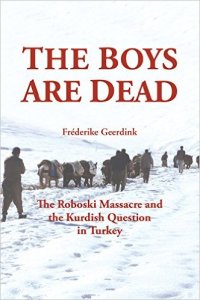
This week’s podcast is with Frederike Geerdink, author of “The Boys are Dead: The Roboski Massacre and the Kurdish Question in Turkey” (Gomidas).
We chat about her time as a journalist in the Kurdish-majority city Diyarbakır, her deportation from Turkey last year, and the troubled history/present of the issue in the wake of the collapse of the peace process last summer.
Download the podcast, or listen below:
Here’s my review of the book at Hürriyet Daily News.
Subscribe to the Turkey Book Talk podcast via iTunes or via PodBean.
Follow Frederike Geerdink on Twitter.
Added bonus: I’ve dug out this interview from last year with sociologist Cem Emrence, co-author of “Zones of Rebellion: Kurdish Insurgents and the Turkish State” – quite a thought-provoking book.
Ryan Gingeras on ‘Atatürk: Heir to an Empire’
January 23, 2016
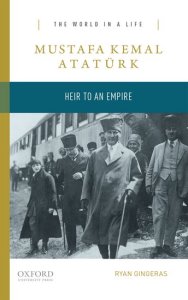
This week I spoke to author Ryan Gingeras on his new biography of Turkey’s founding father, “Mustafa Kemal Atatürk: Heir to an Empire” (Oxford University Press).
Or just listen here:
Here’s an edited transcript of the interview.
And here’s my review of the book (which is highly recommended).
As I mentioned in the podcast, here’s a link to an interview I did with Ryan last year about another of his books, “Heroin, Organized Crime, and the Making of Modern Turkey.”
Subscribe to the Turkish Book Talk Podcast via PodBean, or via iTunes.
Nilgün Önder on the economic transformation of Turkey since 1980
December 12, 2015
This week’s podcast is with Nilgün Önder of the University of Regina, who joined to discuss her new book “The Economic Transformation of Turkey: Neoliberalism and State Intervention” (IB Tauris).
It’s a great and detailed book on some of the paradoxes of the economic reforms passed after Turkey’s military coup of 1980 – rather than rolling back, the authority of the state was substantially deepened by the reforms.
Download the podcast here. Or listen/subscribe via PodBean.
Here’s a transcript of the interview at Hürriyet Daily News.
And here’s my review of the book.

Subscribe to the Turkey Book Talk podcast via iTunes, PodBean, or Soundcloud.
Thanks for listening!
Lastly, apologies for the dodgy sound quality in these first few podcasts. I’ve got a new mic in the post so that should go some way to sorting it out.
Ozan Özavcı on liberalism in Turkey
October 10, 2015
This week I spoke to Ozan Özavcı about his book “Ahmet Ağaoğlu and the Genealogy of Liberalism in Turkey” (Brill), on the life of one of the most prominent intellectuals bridging the late Ottoman/early republican years.
Download the podcast of the interview here.
Subscribe to the Turkey Book Talk Podcast via iTunes, via Podbean, or via Soundcloud.
Here’s an edited version of the interview at HDN.
And here’s my review of the book.
If you’re interested in the subject, here’s my interview with Ankara University’s Alexandros Lamprou from earlier this year, discussing social engineering in the early Turkish Republic.

Finally, a shout out to my brother James Armstrong, who has designed the terrific icon for my podcast above. Follow him on Twitter and check out his great work at his website.
I should say that the two things in the title are unrelated.
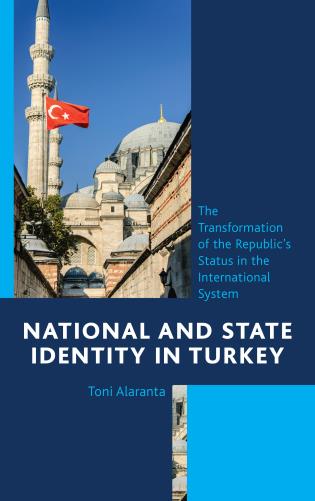
My interview this week was with Toni Alaranta of the Finnish Institute of International Affairs, discussing his new book “National and State Identity in Turkey: The Transformation of the Republic’s Status in the International System” (Rowman). In the book, Alaranta traces how the entrenchment in power of authoritarian political Islam in Turkey after 2002 was critically aided by the West’s misguided search for a “moderate Muslim democracy” after the end of the Cold War and the 9/11 terror attacks.
Read the interview at the Hürriyet Daily News here.
And read my review of the book here.
This also marks my first step into the world of podcasting. From now on I’ll be publishing these author interviews in audio as well as written form, through my new podcast “Turkey Book Talk.” The podcast will include some extra parts that didn’t make the written edit, as well as some fancy music, etc.
Click here to listen to the first episode (a work in progress as I’m still figuring out the best host, player, etc).
To subscribe to the feed, visit my PodBean page.
Please spread the word to anyone you think may be interested, and do get in touch with any suggestions on how I can improve the podcast!
Turkey’s LGBT crackdown
July 31, 2015
I’ve been walking in north Wales so haven’t had chance to post this piece I wrote on Turkey’s nervous LGBTIs and the “perils of visibility.” Clouds have darkened in recent weeks for LGBTIs in Turkey after last month’s police crackdown on the annual Pride March and a broader uptick in violent incidents and homophobic rhetoric.
The paradox I try to explain in the article is that this has accompanied an increasingly vocal LGBT rights activism that has flourished in the country over the past couple of decades:
“Yeşim Başaran, who works at LGBTI rights group Lambda Istanbul, agrees that a ‘conservative resistance’ has arisen in response to the campaign for recognition. ‘The two things have happened at the same time. The issue of LGBTI rights has become more visible in the media and activists have become more vocal. Opposition parties have nominated gay candidates in elections and have LGBTI people working in their party organizations. That would not have happened a few years ago,’ she says. ‘Life for LGBTIs in Turkey was never easy. They already were subject to attacks in public and within their families. They were at risk of being fired from their jobs or committing suicide. But in the last few weeks it has become more concrete.'”
Read the whole piece at Balkanist.

Istanbul’s 2013 Pride March, in happier times. Source: Wikipedia Commons.
It was particularly interesting to meet the pro-Erdoğan AK-LGBTI group. Many people assumed they were trolls, but I can confirm that they are serious and in the process of becoming a legally recognised “dernek” (association). Turkey is certainly full of surprises.
Turkey and the PKK at another crossroads
July 25, 2015
This week saw some of the worst clashes between Turkish security forces and the Kurdistan Workers’ Party (PKK) since the (now ended?) peace process officially started over two years ago.
As a result my interview and review this week are sadly topical. I spoke to Cem Emrence, who co-authored a new title on the history of the Turkey-PKK conflict, “Zones of Rebellion: Kurdish Insurgents and the Turkish State.” It is a slim but rich book, elaborating a complex theory of path dependence that has limited the options of both the Turkish state and the PKK over three decades and ultimately led to stalemate.
Read the Q&A with Emrence in Hürriyet Daily News here.
And read my review of the book from earlier this week here.

And something completely different: In next week’s Times Literary Supplement I review a new English selection of the great Sait Faik’s stories. It’s only available in print form so you’ll have to seek out an actual real physical copy of the TLS if you’re interested in reading it.
The Circassian diaspora in Turkey
May 9, 2015
This week I interviewed Zeynel Abidin Besleney, the author of a new book on the history of Circassian political activism in Turkey. The book is probably the most detailed available title on what is a pretty obscure subject, and I learnt plenty from it.
Here’s a link to the interview with Besleney at the Hürriyet Daily News.
And here’s my review of the book.

The rise of political Islam in Turkey
March 7, 2015
My review/interview double-header this week was based on “The Rise of Political Islam in Turkey: Urban Poverty, Grassroots Activism and Islamic Fundamentalism” by Kayhan Delibaş, who works at Kent University and Turkey’s Adnan Menderes University.
The book is well worth reading for anyone looking for a deeper look into the political context of the emergence of Islamist parties in Turkey in the 1980s and 1990s. While it’s true that political Islam is an intrinsically transnational phenomenon, it’s always worth remembering the specific conditions that have facilitated it’s emergence, which of course differ everywhere.
Here’s my review of the book in the Hurriyet Daily News.
And here’s my conversation with its author Kayhan Delibaş.

The Turkish gov’t takes on the foreign media
December 10, 2014
I’ve written a piece for Foreign Policy on the deterioration of the Turkish government’s image in the international media, and Turkey’s aggressive response:
The foreign media image of President Recep Tayyip Erdoğan and the Turkish government has shattered over the past 18 months, and in response Turkey has ramped up an international information blitzkrieg.
The tone is becoming increasingly bitter, motivated by a conviction that the foreign media is a propaganda weapon deployed by the West to attack the ruling Justice and Development Party (AKP). Patriotic Turks are called on to rally behind their government in the name of national sovereignty.
This sense of embattled defiance is important to understand, and reveals much about the resentful mindset gripping the state. Suspicion about the foreign press is hardly new in Turkey, but it’s unfortunate to see the worst of such sentiments returning – openly sponsored by Erdoğan and the AKP’s top brass. The president himself is even managing to turn international criticism to his own advantage, as evidence that the West is implacably hostile to Turkey and its fearless, truth-telling leader — a useful populist line ahead of next June’s crucial parliamentary elections.
Read the full article here.
‘Pan-Islamist PM Davutoğlu’ thesis ruffling feathers
September 3, 2014
Is Turkey’s new Prime Minister Ahmet Davutoğlu a pan-Islamist ideologue, with imperialist ambitions to reshape the Middle East into a post-national order based on Turkish and Sunni religious supremacy? That is the blockbuster thesis currently turning heads both inside and outside Turkey, thanks to a series of recent articles by Marmara University Assistant Professor Behlül Özkan.
Özkan, a one-time student of Davutoğlu’s from the latter’s time as an international relations professor, bases his provocative conclusion on close study of 300 articles penned by Davutoğlu in the 1980s and 90s. He first made his case in an essay for the August-September edition of the International Institute for Strategic Studies’ journal“Survival,” before introducing it to a wider English audience with pieces on Al-Monitor and in the New York Times.
In his NYT op-ed “Turkey’s Imperial Fantasy” published last week, Özkan remembered Professor Davutoğlu as a hard-working and “genial figure” who “enjoyed spending hours conversing with his students.” In contrast with his academic peers, however, he believed that Turkey would “soon emerge as the leader of the Islamic world by taking advantage of its proud heritage and geographical potential … encompass[ing] the Middle East, the Caucasus and Central Asia, and include Albania and Bosnia”:
Mr. Davutoglu’s classroom pronouncements often sounded more like fairy tales than political analysis. He cited the historical precedents of Britain, which created a global empire in the aftermath of its 17th-century civil war, and Germany, a fragmented nation which became a global power following its 19th-century unification. Mr. Davutoglu was confident that his vision could transform what was then an inflation-battered nation, nearly torn apart by a war with Kurdish separatists, into a global power.
He crystallized these ideas in the book ‘Strategic Depth,’ in 2001, a year before the Justice and Development Party, or A.K.P., came to power. In the book, he defined Turkey as a nation that does not study history, but writes it — a nation that is not at the periphery of the West, but at the center of Islamic civilization … Mr. Davutoglu saw himself as a grand theorist at the helm of his country as it navigated what he called the ‘river of history.’ He and his country were not mere pawns in world politics, but the players who moved the pieces.
Özkan rejects that Davutoğlu’s ideas amount to “neo-Ottomanism,” as often accused. Instead, he gives Turkey’s new prime minister the even heftier label of “pan-Islamist”:
The movement known as Ottomanism emerged in the 1830s as the empire’s elites decided to replace existing Islamic institutions with modern European-style ones, in fields from education to politics. By contrast, Mr. Davutoglu believes that Turkey should look to the past and embrace Islamic values and institutions.
But, ironically, he bases his pan-Islamist vision on the political theories that were used to legitimize Western imperial expansion prior to 1945. While purporting to offer Turkey a new foreign policy for the 21st century, his magnum opus draws on the outdated concepts of geopolitical thinkers like the American Alfred Thayer Mahan, the Briton Halford Mackinder and the German Karl Haushofer, who popularized the term “Lebensraum,” or living space, a phrase most famously employed by Germany during the 1920s and 1930s to emphasize the need to expand its borders.
According to Mr. Davutoglu, the nation states established after the breakup of the Ottoman Empire are artificial creations and Turkey must now carve out its own Lebensraum — a phrase he uses unapologetically. Doing so would bring about the cultural and economic integration of the Islamic world, which Turkey would eventually lead. Turkey must either establish economic hegemony over the Caucasus, the Balkans and the Middle East, or remain a conflict-riven nation-state that risks falling apart.
After becoming Turkey’s foreign minister from 2009, Davutoğlu had the opportunity to put these ideas into practice – with disastrous results:
As foreign minister, Mr. Davutoglu fervently believed that the Arab Spring had finally provided Turkey with a historic opportunity to put these ideas into practice. He predicted that the overthrown dictatorships would be replaced with Islamic regimes, thus creating a regional ‘Muslim Brotherhood belt’ under Turkey’s leadership.
He sought Western support by packaging his project as a ‘democratic transformation’ of the Middle East. Yet today, instead of the democratic regimes promised three years ago, Turkey shares a border with ISIS’s self-proclaimed caliphate. Two months ago, its fighters raided the Turkish consulate in the Iraqi city of Mosul, and is still holding 49 Turkish diplomats hostage. Mr. Davutoglu, who has argued that Turkey should create an Islamic Union by abolishing borders, seems to have no idea how to deal with the jihadis in Syria and Iraq, who have made Turkey’s own borders as porous as Swiss cheese.
To repair this dire situation as prime minister, Özkan says Davutoğlu needs to pragmatically reconnect Turkey’s regional policy with reality:
The new prime minister is mistaken in believing that the clock in the Middle East stopped in 1918 — the year the Ottoman Empire was destroyed — or that Turkey can erase the region’s borders and become the leader of an Islamic Union, ignoring an entire century of Arab nationalism and secularism. What Mr. Davutoglu needs to do, above all, is to accept that his pan-Islamist worldview, based on archaic theories of expansionism, is obsolete.
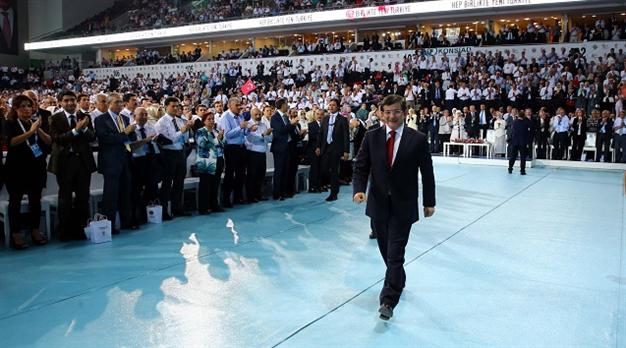
Turkey’s new prime minister, Ahmet Davutoğlu (Photo: Anadolu Agency)
Özkan’s thesis certainly seems to have struck a chord, with plenty of prominent figures declaring their admiration. Still, the reception has not been universally positive. In Radikal, political scientist Fuat Keyman expressed skepticism about the use of any catch-all term such as “pan-Islamist” to accurately describe Davutoğlu’s worldview:
As someone who has read many – if not all – of Davutoğlu’s works, it’s difficult to understand how Dr. Özkan has drawn the conclusion that Davutoğlu is a pan-Islamist (which is problematic as a term anyway).
It shouldn’t be forgotten that such expressions have only recently started to be used for Erdoğan and Davutoğlu. It could be said that irresponsible, anti-Semitic writings and comments made [by others] in Turkey recently have contributed to the increased use of terms like ‘pan-Islamism’ abroad.
Still, I don’t think terms such as ‘neo-Ottoman,’ ‘sectarian,’ or ‘pan-Islamist’ are useful or appropriate when describing Davutoğlu’s worldview, or his approach to foreign and domestic politics … Criticism of Turkish foreign policy should instead focus on the strategic errors that have been made, the exaggeration of Turkey’s power, and recently its distancing from democracy.
In Zaman, meanwhile, Şahin Alpay similarly questioned the validity of any term that sought to place a rigid label on the often multi-dimensional policies of Davutoğlu and the AKP:
The foreign policies pursued by Erdoğan and Davutoğlu do not fit into the mold of ‘neo-Ottoman,’ ‘pan-Islamist,’ or ‘Sunni sectarian.’ It’s difficult to apply a single ideological label for a foreign policy that started negotiations to join the EU, gave NATO permission for its Kürecik bases, received prizes from the Israeli lobby, struck up a personal friendship with Bashar al-Assad, recommended secularism to Egypt, and felt Tehran to be its own home. Rather than being based on certain principles, the policies pursued by the AKP, domestically and abroad, can be said to be either pragmatic, populist, opportunistic, or aimed at securing or protecting power. But if an ideological tag is necessary, Islamic Kemalism or religious nationalism could be used.
A deeper and more academic critique of Özkan’s work that has attracted particular attention was posted on the personal website of Ali Balcı, an associate professor at Sakarya University. Balcı doesn’t take issue with Özkan’s use of such a blanket term as “pan-Islamist,” but voices more substantial reservations about the underlying fundamentals of his work:
Özkan argues that the ‘pan-Islamic’ conclusions and analyses made by Davutoğlu as an academic in the second half of the 1980s and the 1990s can be used to understand Davutoğlu’s later foreign policy. This strongly indicates a ‘once an Islamist always an Islamist’ assumption, suggesting that Davutoğlu’s essential core is unchanging in the face of different times and conditions … The work’s fundamental problem is that despite all of the changes in conditions [since Davutoğlu wrote], it still puts forward that a pan-Islamist is always a pan-Islamist – a reductionist and essentialist reading.
Balcı says it isn’t clear why Özkan searches for proof of Davutoğlu’s “pan-Islamism” in his old academic articles, while he supports the “neo-Ottoman” label for former Turkish President Turgut Özal using evidence from the latter’s period in office:
Examples of Özal’s neo-Ottomanism given by the writer can also be given for the AK Parti’s time in power and in Davutoğlu’s period as foreign minister. As stated by the writer, Özal applied for EU membership in 1987, worked to broaden influence in the Caucasus and the Balkans, tried to solve the Kurdish problem through reforms, and worked to establish control in its relations with Iraq. If all of these practical realities have also emerged during the AK Parti and Davutoğlu eras, how can Özal be considered a neo-Ottoman while Davutoğlu is a pan-Islamist? In answer to this question the writer only presents certain criticisms of Özal made by Davutoğlu. But while proving Özal’s neo-Ottomanism with practical examples, [Özkan] doesn’t answer why he looks for examples of Davutoğlu’s pan-Islamism in articles written while he was an academic.
Some of these criticisms are valid, but some are wide of the mark. It may not be true that “once a pan-Islamist is always a pan-Islamist,” but there is plenty of evidence that today’s Davutoğlu still sympathizes with the views expressed in his old academic work. While he certainly has demonstrated a keen sense of pragmatism and adaptability in the past, there’s can be little doubt that he has steadily moved away from this realism and back to a far more dogmatic and ideological approach in recent years. It may be less articulate than Balcı’s blog post, but the government’s hagiographical short film that accompanied Davutoğlu’s recent nomination as prime minister was equally germane to the issue: “He is the awaited spirit of Abdülhamid,” the lyrics say at one point, referencing the 19th century sultan who deployed Islamism to combat the collapse of the Ottoman Empire. “For the nation, for the ummah, for Allah.”
Now that Davutoğlu is in the prime minister’s chair, the question is whether he will continue to be seduced by his ideological convictions and lose touch with his former pragmatism. If he does, then Özkan’s thesis will look even more prescient.
By now, the basics are well known. The mainstream Turkish media was found to be woefully inadequate when it came to reporting the enormous anti-government protests that recently erupted across the country. As Turks took to the streets to confront ruthless security forces armed with gallons of tear gas, pressurized water, tanks and batons, those still at home turned to TV news stations only to find nature documentaries and panel shows discussing liposuction.
It’s fair to say that the protests still ongoing across Turkey have not been the Turkish media’s finest hour. In fact, these events – perhaps more than any previously – have exposed for domestic and international observers just how compromised the Turkish media has become. (As many have observed, this comes with a bitter taste for Kurds, who ask why many now protesting did little when the Kurds were complaining about scant media coverage of their own troubles.) Ironically enough, the lack of TV coverage appears only to have inspired more protests. According to a Bilgi University survey among 3,000 young Gezi Park protesters, 84% cited muted media coverage as one of the main reasons for taking to the streets. This also explains the graffiti around Istanbul lambasting the “sold-out” media, the satirical memes circulating like wildfire on the internet, and the NTV broadcast van trashed and overturned in the middle of Taksim Square.
As is now well documented, where mainstream media failed, social media stepped in. It is estimated that more than 3,000 tweets per minute were sent about the protests after midnight on May 31; Twitter hashtags telling the Turkish media to do its job were trending worldwide, while CNN Türk was airing a documentary about penguins. This also resulted in large demonstrations being organised outside the Habertürk and NTV offices in the following days, which, in a grim irony, NTV ended up reporting on.
Indeed, Twitter became the only place to go to for information (and disinformation) as events unfolded; exposing the enormous chasm that now exists between independent new media and the toothless media corporations in Turkey. While this was no real revelation, (the same happened after the Uludere/Roboski massacre in December 2011, when live tweeters at the scene bypassed and shamed the established media groups), the scale of the awareness that the latest events stirred is unprecedented. Reflecting the government’s frustration at being unable to do much about what gets posted online, Erdoğan described social media as a “trouble” full of “unmitigated lies” (if he was referring to the deluded Twitter ramblings of Ankara Mayor Melih Gökçek he may have had a point). One day later, Deputy Prime Minister Bulent Arınç declared that the government “could have shut down Internet access, but didn’t.” Still, there were other ways for the government to make its point, as 33 protesters were detained in the western city of İzmir for tweets they had posted.
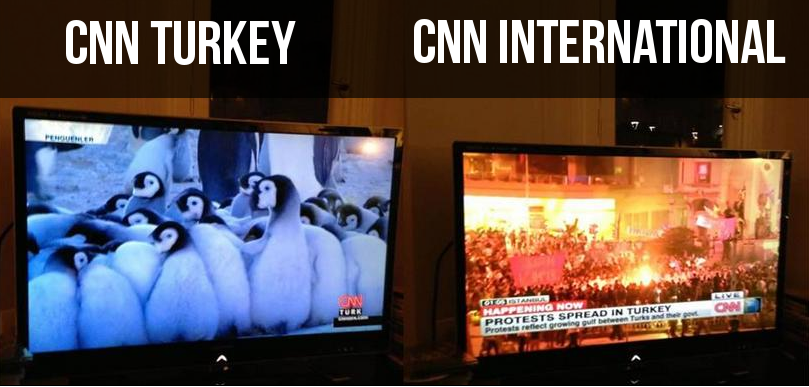
CNN International shows live coverage of the demonstrations in Taksim Square, while CNN Türk airs a penguin documentary.
Turkey-watchers are familiar with the country’s chronic press freedom problems. One of the root causes is related to the ownership structures of Turkish media companies, which opens them up to political pressure, an issue that Yavuz Baydar repeatedly – and convincingly – returns to. One small example of this which I didn’t see anyone else pick up on came with a report, released in April, by respected think-tank the Turkish Economic and Social Studies Foundation (TESEV), titled “Policy Suggestions for Free and Independent Media in Turkey.” The report was thorough and fair, particularly focusing on the crippling conflict of interest that comes when major media outlets are owned by large holding companies involved in other sectors. Although the report was covered by the Gülen-affiliated Zaman newspapers, no newspapers from the Doğan Media Group (owned by billionaire Aydın Doğan – perhaps Exhibit A of the above problem) – Hürriyet, its English language arm Hürriyet Daily News, or Radikal – mentioned it.
With the large media companies so obviously unfit to perform their Fourth Estate function, the focus is shifting to new online independent media. Along with the agenda-setting Twitter, the website T24 has also developed quite a reputation in providing brave, reliable, independent reporting. Veteran journalist Hasan Cemal, for example, after being controversially fired by daily Milliyet, was taken on by T24 and has since written a series of articles based on time spent with the retreating Kurdistan Workers’ Party (PKK) rebels in southeast Turkey, including an interview with military head of the PKK, Murat Karayılan. The Demirören Holding-owned Milliyet would not touch such a daring project. Freely-available online and with little advertising, I’m not sure how T24 is actually funded (if anybody does, please do let me know), or whether it’s a viable long-term model for more serious journalism in Turkey, bypassing the established news organisations. Still, with mainstream media having so thoroughly discredited itself throughout the Gezi Park protests, the void will have to be filled by something if Turkey is to become more democratic.


