Brand new Turkey Book Talk episode.
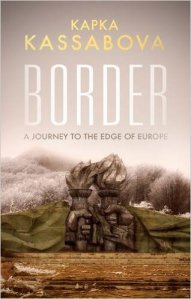
KAPKA KASSABOVA joins the pod to discuss her book “BORDER: A JOURNEY TO THE EDGE OF EUROPE” (Granta), on the troubled past and present of the border between Turkey, Greece and Bulgaria.
Download the episode or listen below.
Listen out for a cameo appearance by my cat at around the 23:09 mark.
Here’s my review of the book at HDN.
Subscribe to Turkey Book Talk : iTunes / PodBean / Stitcher / Acast / RSS
Follow on Facebook or Twitter.
*SPECIAL OFFER*
You can support Turkey Book Talk by taking advantage of a 33% discount plus free delivery (cheaper than Amazon) on five different titles, courtesy of Hurst Publishers:
- ‘Jihad and Death: The Global Appeal of Islamic State’ by Olivier Roy
- ‘The Circassian: A Life of Eşref Bey, Late Ottoman Insurgent and Special Agent’ by Benjamin Fortna
- ‘The New Turkey and its Discontents’ by Simon Waldman and Emre Çalışkan
- ‘The Poisoned Well: Empire and its Legacy in the Middle East’ by Roger Hardy
- ‘Out of Nowhere: The Syrian Kurds in Peace and War’ by Michael Gunter
Follow this link to get that discount from Hurst Publishers.
Another way you can support is by making a donation to Turkey Book Talk via Patreon. Many thanks to current supporters Özlem Beyarslan, Steve Bryant, Celia Jocelyn Kerslake and Aaron Ataman.
Hale Yılmaz on social transformation in Turkey, yesterday and today
January 27, 2017
In this new Turkey Book Talk episode Southern Illinois University associate professor of history Hale Yılmaz speaks about her book “Becoming Turkish: Nationalist Reforms and Cultural Negotiations in Early Republican Turkey, 1923-1945” (Syracuse University Press).
Download the episode or listen below.
Subscribe to Turkey Book Talk : iTunes / PodBean / Stitcher / Acast / RSS
Follow on Facebook or Twitter.

Background reading:
- Alexandros Lamprou discusses his book on the People’s Houses: “Nation-Building in Modern Turkey: The People’s Houses, the State and the Citizen”.
- A visit to Mahmut Makal on the 60th anniversary of his autobiographical book “Bizim Köy” (Our Village), describing the tough life of a village teacher in early republican Turkey.
If you enjoy or benefit from the podcast and want to support it, click here to make a small or large donation to Turkey Book Talk via Patreon.
Many thanks to my current supporters Özlem Beyarslan, Steve Bryant, Celia Jocelyn Kerslake and Aaron Ataman.
Kaya Genç on rage and revolution in modern Turkey
November 25, 2016
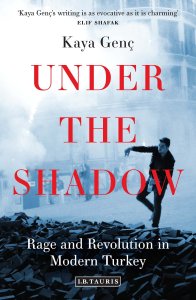
Kaya Genç returns to the Turkey Book Talk podcast. This time he joins to discuss his new book “Under the Shadow: Rage and Revolution in Modern Turkey,” which profiles young Turks from across the political spectrum.
Download the episode or listen below:
Subscribe to Turkey Book Talk : iTunes / PodBean / Stitcher / Facebook / RSS
My review of the book will be appearing in the next couple of weeks in the Times Literary Supplement so keep your eyes peeled for that.
Here’s the episode from earlier this year with Kaya discussing “An Istanbul Anthology”, which he edited:
NB: If you like this podcast and want to support independent podcasting, click here to make a small or large monetary donation to Turkey Book Talk via Patreon.
Many thanks to current supporters Özlem Beyarslan, Steve Bryant, Celia Jocelyn Kerslake and Aaron Ataman.
Özge Samancı on ‘Dare to Disappoint: Growing up in Turkey’
October 12, 2016
Özge Samancı talks to Turkey Book Talk about her bestselling graphic memoir “Dare to Disappoint: Growing up in Turkey” (Farrar Straux Giroux). It’s a charming book and everyone I know who has read it raves about it.
Download the podcast episode or listen below.
Subscribe to Turkey Book Talk : iTunes / PodBean / Stitcher / Facebook / RSS
Here’s my review of the book from a few months ago.

Many thanks to current supporters Özlem Beyarslan, Steve Bryant, Andrew Cruickshank and Aaron Ataman.
Cem Emrence on ‘remapping the Ottoman Middle East’
July 15, 2016
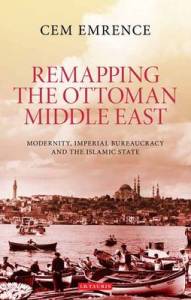
Cem Emrence speaks to Turkey Book Talk about his book “Remapping the Ottoman Middle East: Modernity, Imperial Bureaucracy and Islam” (IB Tauris).
The book looks at Ottoman modernization through the 19th and early 20th centuries using an original model of “three-trajectories”: The coast, the interior, and the frontier, which each followed distinct paths to modernity.
Download the episode or listen below.
Subscribe to Turkey Book Talk: iTunes / PodBean / Stitcher / Facebook / RSS
Here’s my review of the book at Hürriyet Daily News.
If you like Turkey Book Talk and want to support independent podcasting, you can make a small or large monetary donation to the show via Patreon. Many thanks to current supporters Özlem Beyarslan, Steve Bryant and Andrew Cruickshank.
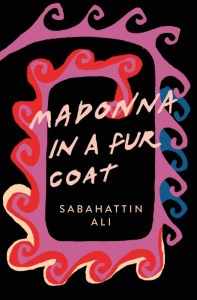
Maureen Freely joins to discuss the tragic life of author Sabahattin Ali and her translation of his classic 1943 novel “Madonna in a Fur Coat,” just published in a first ever English edition by Penguin.
Download the episode or listen below:
Subscribe to Turkey Book Talk: iTunes / PodBean / Stitcher / Facebook / RSS
Check my review of the book at Hürriyet Daily News, previously published in the Times Literary Supplement.
Support the Turkey Book Talk podcast with a per episode donation via Patreon – Many thanks to current supporters Özlem Beyarslan, Steve Bryant and Andrew Cruickshank.
Shadi Hamid on ‘Islamic exceptionalism’
June 4, 2016
Brookings Institution senior fellow Shadi Hamid joins the pod to discuss his new book ‘Islamic Exceptionalism: How the Struggle Over Islam is Reshaping the World’ (St Martins).
Download the episode or listen below:
Subscribe to Turkey Book Talk: iTunes / PodBean / Stitcher / Facebook / RSS
And here’s my review of the book at HDN.

Support the podcast with a per episode donation via Patreon! Many thanks to current supporters Özlem Beyarslan, Steve Bryant and Andrew Cruickshank.
Cihan Tuğal on the fall of the ‘Turkish model’
April 16, 2016
Cihan Tuğal, a sociologist at UC Berkeley, chats about “The Fall of the Turkish Model: How the Arab Uprisings Brought Down Islamic Liberalism” (Verso), charting how Turkey went from a model “Muslim democracy” for the Middle East to an increasingly authoritarian state.
Download the podcast or listen below:
Subscribe: iTunes / PodBean / Stitcher / Facebook / RSS
Here’s my review of the book at Hürriyet Daily News.

Support the Turkey Book Talk podcast via my Patreon account. You can help me keep producing the podcast by making a monetary donation, big or small, on a per episode basis! Many thanks to current supporters Sera Aleksandra Marshall and Andrew Cruickshank.
Mustafa Gurbuz on ‘rival Kurdish movements in Turkey’
March 12, 2016
The latest Turkey Book Talk podcast is with Mustafa Gürbüz, the author of “Rival Kurdish Movements in Turkey: Transforming Ethnic Conflict” (Amsterdam University Press).
Apologies for the delay in dropping this latest pod. I’ve had a technical nightmare.
Download the podcast or listen below.
Subscribe: iTunes / PodBean / Stitcher / Facebook / RSS
Here’s my review of the book at Hürriyet Daily News. Here’s the interview in written form.

Here’s another interview I did with him from last year about his research on the outlawed Kurdish Islamist militant group Hizbullah.
Finally, reposting my recent podcast with Frederike Geerdink discussing the Kurdish issue.
Frederike Geerdink on Turkey’s Kurdish question
February 5, 2016
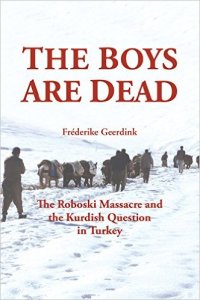
This week’s podcast is with Frederike Geerdink, author of “The Boys are Dead: The Roboski Massacre and the Kurdish Question in Turkey” (Gomidas).
We chat about her time as a journalist in the Kurdish-majority city Diyarbakır, her deportation from Turkey last year, and the troubled history/present of the issue in the wake of the collapse of the peace process last summer.
Download the podcast, or listen below:
Here’s my review of the book at Hürriyet Daily News.
Subscribe to the Turkey Book Talk podcast via iTunes or via PodBean.
Follow Frederike Geerdink on Twitter.
Added bonus: I’ve dug out this interview from last year with sociologist Cem Emrence, co-author of “Zones of Rebellion: Kurdish Insurgents and the Turkish State” – quite a thought-provoking book.
Michael M. Gunter on the Kurds of Syria in peace and war
October 24, 2015
My interview this week was with Professor Michael M. Gunter, author of “Out of Nowhere: The Kurds of Syria in Peace and War” (Hurst).

The slim book charts the Syrian Kurds’ rise to international profile since 2011, taking in their modern history under Ba’athist oppression, their development of “national conscience,” and ties between the PYD in northern Syria and the PKK in Turkey.
Download the interview in podcast form.
Please subscribe to the Turkey Book Talk Podcast via iTunes, via Podbean, or via Soundcloud.
Here’s the text of the interview at HDN.
And here’s my review.
Turkey’s LGBT crackdown
July 31, 2015
I’ve been walking in north Wales so haven’t had chance to post this piece I wrote on Turkey’s nervous LGBTIs and the “perils of visibility.” Clouds have darkened in recent weeks for LGBTIs in Turkey after last month’s police crackdown on the annual Pride March and a broader uptick in violent incidents and homophobic rhetoric.
The paradox I try to explain in the article is that this has accompanied an increasingly vocal LGBT rights activism that has flourished in the country over the past couple of decades:
“Yeşim Başaran, who works at LGBTI rights group Lambda Istanbul, agrees that a ‘conservative resistance’ has arisen in response to the campaign for recognition. ‘The two things have happened at the same time. The issue of LGBTI rights has become more visible in the media and activists have become more vocal. Opposition parties have nominated gay candidates in elections and have LGBTI people working in their party organizations. That would not have happened a few years ago,’ she says. ‘Life for LGBTIs in Turkey was never easy. They already were subject to attacks in public and within their families. They were at risk of being fired from their jobs or committing suicide. But in the last few weeks it has become more concrete.'”
Read the whole piece at Balkanist.

Istanbul’s 2013 Pride March, in happier times. Source: Wikipedia Commons.
It was particularly interesting to meet the pro-Erdoğan AK-LGBTI group. Many people assumed they were trolls, but I can confirm that they are serious and in the process of becoming a legally recognised “dernek” (association). Turkey is certainly full of surprises.


 Turkey Book Talk