Cemil Aydin on the illusion of the Muslim world
May 5, 2017
CEMIL AYDIN, associate professor of history at the University of North Carolina at Chapel Hill, speaks to Turkey Book Talk about “THE IDEA OF THE MUSLIM WORLD: A GLOBAL INTELLECTUAL HISTORY” (Harvard University Press).
It is a bracing book. Aydin argues that the idea there is a discreet “Muslim world” with a set of shared essential, civilisation-defining characteristics is little more than “ahistorical romanticism,” a fantastical illusion that has never existed.
Download the episode or listen below.
My review will be published in the coming weeks in the Times Literary Supplement, so keep your eyes peeled for that.
Subscribe to Turkey Book Talk : iTunes / PodBean / Stitcher / Acast / RSS

*SPECIAL OFFER*
You can support Turkey Book Talk by taking advantage of a 33% discount plus free delivery (cheaper than Amazon) on five different titles, courtesy of Hurst Publishers:
- ‘Jihad and Death: The Global Appeal of Islamic State’ by Olivier Roy
- ‘The Circassian: A Life of Eşref Bey, Late Ottoman Insurgent and Special Agent’ by Benjamin Fortna
- ‘The New Turkey and its Discontents’ by Simon Waldman and Emre Çalışkan
- ‘The Poisoned Well: Empire and its Legacy in the Middle East’ by Roger Hardy
- ‘Out of Nowhere: The Syrian Kurds in Peace and War’ by Michael Gunter
Follow this link to get that discount from Hurst Publishers.
Another way to support the podcast, if you enjoy or benefit from it: Make a donation to Turkey Book Talk via Patreon. Many thanks to current supporters Michelle Zimmer, Steve Bryant, Celia Jocelyn Kerslake and Aaron Ataman.
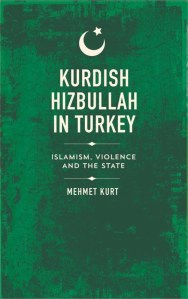
Queen Mary University fellow MEHMET KURT joins the Turkey Book Talk podcast to chat about “KURDISH HIZBULLAH IN TURKEY: ISLAMISM, VIOLENCE AND THE STATE” (Pluto Press).
It is a remarkable book based on Kurt’s personal experiences, which gave him extraordinary access to a shady and secretive group.
Download the episode or listen below.
Here’s my review of the book at HDN.
Subscribe to Turkey Book Talk : iTunes / PodBean / Stitcher / Acast / RSS
Allow me to repost this related conversation from a few weeks ago with Cuma Çiçek on his book “The Kurds of Turkey: National, Religious and Economic Identities” (IB Tauris):
*SPECIAL OFFER*
You can support Turkey Book Talk by taking advantage of a 33% discount plus free delivery (cheaper than Amazon) on five different titles, courtesy of Hurst Publishers:
- ‘Jihad and Death: The Global Appeal of Islamic State’ by Olivier Roy
- ‘The Circassian: A Life of Eşref Bey, Late Ottoman Insurgent and Special Agent’ by Benjamin Fortna
- ‘The New Turkey and its Discontents’ by Simon Waldman and Emre Çalışkan
- ‘The Poisoned Well: Empire and its Legacy in the Middle East’ by Roger Hardy
- ‘Out of Nowhere: The Syrian Kurds in Peace and War’ by Michael Gunter
Follow this link to get that discount from Hurst Publishers.
Another way to support the podcast, if you enjoy or benefit from it: Make a donation to Turkey Book Talk via Patreon. Many thanks to current supporters Özlem Beyarslan, Steve Bryant, Celia Jocelyn Kerslake and Aaron Ataman.
Markus Dressler on the ‘making of Turkish Alevi Islam’
November 28, 2015
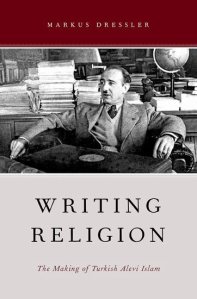
This week’s interview/podcast is with Markus Dressler, author of the book “Writing Religion: The Making of Turkish Alevi Islam.” The book examines how the idea of Alevism is an almost entirely modern concept, formed towards the end of the Ottoman Empire as part of efforts to integrate disparate Anatolian religious groups into the Turkish and Muslim nation.
Download a podcast of our conversation.
Here’s a transcript of the interview at the Hürriyet Daily News.
Here’s my review of the book.
Subscribe to the Turkey Book Talk podcast via iTunes, PodBean, or Soundcloud.
NB – I’ve also just created a Facebook page for the podcast, where I’ll be posting new episodes. Check it out here.
A competition for the ‘giant’ Çamlıca Mosque
August 1, 2012
In May, Prime Minister Recep Tayyip Erdoğan announced to the Turkish media his desire to see a “giant” mosque built on Istanbul’s Çamlıca Hill. In his latest “crazy plan” for the city, Erdoğan said he wanted it to be a mosque that could “be seen from everywhere,” and declared that construction would begin within two months. Çamlıca is situated on the Asian side of the city, and despite currently being the site of a number of enormous television and radio reception towers, the hill is one of Istanbul’s few remaining green, unpopulated spaces. On June 8 the Environment and City Planning Ministry announced that a 250,000 square metre area on Çamlıca Hill had been identified for the project.
The Turkish press is predictably divided along secular/religious lines on the issue. There are, however, a few voices amongst government-supporting newspapers questioning the necessity of a mosque when there are no residents nearby for it to serve. Such objections miss the point that a new mosque on Çamlıca would undoubtedly afford TOKİ developers a golden opportunity to roll up their sleeves in the area(!)

An appropriately crude impression of how a mosque on Çamlıca Hill might look.
Late in June, liberal daily Radikal featured an interview with Ahmet Turan Köksal, professor of architecture at Gaziantep’s Zirve University, to discuss modern tendencies in mosque-building and his thoughts on the Çamlıca plans. He is skeptical: “A mosque should be for the community, not for show. For me, being a mosque architect means only doing work that has a function for the community …. If they want to make a mosque like an Olympic stadium on Çamlıca Hill and want to show off to their friends and rivals, then I’m against this,” he said.
Nevertheless, at the beginning of July, Milliyet included an interview with architect “Hacı” Mehmet Güler, who said he had been charged by the prime minister to make preparations for the new mosque. Güler said it would be designed in a “classical style,” and – in a fine example of “Muslim modesty” – that plans were being drawn up to have it feature the world’s tallest minarets, even surpassing those of the Mosque of the Prophet in Medina.
Following this interview, the issue seemed to fall off the agenda. It was thus quite a surprise to find a number of Turkey’s religion-friendly newspapers recently carrying advertisements announcing: “Çamlıca is searching for its architect!” The advertisements appeal to architects to submit their design ideas, in a competition to find an architect for the new mosque.

The competition opened on July 23, and will be accepting submissions until Sept. 3. According to the website of the organization in charge of the project – the rather clumsily named “Association to Build and Maintain Istanbul Mosques and Educational-Cultural Services” – the winning design will be “suitable for Istanbul’s silhouette and texture, reflect the Ottoman-Turkish style, extend traditions to the future, add value to Istanbul, and become one of Istanbul’s symbols.” The winner, the association has announced, will be awarded the honour of designing the ‘Recep Tayyip Erdoğan’ as yet unnamed mosque, as well as 300,000 Turkish Liras in prize money.
As declared in advertisements for the ruling AKP at the last parliamentary elections, alongside a picture of a vatic looking Erdoğan: “It was a dream, it came true!”
[Published on openDemocracy (11th May 2012): http://www.opendemocracy.net/william-armstrong/temporary-alliance-akp-fethullah-g%C3%BClen-and-religion-in-turkish-politics]
With the ‘Turkish model’ commonly cited as one of the inspirations for the revolts sweeping the Arab region, and with much speculation about the role of Islam in the newly emerging political systems in those countries, a closer look at religion’s potential future role in Turkish politics seems appropriate. Of course, it’s perilous to look into the crystal ball and make predictions about the medium to long term political future of any country, and this is particularly so in a place with such a volatile political landscape as Turkey. However, at the risk of inviting egg on my face at some point in the future, I would fairly confidently suggest that Turkey will not simply ‘evolve away’ from politicised Islam any time soon – as many hailing the apparent civilianisation of Turkish politics and liberalisation of the country’s economy often tacitly assume. With roots deeply planted – most notably through the Gülen movement of reclusive religious preacher Fethullah Gülen – it’s clear that religion will continue to play a significant role in Turkish political life, as in social life, for the foreseeable future. Whether its vehicle will remain the current ruling Justice and Development Party (AKP), however, is not quite so certain.
Much has been made of the role and importance of the Fethullah Gülen movement, or cemaat (‘community’), both inside and outside Turkey. It emerged as a significant force in the 1980s, initially coalescing around the personality of religious preacher Fethullah Gülen in the western Turkish city of Izmir. The movement now aims to promote conservative social values, with a soft, public face emphasising ecumenism, tolerance and inter-faith dialogue. Gülen now resides on a ranch in Pennsylvania, his cemaat having evolved into a multi-million dollar global network, sustained by donations from members and numerous commercial enterprises. It has been at least passively supported by the U.S. since the 1990s as an apparently moderate, relatively liberal expression of Islam. The Gülen movement is now active in 140 countries, with interests including boarding schools, universities, banks, media companies, newspapers, charities, and think tanks. There is also much evidence that its sympathisers have infiltrated into the higher positions of power within the Turkish police force. As the recently “wikileaked” Stratfor intelligence agency cable put it in 2009, the Gülen brotherhood is “perhaps the best-organized grass roots movement in Turkey … [with] a vast social and economic organization, intelligence assets, a global network”. The cable goes on to give an idea of how it sustains and expands itself:
“FGC [Fethullah Gülen Community] businesses advertise heavily on FGC media, while FGC-owned media runs human interest stories and profiles of FGC sympathisers, businesses and schools. FGC members and sympathisers take holidays in FGC-owned hotels and shop at FGC-owned stores and invest in FGC financial institutions. Graduates of FGC cramming schools funded by FGC businesses often serve as teachers in FGC schools overseas. Finally, FGC media, funded by FGC businesses, reacts sharply to any criticism directed at Fethullah Gulen.”
In a country in which conspiracy theories find such fertile ground, the growth of this far-from-transparent and apparently unaccountable religious movement is alarming for many secular Turks. It would be wrong, however, to automatically equate the Gülen movement with the current Islamist government of the Justice and Development Party (AKP), as many observers tend to do. In fact, the two have significantly different origins. The AKP, which was established in 2001 and has been in government since 2002, evolved out of the Sunni orthodox Milli Görüş/Nakshibendi school, which found primary expression in the various political parties established over the years by the late Islamist leader Necmettin Erbakan. The Gülenists, on the other hand, stem from the ‘Nurcu’ movement, whose origins go back to the late-Ottoman/early-Republican-era Islamic theologian Bediuzzaman Said Nursî. In contrast with the Nakshibendis, the Nurcus have always emphasised refraining from direct involvement in politics, and stayed largely non-partisan, their main aim being the rather more vague imana hizmet or ‘service to the faith’. Thus, the Gülen movement has only ever lent passive support to political parties over time, and it’s significant that this support was never extended to Erbakan’s Refah (Welfare) Party in the 1980s and 90s, out of the ashes of which the AKP emerged.
Both the Gülen movement and the AKP share socially conservative values based in Sunni Islam, and have therefore experienced a kind of alliance of convenience or symbiotic coexistence during the AKP’s term in power. The 2007 “e-memorandum” affair (in which the Turkish military attempted a “post-modern” coup similar to that of 1997), as well as the 2008 closure case at the Constitutional Court against the AKP for alleged anti-secular activities, brought the two even closer together. However, there are increasing signs of a growing divergence of interest. The din surrounding the recent reforms to compulsory education generally portrayed the developments as simply another round in the familiar secular-religious tug-of-war in Turkey. However, a more subtle interpretation was outlined in a recent piece by M. Kemal Kaya and Halil M. Karaveli, suggesting that the reforms were in fact – at least partly – the latest episode in the ongoing covert power struggle between the AKP and the Gülenists. Marked differences of opinion have also been apparent on such contentious topics as the recent Turkish football match-fixing investigation, the Kurdish question, and the continuing friction with Israel.
It would thus be wrong to consider the Sunni religious community in Turkey a homogenous whole. Inevitably, there are fissures and power struggles contained within it, and it seems reasonable to suggest that the outcome of these shifting allegiances will be the dynamic that determines the future direction of Turkish politics, rather than the divided and ineffectual secular opposition. The Gülen brotherhood now has roots deeply planted in many of the institutions of public life inTurkey, and its sensitivities must be taken into account by any political group hoping for electoral success. In a largely pious and conservative country, it seems clear that religion will continue to play a significant role in the political sphere in Turkeyfor a while yet. However, with recent indications of high-level schisms, far less clear is whether the AKP, or some other party that understands and is comfortable with this reality, will be the leading political force to harvest its energies.


 Turkey Book Talk