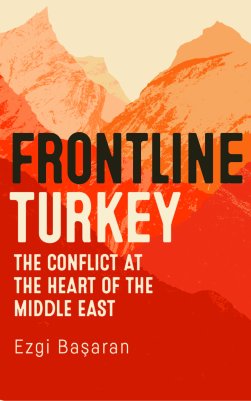
Turkey Book Talk episode #54 – EZGİ BAŞARAN on her book FRONTLINE TURKEY: THE CONFLICT AT THE HEART OF THE MIDDLE EAST (IB Tauris), a 200-page account of the collapse of the Kurdish peace process, the rise and fall of the Gülen movement, and deepening authoritarianism.
Download the episode or listen below.
Here’s my review of the book at HDN.
Subscribe to Turkey Book Talk : iTunes / PodBean / Stitcher / Acast / RSS
* ONE WEEK LEFT FOR OUR SPECIAL OFFER *
You’ve only got until the end of 2017 to support Turkey Book Talk by taking advantage of a 33% discount plus free delivery (cheaper than Amazon) on five different titles, courtesy of Hurst Publishers:
- ‘Jihad and Death: The Global Appeal of Islamic State’ by Olivier Roy
- ‘The Circassian: A Life of Eşref Bey, Late Ottoman Insurgent and Special Agent’ by Benjamin Fortna
- ‘The New Turkey and its Discontents’ by Simon Waldman and Emre Çalışkan
- ‘The Poisoned Well: Empire and its Legacy in the Middle East’ by Roger Hardy
- ‘Out of Nowhere: The Syrian Kurds in Peace and War’ by Michael Gunter
Follow this link to get that discount from Hurst Publishers.
Another way to support the podcast, if you enjoy or benefit from it: Make a pledge to Turkey Book Talk via Patreon. Many thanks to current supporters Michelle Zimmer, Steve Bryant, Jan-Markus Vömel, Celia Jocelyn Kerslake, Aaron Ataman, Max Hoffman, Andrew MacDowall, Paul Levin, Ayla Jean Yackley and Tan Tunalı.
Many thanks for listening all year. Here’s to a podcast-filled 2018!
The Turkey director of International Crisis Group, NIGAR GÖKSEL, joins the podcast to discuss their recent report “MANAGING TURKEY’S PKK CONFLICT: THE CASE OF NUSAYBIN.”
The report examines the 33-year conflict between the Turkish security forces and the PKK through ground-level research in Nusaybin, a small Kurdish-majority town in Mardin province that has been particularly badly hit by violence since the collapse of the peace process in summer 2015.
Download the episode or listen below.
Here’s a link to the report we discuss. It is also downloadable in PDF form. Here it is in Turkish.
Subscribe to Turkey Book Talk : iTunes / PodBean / Stitcher / Acast / RSS

Inside a home in Silopi ruined in clashes between the PKK and Turkish security forces in January 2016. (Source: Wikimedia commons)
*SPECIAL OFFER*
You can support Turkey Book Talk by taking advantage of a 33% discount plus free delivery (cheaper than Amazon) on five different titles, courtesy of Hurst Publishers:
- ‘Jihad and Death: The Global Appeal of Islamic State’ by Olivier Roy
- ‘The Circassian: A Life of Eşref Bey, Late Ottoman Insurgent and Special Agent’ by Benjamin Fortna
- ‘The New Turkey and its Discontents’ by Simon Waldman and Emre Çalışkan
- ‘The Poisoned Well: Empire and its Legacy in the Middle East’ by Roger Hardy
- ‘Out of Nowhere: The Syrian Kurds in Peace and War’ by Michael Gunter
Follow this link to get that discount from Hurst Publishers.
Another way to support the podcast, if you enjoy or benefit from it: Make a donation to Turkey Book Talk via Patreon. Many thanks to current supporters Michelle Zimmer, Steve Bryant, Jan-Markus Vömel, Celia Jocelyn Kerslake and Aaron Ataman.
Ryan Gingeras on Turkey’s ‘deep state of crisis’
May 19, 2017
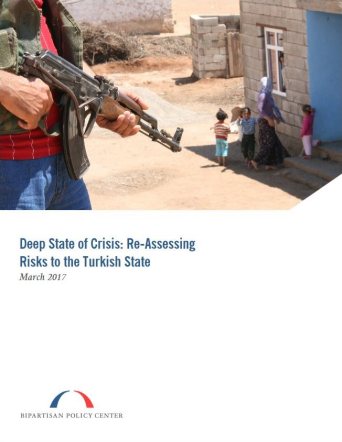
RYAN GINGERAS, associate professor at the Naval Postgraduate School in California, joins Turkey Book Talk once again. This time he is discussing his report, penned for Washington’s Bipartisan Policy Center, “DEEP STATE OF CRISIS: RE-ASSESSING RISKS TO THE TURKISH STATE.”
Download the episode or listen below.
Here’s a link to the PDF of the report we are discussing.
Subscribe to Turkey Book Talk : iTunes / PodBean / Stitcher / Acast / RSS
Ryan previously appeared on the podcast last year to discuss his book “The Fall of the Sultanate: The Great War and the End of the Ottoman Empire, 1908-1922” (Oxford University Press):
He also joined to discuss his biography of Atatürk: “Mustafa Kemal Atatürk: Heir to an Empire” (Oxford University Press):
*SPECIAL OFFER*
You can support Turkey Book Talk by taking advantage of a 33% discount plus free delivery (cheaper than Amazon) on five different titles, courtesy of Hurst Publishers:
- ‘Jihad and Death: The Global Appeal of Islamic State’ by Olivier Roy
- ‘The Circassian: A Life of Eşref Bey, Late Ottoman Insurgent and Special Agent’ by Benjamin Fortna
- ‘The New Turkey and its Discontents’ by Simon Waldman and Emre Çalışkan
- ‘The Poisoned Well: Empire and its Legacy in the Middle East’ by Roger Hardy
- ‘Out of Nowhere: The Syrian Kurds in Peace and War’ by Michael Gunter
Follow this link to get that discount from Hurst Publishers.
Another way to support the podcast, if you enjoy or benefit from it: Make a donation to Turkey Book Talk via Patreon. Many thanks to current supporters Michelle Zimmer, Steve Bryant, Jan-Markus Vömel, Celia Jocelyn Kerslake and Aaron Ataman.
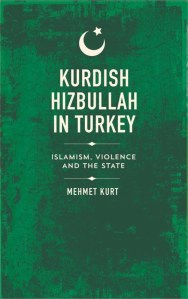
Queen Mary University fellow MEHMET KURT joins the Turkey Book Talk podcast to chat about “KURDISH HIZBULLAH IN TURKEY: ISLAMISM, VIOLENCE AND THE STATE” (Pluto Press).
It is a remarkable book based on Kurt’s personal experiences, which gave him extraordinary access to a shady and secretive group.
Download the episode or listen below.
Here’s my review of the book at HDN.
Subscribe to Turkey Book Talk : iTunes / PodBean / Stitcher / Acast / RSS
Allow me to repost this related conversation from a few weeks ago with Cuma Çiçek on his book “The Kurds of Turkey: National, Religious and Economic Identities” (IB Tauris):
*SPECIAL OFFER*
You can support Turkey Book Talk by taking advantage of a 33% discount plus free delivery (cheaper than Amazon) on five different titles, courtesy of Hurst Publishers:
- ‘Jihad and Death: The Global Appeal of Islamic State’ by Olivier Roy
- ‘The Circassian: A Life of Eşref Bey, Late Ottoman Insurgent and Special Agent’ by Benjamin Fortna
- ‘The New Turkey and its Discontents’ by Simon Waldman and Emre Çalışkan
- ‘The Poisoned Well: Empire and its Legacy in the Middle East’ by Roger Hardy
- ‘Out of Nowhere: The Syrian Kurds in Peace and War’ by Michael Gunter
Follow this link to get that discount from Hurst Publishers.
Another way to support the podcast, if you enjoy or benefit from it: Make a donation to Turkey Book Talk via Patreon. Many thanks to current supporters Özlem Beyarslan, Steve Bryant, Celia Jocelyn Kerslake and Aaron Ataman.
Basharat Peer on Turkey, India and ‘the return of strongmen’
March 24, 2017
New Turkey Book Talk episode.
New York Times journalist BASHARAT PEER joins to discuss “A QUESTION OF ORDER: INDIA, TURKEY, AND THE RETURN OF STRONGMEN” (Columbia Global Reports), exploring the parallels between Erdoğan’s Turkey and Narendra Modi’s India.
We spoke about his reporting for the book, modernization and secularism in Turkey and India, and comparisons between the Kashmir and Kurdish issues.
Download the episode or listen below.
Here’s my review of the book at HDN.
Subscribe to Turkey Book Talk : iTunes / PodBean / Stitcher / Acast / RSS
Follow on Facebook or Twitter.

*SPECIAL OFFER*
You can support Turkey Book Talk by taking advantage of a 33% discount plus free delivery (cheaper than Amazon) on five different titles, courtesy of Hurst Publishers:
- ‘Jihad and Death: The Global Appeal of Islamic State’ by Olivier Roy
- ‘The Circassian: A Life of Eşref Bey, Late Ottoman Insurgent and Special Agent’ by Benjamin Fortna
- ‘The New Turkey and its Discontents’ by Simon Waldman and Emre Çalışkan
- ‘The Poisoned Well: Empire and its Legacy in the Middle East’ by Roger Hardy
- ‘Out of Nowhere: The Syrian Kurds in Peace and War’ by Michael Gunter
Follow this link to get that discount from Hurst Publishers.
Finally, if you enjoy or benefit from the podcast and want to support it, make a donation to Turkey Book Talk via Patreon. Many thanks to current supporters Özlem Beyarslan, Steve Bryant, Celia Jocelyn Kerslake and Aaron Ataman.
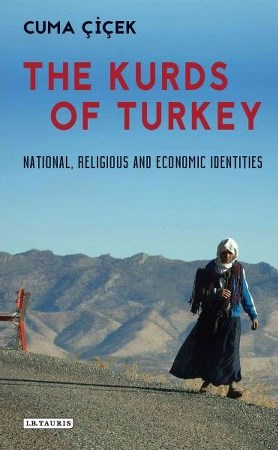
CUMA ÇIÇEK joins to discuss his book “THE KURDS OF TURKEY: NATIONAL, RELIGIOUS AND ECONOMIC IDENTITIES” (IB Tauris).
Download the episode or listen below.
Subscribe to Turkey Book Talk : iTunes / PodBean / Stitcher / Acast / RSS
Follow on Facebook or Twitter.
You may also be interested in an earlier episode with Mustafa Gurbuz discussing his book “Rival Kurdish Movements in Turkey: Transforming Ethnic Conflict” (Amsterdam University Press):
*SPECIAL OFFER* – Turkey Book Talk listeners can get a 33% discount plus free delivery on four titles published by Hurst – “The Circassian: A Life of Eşref Bey, Late Ottoman Insurgent and Special Agent” by Benjamin Fortna, “The New Turkey and its Discontents” by Simon Waldman and Emre Çalışkan, “The Poisoned Well: Empire and its Legacy in the Middle East” by Roger Hardy, and “Out of Nowhere: The Syrian Kurds in Peace and War” by Michael Gunter. Follow this link to get that discount from Hurst Publishers.
Finally, if you enjoy or benefit from the podcast and want to support it, click here to make a donation to Turkey Book Talk via Patreon!
Many thanks to my current supporters Özlem Beyarslan, Steve Bryant, Celia Jocelyn Kerslake and Aaron Ataman.
Mustafa Gurbuz on ‘rival Kurdish movements in Turkey’
March 12, 2016
The latest Turkey Book Talk podcast is with Mustafa Gürbüz, the author of “Rival Kurdish Movements in Turkey: Transforming Ethnic Conflict” (Amsterdam University Press).
Apologies for the delay in dropping this latest pod. I’ve had a technical nightmare.
Download the podcast or listen below.
Subscribe: iTunes / PodBean / Stitcher / Facebook / RSS
Here’s my review of the book at Hürriyet Daily News. Here’s the interview in written form.

Here’s another interview I did with him from last year about his research on the outlawed Kurdish Islamist militant group Hizbullah.
Finally, reposting my recent podcast with Frederike Geerdink discussing the Kurdish issue.
Frederike Geerdink on Turkey’s Kurdish question
February 5, 2016
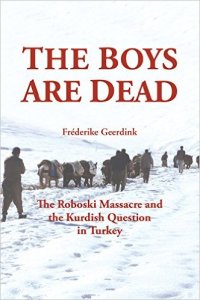
This week’s podcast is with Frederike Geerdink, author of “The Boys are Dead: The Roboski Massacre and the Kurdish Question in Turkey” (Gomidas).
We chat about her time as a journalist in the Kurdish-majority city Diyarbakır, her deportation from Turkey last year, and the troubled history/present of the issue in the wake of the collapse of the peace process last summer.
Download the podcast, or listen below:
Here’s my review of the book at Hürriyet Daily News.
Subscribe to the Turkey Book Talk podcast via iTunes or via PodBean.
Follow Frederike Geerdink on Twitter.
Added bonus: I’ve dug out this interview from last year with sociologist Cem Emrence, co-author of “Zones of Rebellion: Kurdish Insurgents and the Turkish State” – quite a thought-provoking book.
Turkey and the PKK at another crossroads
July 25, 2015
This week saw some of the worst clashes between Turkish security forces and the Kurdistan Workers’ Party (PKK) since the (now ended?) peace process officially started over two years ago.
As a result my interview and review this week are sadly topical. I spoke to Cem Emrence, who co-authored a new title on the history of the Turkey-PKK conflict, “Zones of Rebellion: Kurdish Insurgents and the Turkish State.” It is a slim but rich book, elaborating a complex theory of path dependence that has limited the options of both the Turkish state and the PKK over three decades and ultimately led to stalemate.
Read the Q&A with Emrence in Hürriyet Daily News here.
And read my review of the book from earlier this week here.

And something completely different: In next week’s Times Literary Supplement I review a new English selection of the great Sait Faik’s stories. It’s only available in print form so you’ll have to seek out an actual real physical copy of the TLS if you’re interested in reading it.
Coverage of Ankara-PKK ‘peace process’ in the Turkish media
January 19, 2013
Peace talks are still ongoing between the Turkish state, representatives of the Kurdistan Workers’ Party (PKK), and PKK leader Abdullah Öcalan. It is likely that for any kind of peace to be secured they will have to go on for quite a while longer. Looking at the attitudes adopted by the Turkish media over the course of the “İmralı process” has been illuminating, particularly the reporting of the Jan. 17 funeral ceremonies in Diyarbakır of the three female Kurdish activists who were recently shot dead in Paris.
The government’s previous “Kurdish Opening” in 2009 came to an abrupt end after the controversy that followed the release of a group of PKK militants at the Habur border crossing and their welcoming back by huge crowds in Diyarbakır. Any comparable scenes carried the danger of enflaming Turkish nationalist sentiments and posed a risk to the latest dialogue process. Thus, in the lead up to the funerals most in the mainstream media were in agreement that they represented a significant test. On the morning of the ceremonies, dailies Vatan, Yeni Şafak, and Yeni Asya all featured front page headlines quoting the words of Prime Minister Recep Tayyip Erdoğan saying that the day would be a “Samimiyet sınavı,” or “Sincerity test.”
The ongoing process is extremely delicate. It’s easy to forget that although public support for the current PKK talks is significantly higher than it was in 2009, suspicion of the talks is still widespread. It was therefore interesting to observe how none of the major TV stations covered the ceremonies live in any detail on the day, despite the fact that they were attended by tens of thousands of people. As with much coverage of the Kurdish issue, (the Uludere/Roboski massacre in December 2011, for example), it is likely that this low key coverage had been “suggested” to the major media organizations by the government, acutely aware of the need to avoid scenes similar to those in Habur in 2009. Tellingly, Deputy Prime Minister Bülent Arınç had the following to say at a media event on Thursday: “The media’s support is so pleasing for us. I know and I see this support. … Eighty percent of media groups are lending their support. They are conducting positive broadcasts and contributing to the process. I hope this continues.” Still, in a column the next day titled “Peace is difficult with this media,” daily Vatan’s Rüşen Çakır had some critical things to say about this mentality:
“Television stations who didn’t show the ceremony yesterday failed the ‘sincerity test.’ In fact, they didn’t even sit the test … In the name of not making mistakes, or avoiding possible crises, or not annoying the government, they chose not to do anything at all … During the latest İmralı process, our media sees only one side as having to take steps – and all of these steps set according to what the government wishes – which itself sabotages the road to peace.”
In the event, Jan. 18’s newspapers exhaled an audible sigh of relief that the day passed without “provocation or sabotage” from either the mourners or the Turkish security forces. In contrast to the relative silence of the TV stations, the majority of the next day’s papers featured the funerals as front page headline stories, showing pictures of the crowds gathered in Diyarbakır and striking a noticeably optimistic tone. Many focused on a makeshift sign that one man was carrying at the ceremonies: “There is no winner from war; there is no loser from peace.”
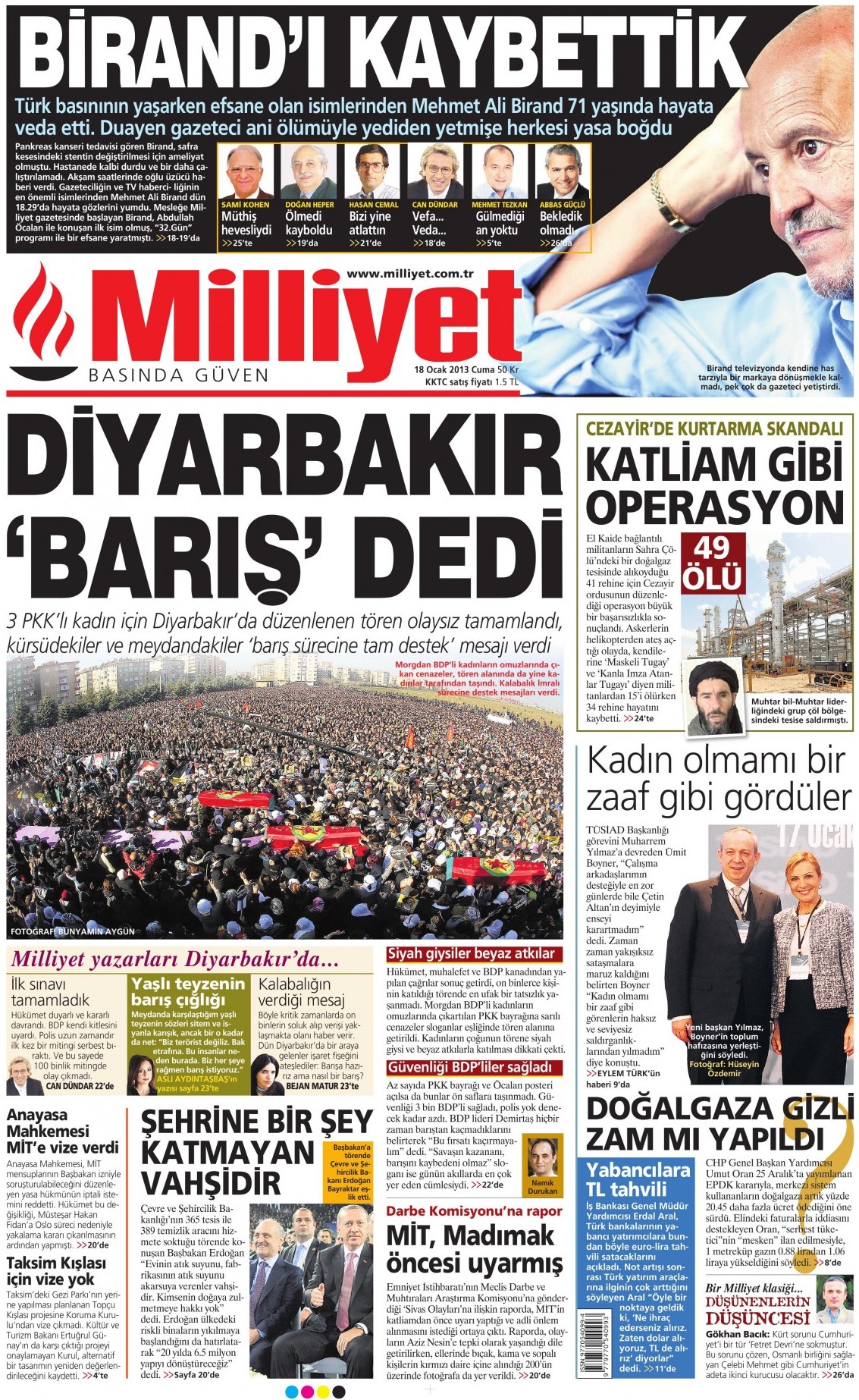
The front page of Milliyet on Jan. 18: ‘Diyarbakır said peace’
That the funerals passed peacefully was a relief not only for the government but also for the Peace and Democracy Party (BDP), which shares grassroots with the PKK. At the moment, both the Justice and Development Party (AKP) government and the BDP have a common interest in continuing the talks. For the process to come to a successful conclusion – still a long way off – this shared interest will need to persist for a while yet.
‘Bring back capital punishment, end this business’
November 14, 2012
Recently, Turkish Prime Minister Recep Tayyip Erdoğan has repeatedly expressed his opinion that Turkey should consider reinstating capital punishment “in certain situations.” He first brought the issue up at a meeting of his Justice and Development Party’s (AKP) deputies on Nov. 3, in reference to Abdullah Öcalan, the convicted leader of the outlawed Kurdistan Workers’ Party (PKK), and has returned to it on a number of occasions since. “Right now a lot of people in public surveys say that capital punishment should be reintroduced … It is legitimate in certain situations,” Erdoğan said. “Yes, the death penalty was removed from Europe, but has it left America, Japan and China? Then there is a justified cause for the death penalty to remain.”
Capital punishment was abolished by Turkey in 2002, just prior to the AKP’s accession to power in the general elections of that year. Although no execution had been carried out by the Turkish state since 1984, an official end to the practice on the Turkish law books was seen as one of the key steps in Turkey’s EU accession process, which was then entering its most energetic period. The decision was fairly controversial at the time, as PKK leader Öcalan was captured and sentenced to death by the Turkish authorities in 1999. With the abolition of capital punishment, this sentence was commuted to life imprisonment, and Öcalan has since been held in a remote prison on İmralı Island in the Marmara Sea. With the recent spike in clashes between the Turkish security forces and the PKK, Erdoğan’s words on capital punishment should be interpreted in terms of the government’s failure to solve the Kurdish question – populist sentiments aiming to deflect nationalist criticism that he has made too many concessions to Kurdish rights with little to show in return.
The most striking newspaper coverage of the issue I saw came from popular pro-government daily Sabah, the newspaper with the fourth highest circulation nationally. Its Nov. 13 front page carried the bold headline “Bring back capital punishment, end this business.” These were the words of Fatma Çınar, the mother of one of the 17 soldiers killed in the recent helicopter crash in the southeastern province of Siirt, speaking at her son’s funeral. The crash was not a result of direct clashes with the PKK, but it was enough for PM Erdoğan to frame it as taking place within “much intensified, multi-dimensional” military operations in the region.

The return of the issue to the national debate has predictably raised eyebrows among those parts of the media who retain forlorn hopes that Turkey’s EU accession process can still be revived from its current moribund state. Opposition Republican People’s Party (CHP) deputy Rıza Türmen, who worked for 10 years at the European Court of Human Rights, wrote in Milliyet on Nov. 13: “Capital punishment is banned according to the third section of the European Union’s founding principles, and the lifting of capital punishment is a precondition for membership of the EU and the European Council … Is leaving the EU process what the prime minister actually wants?” Meanwhile, Taraf editor Ahmet Altan’s disillusionment continued on the same day: “We’ve gone from a country that celebrated with enthusiasm the opening of ‘full EU membership negotiations,’ to one with a prime minister – like a funeral undertaker – shouting ‘hang them, hang them’ at every opportunity.” A response even came from the murky corridors of the EU itself, with Peter Stano, the spokesman for Enlargement Commissioner Stefan Füle, stating: “Our position on this is quite clear. Countries wishing to be a member of the EU cannot practice capital punishment. If capital punishment comes, the EU goes.”
Meanwhile, the hunger strikes of 700 Kurdish prisoners today entered their 64th day. Despite the increasing urgency of the situation, Erdoğan has so far ignored calls to directly engage in finding a solution. He even spent Nov. 12 in his hometown of Rize, receiving an honorary doctorate from the newly-established “Recep Tayyip Erdoğan University” (it’s sometimes difficult to tell in Turkey that you’re not reading The Onion). His words on capital punishment have certainly been an effective tactic distracting some attention away from the critical situation of the strikers. However, like the Peace and Democracy Party’s (BDP) recent remarks about erecting a statue of Öcalan, they have hardly done much to help create an atmosphere congenial to a solution.
Cihan news agency accused over Şemdinli report
November 7, 2012
The hunger strikes of 682 Turkish prisoners are entering their 57th day. The way that they – and the broader issues related to them – are being reported by media outlets known to be close to the ruling Justice and Development Party (AKP) clearly reflects the direction that the government’s Kurdish policy has recently taken.
With the government’s “Kurdish initiative” apparently having run out of steam, the conflict between the Turkish security forces and the outlawed Kurdistan Workers’ Party (PKK) has become increasingly bloody over the last 12 months, and chances for a political solution seem to be ever more remote. The latest bloody incident in south-eastern Turkey took place in the Şemdinli district of Hakkari province on Nov. 4, when a car bomb targeting a military vehicle killed 11-year-old boy Faris Demircan and wounded 26 others. Although there was no immediate claim of responsibility, the PKK is widely thought to be behind the blast.
On Nov. 5, the Gülen-affiliated Cihan news agency reported that pro-Kurdish Peace and Democracy Party (BDP) Hakkari deputy, Esat Canan, tried to visit the family of the deceased to offer his condolences, but was refused entry to the family home. However, no sources were referenced and no quotations on the incident from the family were included in the report. What’s more, no other news agencies mentioned this and local media in the area reported quite the opposite, saying that Canan had in fact been welcomed in to “share the pain.”
Those known to be close to the government, or the Gülen movement, were the only national newspapers to feature Cihan’s story. Zaman included it as their main front page story, under the headline: “Family of 11-year-old Faris respond to the BDP: ‘You killed our child, how dare you come here’”.
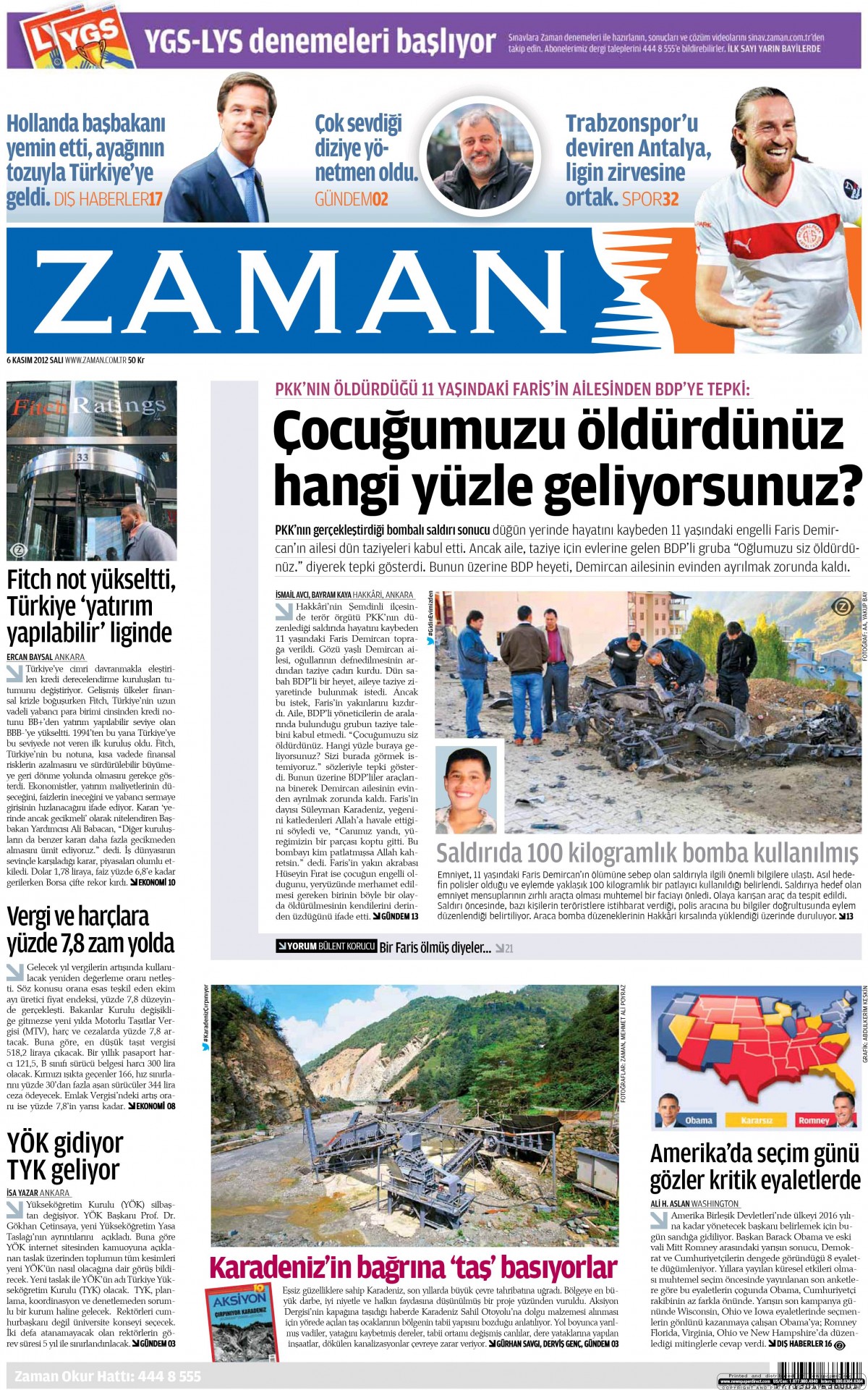
Star included the same story on its front page, alongside news claiming that local traders in Şemdinli were closed in protest against the incident. The headline read: “Şemdinli’s shutters closed against the PKK.”

Strongly Islamist daily Yeni Şafak carried a front page headline declaring: “BDP driven from the door”, included under which was a subtle subtitle: “God damn them.” Popular pro-government daily Sabah also featured the same story at the bottom of its front page under the headline: “You murdered my son.”
BDP deputy Canan has written a formal letter of complaint – which I have read (anybody interested can contact me) – to Cihan news agency about its “baseless” report. In the letter, he says that his visit was in fact accepted by the family of the deceased, and he claims that Cihan’s news was written without any examination of the area and without any correspondent on the ground. He demands a retraction and an apology, warning that he will exercise his full legal rights to pursue the case if he does not receive one.


 Turkey Book Talk