Maureen Freely joins to discuss the tragic life of author Sabahattin Ali and her translation of his classic 1943 novel “Madonna in a Fur Coat,” just published in a first ever English edition by Penguin.
Download the episode or listen below:
Subscribe to Turkey Book Talk: iTunes / PodBean / Stitcher / Facebook / RSS
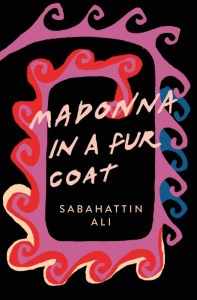
Check my review of the book at Hürriyet Daily News, previously published in the Times Literary Supplement.
Support the Turkey Book Talk podcast with a per episode donation via Patreon – Many thanks to current supporters Özlem Beyarslan, Steve Bryant and Andrew Cruickshank.
Umut Uzer on the history of Turkish nationalism
June 17, 2016
Umut Uzer of Istanbul Technical University joins to discuss his new book “An Intellectual History of Turkish Nationalism: Between Turkish Ethnicity and Islamic Identity” (Utah University Press).
Download the episode or listen below
Subscribe to Turkey Book Talk: iTunes / PodBean / Stitcher / Facebook / RSS
Here’s my review of the book.

Support the podcast with a per episode donation via Patreon – Many thanks to current supporters Özlem Beyarslan, Steve Bryant and Andrew Cruickshank.
Shadi Hamid on ‘Islamic exceptionalism’
June 4, 2016
Brookings Institution senior fellow Shadi Hamid joins the pod to discuss his new book ‘Islamic Exceptionalism: How the Struggle Over Islam is Reshaping the World’ (St Martins).
Download the episode or listen below:
Subscribe to Turkey Book Talk: iTunes / PodBean / Stitcher / Facebook / RSS
And here’s my review of the book at HDN.

Support the podcast with a per episode donation via Patreon! Many thanks to current supporters Özlem Beyarslan, Steve Bryant and Andrew Cruickshank.
Ryan Gingeras on the fall of the Ottoman sultanate
May 14, 2016
A welcome return to the pod to Ryan Gingeras, who joins to talk about his new book “The Fall of the Sultanate: The Great War and the End of the Ottoman Empire, 1908-1922” (Oxford University Press).
Download the podcast or listen below.
Subscribe: iTunes / PodBean / Stitcher / Facebook / RSS
Here’s my review of the book at HDN.

This is Ryan’s second appearance on the Turkey Book Talk podcast. Click here to listen to him discussing his recently published biography of Atatürk: “Mustafa Kemal Atatürk: Heir to an Empire.”
Support the podcast via Patreon. Many thanks to current supporters Özlem Beyarslan, Steve Bryant and Andrew Cruickshank.
Cihan Tuğal on the fall of the ‘Turkish model’
April 16, 2016
Cihan Tuğal, a sociologist at UC Berkeley, chats about “The Fall of the Turkish Model: How the Arab Uprisings Brought Down Islamic Liberalism” (Verso), charting how Turkey went from a model “Muslim democracy” for the Middle East to an increasingly authoritarian state.
Download the podcast or listen below:
Subscribe: iTunes / PodBean / Stitcher / Facebook / RSS
Here’s my review of the book at Hürriyet Daily News.

Support the Turkey Book Talk podcast via my Patreon account. You can help me keep producing the podcast by making a monetary donation, big or small, on a per episode basis! Many thanks to current supporters Sera Aleksandra Marshall and Andrew Cruickshank.
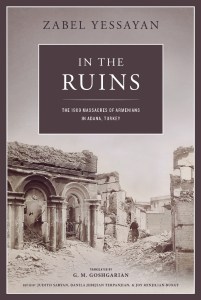
The latest podcast is with Judith Saryan, who edited a new English edition of Zabel Yessayan’s account of a trip to Adana in the aftermath of pogroms targeting Armenians there in 1909.
Download the podcast or listen below:
Subscribe: iTunes / PodBean / Stitcher / Facebook / RSS
Read my Hurriyet Daily News review of “In the Ruins: The 1909 Massacres of Armenians in Adana” (AIWA).
Here’s an interview from last year with translator Jennifer Manoukian, discussing Yessayan’s remarkable life and work.
Here’s another piece I wrote last year for Al Monitor from a crumbling station on the Armenian side of the closed Turkey-Armenia border. The immediate political dynamics have changed since then but it may still be an interesting read. View photos I took of the station here.

Finally, let me flag up my newly opened Patreon account – Through it you can support the Turkey Book Talk podcast by making a monetary donation, large or small, on a per episode basis. Check it out. Many thanks to my first supporter Sera Aleksandra Marshall.
Mustafa Gurbuz on ‘rival Kurdish movements in Turkey’
March 12, 2016
The latest Turkey Book Talk podcast is with Mustafa Gürbüz, the author of “Rival Kurdish Movements in Turkey: Transforming Ethnic Conflict” (Amsterdam University Press).
Apologies for the delay in dropping this latest pod. I’ve had a technical nightmare.
Download the podcast or listen below.
Subscribe: iTunes / PodBean / Stitcher / Facebook / RSS
Here’s my review of the book at Hürriyet Daily News. Here’s the interview in written form.

Here’s another interview I did with him from last year about his research on the outlawed Kurdish Islamist militant group Hizbullah.
Finally, reposting my recent podcast with Frederike Geerdink discussing the Kurdish issue.
Şakir Dinçşahin on the life and times of Niyazi Berkes, 1908-1988
February 20, 2016
Here’s my conversation with Şakir Dinçşahin about his book on the life and times of Turkish intellectual Niyazi Berkes.
Download the podcast, or listen below:
You can also now subscribe to the Turkey Book Talk podcast on Stitcher. Alternatively subscribe via iTunes or via PodBean.
Here’s my review of “State and Intellectuals: The Life and Times of Niyazi Berkes” (Rowman) at the Hürriyet Daily News.

If the issues discussed are your thing, check out this interview from last year with Andros Lamprou, who wrote an interesting book on the People’s Houses.
Also worth plugging this piece I wrote a couple of years ago on Mahmut Makal and his book “Bizim Köy” (Our Village), on his experiences as a teacher at a Village Institute in the 1940s.
Frederike Geerdink on Turkey’s Kurdish question
February 5, 2016
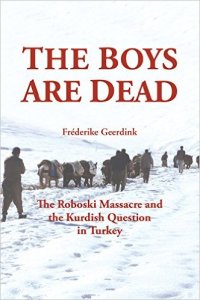
This week’s podcast is with Frederike Geerdink, author of “The Boys are Dead: The Roboski Massacre and the Kurdish Question in Turkey” (Gomidas).
We chat about her time as a journalist in the Kurdish-majority city Diyarbakır, her deportation from Turkey last year, and the troubled history/present of the issue in the wake of the collapse of the peace process last summer.
Download the podcast, or listen below:
Here’s my review of the book at Hürriyet Daily News.
Subscribe to the Turkey Book Talk podcast via iTunes or via PodBean.
Follow Frederike Geerdink on Twitter.
Added bonus: I’ve dug out this interview from last year with sociologist Cem Emrence, co-author of “Zones of Rebellion: Kurdish Insurgents and the Turkish State” – quite a thought-provoking book.
Ryan Gingeras on ‘Atatürk: Heir to an Empire’
January 23, 2016
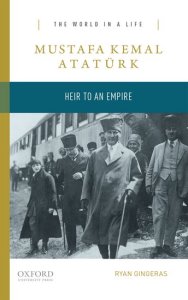
This week I spoke to author Ryan Gingeras on his new biography of Turkey’s founding father, “Mustafa Kemal Atatürk: Heir to an Empire” (Oxford University Press).
Or just listen here:
Here’s an edited transcript of the interview.
And here’s my review of the book (which is highly recommended).
As I mentioned in the podcast, here’s a link to an interview I did with Ryan last year about another of his books, “Heroin, Organized Crime, and the Making of Modern Turkey.”
Subscribe to the Turkish Book Talk Podcast via PodBean, or via iTunes.
Kaya Genç talks Istanbul writing
January 9, 2016
Happy New Year!
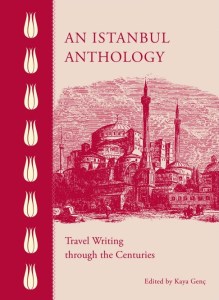
First Turkey Book Talk pod of the year is with novelist Kaya Genç, the editor of “An Istanbul Anthology” (AUC Press), a new selection of classic writing on Istanbul by classic names including Mark Twain, Ernest Hemingway, and Lady Mary Wortley Montagu.
Happily, I’ve finally picked up a decent mic so the podcasts should now be more listenable. Hooray!
Here’s text of interview at the Hürriyet Daily News.
And here’s my review of the book.
Subscribe to the Turkey Book Talk podcast via iTunes or PodBean.
Nilgün Önder on the economic transformation of Turkey since 1980
December 12, 2015
This week’s podcast is with Nilgün Önder of the University of Regina, who joined to discuss her new book “The Economic Transformation of Turkey: Neoliberalism and State Intervention” (IB Tauris).
It’s a great and detailed book on some of the paradoxes of the economic reforms passed after Turkey’s military coup of 1980 – rather than rolling back, the authority of the state was substantially deepened by the reforms.
Download the podcast here. Or listen/subscribe via PodBean.
Here’s a transcript of the interview at Hürriyet Daily News.
And here’s my review of the book.

Subscribe to the Turkey Book Talk podcast via iTunes, PodBean, or Soundcloud.
Thanks for listening!
Lastly, apologies for the dodgy sound quality in these first few podcasts. I’ve got a new mic in the post so that should go some way to sorting it out.


 Turkey Book Talk