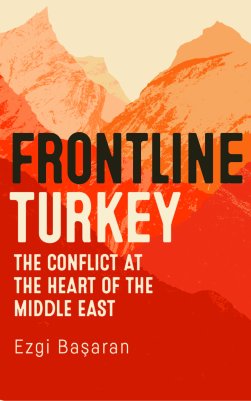
Turkey Book Talk episode #54 – EZGİ BAŞARAN on her book FRONTLINE TURKEY: THE CONFLICT AT THE HEART OF THE MIDDLE EAST (IB Tauris), a 200-page account of the collapse of the Kurdish peace process, the rise and fall of the Gülen movement, and deepening authoritarianism.
Download the episode or listen below.
Here’s my review of the book at HDN.
Subscribe to Turkey Book Talk : iTunes / PodBean / Stitcher / Acast / RSS
* ONE WEEK LEFT FOR OUR SPECIAL OFFER *
You’ve only got until the end of 2017 to support Turkey Book Talk by taking advantage of a 33% discount plus free delivery (cheaper than Amazon) on five different titles, courtesy of Hurst Publishers:
- ‘Jihad and Death: The Global Appeal of Islamic State’ by Olivier Roy
- ‘The Circassian: A Life of Eşref Bey, Late Ottoman Insurgent and Special Agent’ by Benjamin Fortna
- ‘The New Turkey and its Discontents’ by Simon Waldman and Emre Çalışkan
- ‘The Poisoned Well: Empire and its Legacy in the Middle East’ by Roger Hardy
- ‘Out of Nowhere: The Syrian Kurds in Peace and War’ by Michael Gunter
Follow this link to get that discount from Hurst Publishers.
Another way to support the podcast, if you enjoy or benefit from it: Make a pledge to Turkey Book Talk via Patreon. Many thanks to current supporters Michelle Zimmer, Steve Bryant, Jan-Markus Vömel, Celia Jocelyn Kerslake, Aaron Ataman, Max Hoffman, Andrew MacDowall, Paul Levin, Ayla Jean Yackley and Tan Tunalı.
Many thanks for listening all year. Here’s to a podcast-filled 2018!
Max Hoffman on Turkish civil society under siege
August 4, 2017
Turkey Book Talk episode #44 – MAX HOFFMAN on “TRENDS IN TURKISH CIVIL SOCIETY,” a joint report published by the Center for American Progress, the Istanbul Policy Center, and the Italian think tank IAI.
Download the episode or listen below.
Here’s a link to the report itself.
Subscribe to Turkey Book Talk : iTunes / PodBean / Stitcher / Acast / RSS

* SPECIAL OFFER *
You can support Turkey Book Talk by taking advantage of a 33% discount plus free delivery (cheaper than Amazon) on five different titles, courtesy of Hurst Publishers:
- ‘Jihad and Death: The Global Appeal of Islamic State’ by Olivier Roy
- ‘The Circassian: A Life of Eşref Bey, Late Ottoman Insurgent and Special Agent’ by Benjamin Fortna
- ‘The New Turkey and its Discontents’ by Simon Waldman and Emre Çalışkan
- ‘The Poisoned Well: Empire and its Legacy in the Middle East’ by Roger Hardy
- ‘Out of Nowhere: The Syrian Kurds in Peace and War’ by Michael Gunter
Follow this link to get that discount from Hurst Publishers.
Another way to support the podcast, if you enjoy or benefit from it: Make a donation to Turkey Book Talk via Patreon. Many thanks to current supporters Michelle Zimmer, Steve Bryant, Jan-Markus Vömel, Celia Jocelyn Kerslake, Aaron Ataman and Andrew MacDowall.
I’ve written a piece for the New York Times to mark President Erdoğan’s visit to Washington on the blockbuster series “Diriliş: Ertuğrul,” broadcast on Turkish state TV channel TRT.
A few years ago at the height of so-called neo-Ottomanism there were loads of articles published about Turkish TV serials being exported all over the world. It became quite a tired cliche but the popularity of various shows is in fact a good bell-weather for the political mood. And audiences take the messages that these serials pump out seriously. On a visit to Polatlı, a small town outside Ankara a couple of years ago, I vividly remember how a local coffee house arranged its seats in rows at night once a week to screen the latest episode of the ultra-macho action serial “Valley of the Wolves.” In a provincial town with little else to do, it was clearly a major weekly event.
Get a flavour of Diriliş: Ertuğrul by watching the intro:
If you’ve got too much time on your hands you can stream every episode on the TRT website 🍿🍿🍿
If you missed it, here’s an article I wrote about another dubious cultural product: The Erdoğan biopic “Reis” (The Chief), which flopped at box offices in March.
Michael Wuthrich on the history of elections in Turkey and the future of Turkish democracy
September 17, 2016
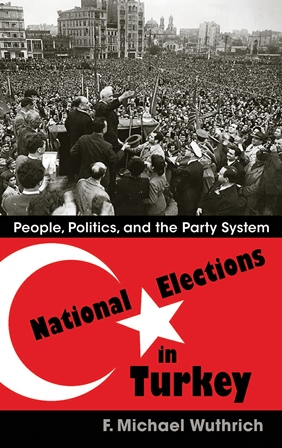
New Turkey Book Talk episode with Michael Wuthrich, chatting about “National Elections in Turkey: People, Politics and the Party System” (Syracuse University Press).
This really is an excellent book that overhauls much conventional wisdom about Turkish politics shared by right and left.
Unlike the deceptively boring title of the book, this episode’s title is stupidly ambitious. But we do cover a lot of ground. I’m really pleased with it – hope you enjoy/learn from it.
Download the episode or listen below.
Subscribe to Turkey Book Talk : iTunes / PodBean / Stitcher / Facebook / RSS
Here’s my review of the book in HDN.
Many thanks to current supporters Özlem Beyarslan, Steve Bryant, Andrew Cruickshank and Aaron Ataman.
Ece Temelkuran on ‘Turkey: The Insane and the Melancholy’
September 2, 2016
Ece Temelkuran joins Turkey Book Talk to discuss “Turkey: The Insane and the Melancholy” (Zed Books), her vivid and personal account of the current state of the country.
Download the episode or listen below.
Subscribe to Turkey Book Talk : iTunes / PodBean / Stitcher / Facebook / RSS

My review of this one is pending – waiting for it to be published in the TLS before posting in abridged form in Hürriyet.
Many thanks to current supporters Özlem Beyarslan, Steve Bryant, Andrew Cruickshank and Aaron Ataman.
Bilge Yeşil on the Turkish media, past and present
August 20, 2016
Turkey Book Talk is back after a one month hiatus.
We return with a good one: Bilge Yeşil speaks about her book “Media in New Turkey: The Origins of an Authoritarian Neoliberal State” (University of Illinois Press).
Download the episode or listen below:
Subscribe to Turkey Book Talk: iTunes / PodBean / Stitcher / Facebook / RSS
Here’s my review of the book.

If you like Turkey Book Talk and want to support independent podcasting, you can make a small or large monetary donation to the show via Patreon. Many thanks to current supporters Özlem Beyarslan, Steve Bryant, Andrew Cruickshank and Aaron Ataman.
The Turkish gov’t takes on the foreign media
December 10, 2014
I’ve written a piece for Foreign Policy on the deterioration of the Turkish government’s image in the international media, and Turkey’s aggressive response:
The foreign media image of President Recep Tayyip Erdoğan and the Turkish government has shattered over the past 18 months, and in response Turkey has ramped up an international information blitzkrieg.
The tone is becoming increasingly bitter, motivated by a conviction that the foreign media is a propaganda weapon deployed by the West to attack the ruling Justice and Development Party (AKP). Patriotic Turks are called on to rally behind their government in the name of national sovereignty.
This sense of embattled defiance is important to understand, and reveals much about the resentful mindset gripping the state. Suspicion about the foreign press is hardly new in Turkey, but it’s unfortunate to see the worst of such sentiments returning – openly sponsored by Erdoğan and the AKP’s top brass. The president himself is even managing to turn international criticism to his own advantage, as evidence that the West is implacably hostile to Turkey and its fearless, truth-telling leader — a useful populist line ahead of next June’s crucial parliamentary elections.
Read the full article here.
‘Pan-Islamist PM Davutoğlu’ thesis ruffling feathers
September 3, 2014
Is Turkey’s new Prime Minister Ahmet Davutoğlu a pan-Islamist ideologue, with imperialist ambitions to reshape the Middle East into a post-national order based on Turkish and Sunni religious supremacy? That is the blockbuster thesis currently turning heads both inside and outside Turkey, thanks to a series of recent articles by Marmara University Assistant Professor Behlül Özkan.
Özkan, a one-time student of Davutoğlu’s from the latter’s time as an international relations professor, bases his provocative conclusion on close study of 300 articles penned by Davutoğlu in the 1980s and 90s. He first made his case in an essay for the August-September edition of the International Institute for Strategic Studies’ journal“Survival,” before introducing it to a wider English audience with pieces on Al-Monitor and in the New York Times.
In his NYT op-ed “Turkey’s Imperial Fantasy” published last week, Özkan remembered Professor Davutoğlu as a hard-working and “genial figure” who “enjoyed spending hours conversing with his students.” In contrast with his academic peers, however, he believed that Turkey would “soon emerge as the leader of the Islamic world by taking advantage of its proud heritage and geographical potential … encompass[ing] the Middle East, the Caucasus and Central Asia, and include Albania and Bosnia”:
Mr. Davutoglu’s classroom pronouncements often sounded more like fairy tales than political analysis. He cited the historical precedents of Britain, which created a global empire in the aftermath of its 17th-century civil war, and Germany, a fragmented nation which became a global power following its 19th-century unification. Mr. Davutoglu was confident that his vision could transform what was then an inflation-battered nation, nearly torn apart by a war with Kurdish separatists, into a global power.
He crystallized these ideas in the book ‘Strategic Depth,’ in 2001, a year before the Justice and Development Party, or A.K.P., came to power. In the book, he defined Turkey as a nation that does not study history, but writes it — a nation that is not at the periphery of the West, but at the center of Islamic civilization … Mr. Davutoglu saw himself as a grand theorist at the helm of his country as it navigated what he called the ‘river of history.’ He and his country were not mere pawns in world politics, but the players who moved the pieces.
Özkan rejects that Davutoğlu’s ideas amount to “neo-Ottomanism,” as often accused. Instead, he gives Turkey’s new prime minister the even heftier label of “pan-Islamist”:
The movement known as Ottomanism emerged in the 1830s as the empire’s elites decided to replace existing Islamic institutions with modern European-style ones, in fields from education to politics. By contrast, Mr. Davutoglu believes that Turkey should look to the past and embrace Islamic values and institutions.
But, ironically, he bases his pan-Islamist vision on the political theories that were used to legitimize Western imperial expansion prior to 1945. While purporting to offer Turkey a new foreign policy for the 21st century, his magnum opus draws on the outdated concepts of geopolitical thinkers like the American Alfred Thayer Mahan, the Briton Halford Mackinder and the German Karl Haushofer, who popularized the term “Lebensraum,” or living space, a phrase most famously employed by Germany during the 1920s and 1930s to emphasize the need to expand its borders.
According to Mr. Davutoglu, the nation states established after the breakup of the Ottoman Empire are artificial creations and Turkey must now carve out its own Lebensraum — a phrase he uses unapologetically. Doing so would bring about the cultural and economic integration of the Islamic world, which Turkey would eventually lead. Turkey must either establish economic hegemony over the Caucasus, the Balkans and the Middle East, or remain a conflict-riven nation-state that risks falling apart.
After becoming Turkey’s foreign minister from 2009, Davutoğlu had the opportunity to put these ideas into practice – with disastrous results:
As foreign minister, Mr. Davutoglu fervently believed that the Arab Spring had finally provided Turkey with a historic opportunity to put these ideas into practice. He predicted that the overthrown dictatorships would be replaced with Islamic regimes, thus creating a regional ‘Muslim Brotherhood belt’ under Turkey’s leadership.
He sought Western support by packaging his project as a ‘democratic transformation’ of the Middle East. Yet today, instead of the democratic regimes promised three years ago, Turkey shares a border with ISIS’s self-proclaimed caliphate. Two months ago, its fighters raided the Turkish consulate in the Iraqi city of Mosul, and is still holding 49 Turkish diplomats hostage. Mr. Davutoglu, who has argued that Turkey should create an Islamic Union by abolishing borders, seems to have no idea how to deal with the jihadis in Syria and Iraq, who have made Turkey’s own borders as porous as Swiss cheese.
To repair this dire situation as prime minister, Özkan says Davutoğlu needs to pragmatically reconnect Turkey’s regional policy with reality:
The new prime minister is mistaken in believing that the clock in the Middle East stopped in 1918 — the year the Ottoman Empire was destroyed — or that Turkey can erase the region’s borders and become the leader of an Islamic Union, ignoring an entire century of Arab nationalism and secularism. What Mr. Davutoglu needs to do, above all, is to accept that his pan-Islamist worldview, based on archaic theories of expansionism, is obsolete.
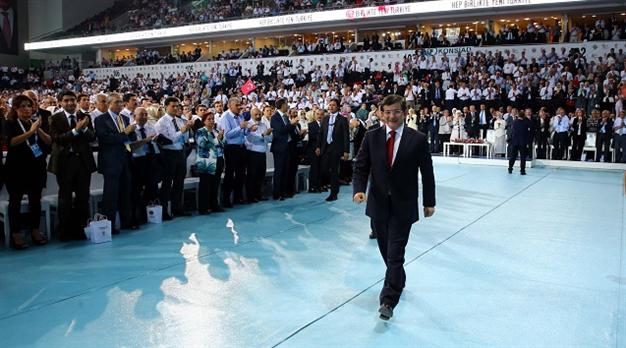
Turkey’s new prime minister, Ahmet Davutoğlu (Photo: Anadolu Agency)
Özkan’s thesis certainly seems to have struck a chord, with plenty of prominent figures declaring their admiration. Still, the reception has not been universally positive. In Radikal, political scientist Fuat Keyman expressed skepticism about the use of any catch-all term such as “pan-Islamist” to accurately describe Davutoğlu’s worldview:
As someone who has read many – if not all – of Davutoğlu’s works, it’s difficult to understand how Dr. Özkan has drawn the conclusion that Davutoğlu is a pan-Islamist (which is problematic as a term anyway).
It shouldn’t be forgotten that such expressions have only recently started to be used for Erdoğan and Davutoğlu. It could be said that irresponsible, anti-Semitic writings and comments made [by others] in Turkey recently have contributed to the increased use of terms like ‘pan-Islamism’ abroad.
Still, I don’t think terms such as ‘neo-Ottoman,’ ‘sectarian,’ or ‘pan-Islamist’ are useful or appropriate when describing Davutoğlu’s worldview, or his approach to foreign and domestic politics … Criticism of Turkish foreign policy should instead focus on the strategic errors that have been made, the exaggeration of Turkey’s power, and recently its distancing from democracy.
In Zaman, meanwhile, Şahin Alpay similarly questioned the validity of any term that sought to place a rigid label on the often multi-dimensional policies of Davutoğlu and the AKP:
The foreign policies pursued by Erdoğan and Davutoğlu do not fit into the mold of ‘neo-Ottoman,’ ‘pan-Islamist,’ or ‘Sunni sectarian.’ It’s difficult to apply a single ideological label for a foreign policy that started negotiations to join the EU, gave NATO permission for its Kürecik bases, received prizes from the Israeli lobby, struck up a personal friendship with Bashar al-Assad, recommended secularism to Egypt, and felt Tehran to be its own home. Rather than being based on certain principles, the policies pursued by the AKP, domestically and abroad, can be said to be either pragmatic, populist, opportunistic, or aimed at securing or protecting power. But if an ideological tag is necessary, Islamic Kemalism or religious nationalism could be used.
A deeper and more academic critique of Özkan’s work that has attracted particular attention was posted on the personal website of Ali Balcı, an associate professor at Sakarya University. Balcı doesn’t take issue with Özkan’s use of such a blanket term as “pan-Islamist,” but voices more substantial reservations about the underlying fundamentals of his work:
Özkan argues that the ‘pan-Islamic’ conclusions and analyses made by Davutoğlu as an academic in the second half of the 1980s and the 1990s can be used to understand Davutoğlu’s later foreign policy. This strongly indicates a ‘once an Islamist always an Islamist’ assumption, suggesting that Davutoğlu’s essential core is unchanging in the face of different times and conditions … The work’s fundamental problem is that despite all of the changes in conditions [since Davutoğlu wrote], it still puts forward that a pan-Islamist is always a pan-Islamist – a reductionist and essentialist reading.
Balcı says it isn’t clear why Özkan searches for proof of Davutoğlu’s “pan-Islamism” in his old academic articles, while he supports the “neo-Ottoman” label for former Turkish President Turgut Özal using evidence from the latter’s period in office:
Examples of Özal’s neo-Ottomanism given by the writer can also be given for the AK Parti’s time in power and in Davutoğlu’s period as foreign minister. As stated by the writer, Özal applied for EU membership in 1987, worked to broaden influence in the Caucasus and the Balkans, tried to solve the Kurdish problem through reforms, and worked to establish control in its relations with Iraq. If all of these practical realities have also emerged during the AK Parti and Davutoğlu eras, how can Özal be considered a neo-Ottoman while Davutoğlu is a pan-Islamist? In answer to this question the writer only presents certain criticisms of Özal made by Davutoğlu. But while proving Özal’s neo-Ottomanism with practical examples, [Özkan] doesn’t answer why he looks for examples of Davutoğlu’s pan-Islamism in articles written while he was an academic.
Some of these criticisms are valid, but some are wide of the mark. It may not be true that “once a pan-Islamist is always a pan-Islamist,” but there is plenty of evidence that today’s Davutoğlu still sympathizes with the views expressed in his old academic work. While he certainly has demonstrated a keen sense of pragmatism and adaptability in the past, there’s can be little doubt that he has steadily moved away from this realism and back to a far more dogmatic and ideological approach in recent years. It may be less articulate than Balcı’s blog post, but the government’s hagiographical short film that accompanied Davutoğlu’s recent nomination as prime minister was equally germane to the issue: “He is the awaited spirit of Abdülhamid,” the lyrics say at one point, referencing the 19th century sultan who deployed Islamism to combat the collapse of the Ottoman Empire. “For the nation, for the ummah, for Allah.”
Now that Davutoğlu is in the prime minister’s chair, the question is whether he will continue to be seduced by his ideological convictions and lose touch with his former pragmatism. If he does, then Özkan’s thesis will look even more prescient.
PM Erdoğan’s jet
July 24, 2014
As Prime Minister Recep Tayyip Erdoğan flies around on his apparently never-ending election campaign, the symbolism of “Erdoğan’s jet” and who he invites onboard is coming under increasing scrutiny. These days, only reporters from the most craven pro-government media outlets – the usual suspects of Sabah, Yeni Şafak, Star, Akşam, Türkiye, Yeni Akit – tend to be given the golden ticket to fly on Erdoğan’s private “ANA” jet; a place on board is almost used as a carrot to reward docile behaviour. As daily Hürriyet’s ombudsman Faruk Bildirici wrote in a piece last month, the reporters accepted onto the plane are guaranteed not to ask difficult questions, choosing to do little more substantial than perform as the AKP’s media arm, “as assistants to help Erdoğan comfortably transmit whatever message he wants to the public.”
An increasingly narrow coterie of trusted media figures is being granted access to the prime minister. The effect isn’t only seen in who Erdoğan accepts onto his plane; it is also there in the TV stations and newspapers that he and other prominent government figures choose to grant interviews to, and in the hand-picking of interlocutors during these exchanges. Of course, democratic governments across the world have media groups to which they are closer and which, to some extent, they rely on; indeed, the opposition parties in Turkey also have their own “reliable” media camps. But there’s something blatantly unfair about the mutually supportive state-private network that is reinforcing the AKP government in power today. The cosiness of the prime minister and the media accepted onto his jet is just one of the most obvious examples of this favouritism.

A familiar scene: Erdoğan surrounded by loyal scribes on his private jet. (Photo credit: Milliyet)
Last week, the Nielsen Company’s AdEx advertising information report caused quite a stir in Turkey, revealing how advertising provided by state companies was weighted heavily in favour of government-friendly media groups. According to the report, of the 18 national newspapers examined, the three that received the most public advertising slots in the first six months of 2014 were the pro-government Sabah, Star and Milliyet dailies. The bottom five, meanwhile, were all broadly AKP sceptics, despite two of them – Posta and Zaman – having the highest circulation figures in the country. The two newspapers known as being close to the movement of ally-turned-bête noir Fethullah Gülen – Bugün and Zaman – received almost zero advertising from state institutions. Similarly, TV stations that are known to be closer to the government received far more advertising from public bodies in the first half of the year. Two pro-Gülen television channels – Samanyolu and Bugün TV – received no advertising revenue whatsoever from state companies. While much of the recent focus has been on public broadcaster TRT’s hugely imbalanced coverage in favour of Erdoğan ahead of next month’s presidential election, the way that state institutions are marching in lock-step with government-friendly private companies also has perilous consequences.
The issue of who gets to travel on the prime minister’s private jet is only one symptom of a Turkish media stuck in a broader partisan malaise. Indeed, while those who get invited onto the PM’s plane see their role as only being to transmit whatever the prime minister says, the myopic fixation on every word uttered by Erdoğan is unfortunately shared across pro- and anti-government outlets (as I have previously written). With important exceptions, all sides are sucked into an endless, meaningless argument about where they stand on whatever Erdoğan’s latest utterances and positions are – those positions are the fuel motoring 80 percent of Turkish media’s shallow news agenda. “Important Statements from the Prime Minister” stories are only becoming more common as power becomes more centralized around one man, and the situation isn’t likely to improve after Erdoğan is elected president next month.
Germany becomes pro-AKP media’s latest bête noire
May 28, 2014
The Justice and Development Party (AKP) government’s recent tactic to feed its supporters a steady diet of enemies has turned its focus on Germany over the last few weeks. The green light came with the verbal joust between German President Joachim Gauck and Turkish Prime Minister Recep Tayyip Erdoğan, during the former’s visit to Ankara at the end of April. After Gauck sharply criticised the state of press freedom and freedom of expression in Turkey, Erdoğan responded in reliably pugnacious style, declaring that the Lutheran Gauck “still thinks of himself as a pastor” and “cannot interfere in our country’s internal affairs.”
Equally reliably, the pro-government media has zealously taken up Erdoğan’s cause, gorging itself on anti-German material over the last couple of weeks including moronic, depressingly predictable Nazi analogies. Germany has thus taken its place alongside Jews, Masons, Atheists, Britain, the U.S., the “interest rate lobby,” the “parallel state,” and assorted domestic collaborators, in a “dirty alliance” to bring down Erdoğan and his government. This media campaign has been thrown a fair amount of red meat by a few ill-advised stories and headlines in Germany. Ahead of the prime minister’s much-anticipated rally in Cologne on May 24, for example, popular tabloid Bild carried a front page headline addressed to Erdoğan, declaring: “You’re not welcome.” The AKP-friendly media took full advantage, describing this as the latest evidence that Germany is frightened of Turkey’s unstoppable rise and is trying to sabotage Erdoğan’s political career (and thus Turkey’s path to a glorious future). Some of this stuff has been harmless tabloid fare, while some of it has been more worrying. Last week, German news magazine Der Speigel announced that it was withdrawing its Turkey correspondent, Hasnain Kazim, after he received over 10,000 threatening messages from online pro-government trolls, including death threats. His crime was to quote in a headline the reaction of a protesting miner in the disaster-struck town of Soma, who reportedly said, “Go to hell, Erdoğan.”

Akşam newspaper claims that “Turkish-Europe” lobbies in Germany – including Turkish media tycoon Aydın Doğan – are working in partnership in a slander campaign against the AKP government.
One of the more thoughtful interventions in this sad state of affairs came in the short interview given to T24 by Cem Özdemir, the Turkish-origin co-leader of Germany’s Green Party, on May 26. Putting aside his questionable sideburns, Özdemir had some eminently reasonable things to say, but PM Erdoğan still found things to object to. During his typically tub-thumping weekly AKP parliamentary group speech on Tuesday, he slammed Özdemir as a “so-called Turk, a co-head of a political party over there. The words he used before and after our meeting were very ugly. How are you a democrat? … Are you so disturbed by the prime minister of the Turkish Republic going there? You have no right to talk to the prime minister of your country of origin, of which you are a member, in this way. It doesn’t matter where you are an MP, first you will know your place.” You can decide for yourself whether that was a proportional response to Özdemir’s measured words to T24, which I’ve translated below:
How do you assess Prime Minister Erdoğan’s speech in Cologne?
From now on, no matter what he does, unfortunately we’ve come to the point where it can’t really change anything … The Soma mine disaster and his earlier speeches have formed such a bad picture. From now on, Erdoğan won’t easily be able to change this image. He’s also negatively affecting Turkey’s image. In recent years here, there was a positive image. But that has completely collapsed, it has reversed and a negative image of Turkey has been formed. Erdoğan has become a symbol of this negative image.
Isn’t the German public’s reaction to Erdoğan very exaggerated?
Both his supporters and his critics are exaggerating. His supporters completely idolize him, and see him as a completely faultless, flawless person; while a section of his critics are making a big mistake by comparing him to Hitler. The comparison with Vladimir Putin is better because Erdoğan really is transforming Turkey into an authoritarian regime. But the Hitler comparison is very excessive. So, without generalizing, both sides are making mistakes. These exaggerated approaches are having a very negative effect on the perception of Turkey here in Germany.
In Erdoğan’s speech, Angela Merkel was booed in the hall.
This booing of Merkel’s name leaves a very bad impression. It was very ugly, and it will stay in people’s minds. We will be the ones to pay the price for this. It gives the message: You’re living here, you’re eating its bread, your taxes are paid here, your children are going to school here, you’re benefiting from the welfare state. At the same time, you are booing this country’s prime minister and worshipping another country’s prime minister. It brings the question of loyalty back onto the agenda. We have been struggling for 50 years. “We are loyal citizens,” we say. “Trust us, there’s no need to worry.” This is brought down by the image left by those who went to that rally.
Erdoğan actually had a lot of different groups booed in the rally.
The crowd was transformed as if it was living on enemy soil. There is no such partisanship in German politics; they support politicians but they don’t worship. In the end we are just people; all of us will depart this world one day. To worship someone in such a way both amazes and scares people. In addition, those German Turks who were demonstrating against Erdoğan’s visit pumped up fears about whether “Turkey’s internal problems are being brought here.” In the past there was polarisation between Turk and Kurd, right and left; now the worry is spreading about whether the new polarisation is between Erdoğan’s supporters and his opponents.
Erdoğan’s image in Europe was very positive for many years. How is it now after this speech?
He’s destroying his own successes.
As a Turkish-origin politician, what do you say to the German public?
In the past, we used to say things like, “Probably he meant to say this; if he knew the details he would have spoken differently.” But we’ve gone beyond that, there’s nothing we can defend anymore. Even those ministers in Germany who were previously most positive [about Turkey] are now saying, “This is more than enough.” Erdoğan has 100 percent lost Germany.
It’s extremely sad to see how quickly the tragic Soma mining disaster has become the latest material to be used in Turkey’s political turf war. Soon after news of the country’s worst ever industrial disaster broke I was appalled by the immediate politicising of the incident; perhaps naively I thought that the time for recriminations could follow after a period of respectful mourning for the hundreds of dead miners. However, events quickly took on a momentum of their own; it became hard to talk about “not politicising” the tragedy after the prime minister and his entourage attacked grieving and angry locals in the town, and when there is such a shocking lack of accountability from either the mining company or the government.
A heavy burden of responsibility for this lack of accountability falls on the shoulders of Turkey’s supplicant mainstream media. There is plenty of talk of “yes men” in Prime Minister Recep Tayyip Erdoğan’s inner circle, but Turkey’s entire mainstream news media acts in a similar way. Watching the major TV “news” stations – ATV, NTV, 24TV, CNN Türk, Habertürk – in the aftermath of the disaster has been depressing and infuriating: A procession of ministers giving statements, interviewers desperately trying to avoid asking difficult questions, and a complete unwillingness to report many of the most significant incidents that happen. Why the lack of numbers of those still inside the mine three days after the explosion? Why the lack of exact numbers of those who went down into the mine in the first place? Why the confusion over the cause of the disaster three days later? Why the confusion over the official death toll? Why did it take three days to get any official statement from the mine’s owner, Soma Holding? Why no resignations? Erdoğan’s disastrous May 14 visit to the town – during which he delivered a shockingly insensitive speech, was heckled by the crowds, and then attacked grieving protesters along with one of his advisers – was also shamelessly covered up by all major TV stations. This was particularly ironic, as they are usually so keen to slavishly report every single word that comes out of the prime minister’s mouth.
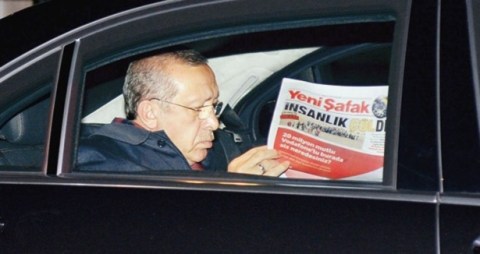
PM Erdoğan snapped while reading Yeni Şafak recently.
But Erdoğan’s apparent lack of sympathy doesn’t just come from nowhere; indeed, his dreadful response to the tragedy has been conditioned by his “yes man” media, which is often little more than an echo chamber of his own words. When the PM never has to respond to a tough question, gives “interviews” with genuflecting, hand-picked interviewers, and holds stage-managed televised rallies in front of hundreds of thousands of bussed in supporters, how will he respond when faced with spontaneous grass-roots opposition holding him to account? When the Justice and Development Party (AKP) government is surrounded by a media establishment simply reinforcing its narrative on every single issue, it isn’t surprising to see it respond with anger and confusion when confronted by events beyond its control.
The Turkish media is flawed because it doesn’t inform the public properly. But its soft-touch failure to hold the ruling authorities to account is actually harming Prime Minister Erdoğan in a more subtle way. Such pandering has made him sloppy, complacent, and blinkered, so that when a “black swan” event like the disaster in Soma occurs, he is simply not conditioned to respond adequately. One of the less recognised effects of the AKP’s castrating of the mainstream media is to make it less responsive to such incidents. Ultimately, while they may seem to help the government in the short term, the AKP’s echo chambers have actually isolated Erdoğan, damaging his ability to think and reason clearly, and contributing to his utter inability to sympathise with those who aren’t like him. The Soma disaster is only the latest example of this; it’s certainly the saddest.
A long and revealing interview with Doğan Ertuğrul, the former senior news editor of the staunchly pro-government daily Star, appeared on the news website T24 on May 5. Ertuğrul resigned from the newspaper in March, issuing a statement complaining that it had descended into the realm of “black propaganda”:
In the state of insanity that Turkey is currently experiencing, the media has suffered more than its share. ‘News’ papers and TV stations that don’t observe news values and instead aim for perception management – or, more accurately, black propaganda – have become routine.I have held the same position at Star for years, but I feel there is no longer any possibility there to do responsible and balanced journalism.
One wonders why it took so long to come to this conclusion, but Ertuğrul candidly explained his thoughts to T24‘s Hazal Özvarış.
Star is one of the pillars of the friendly new media establishment that has developed around Turkey’s ruling Justice and Development Party (AKP) since it came to power in 2002. As comes through in the interview with Ertuğrul, it sees itself as more intellectual that the higher-circulation Sabah, though you have to ask just how highbrow a title featuring bi-weekly columns from PM Erdoğan’s economic advisor and telekinesis-detector Yiğit Bulut can be. Along with its sister TV station, Kanal 24, Star was bought by businessman Ethem Sancak in 2007, with Sancak declaring soon afterwards that he had entered the media sector “to serve the prime minister.” Kanal 24 is now equally devoted to the government as Star, and is probably even more influential, reaching a much wider audience while remaining just as partisan. After selling both off in 2009 (having made the necessary editorial adjustments), Sancak bought them back last month.

Star’s front page headline on May 4, slamming Washington-based think tank Freedom House for it’s recent press freedom report describing the Turkish media as “Not free.” The subheading says Freedom House has links to “Israel lobbies” as well as “famous speculator George Soros,” while the text underneath emphasises that its president, David Kramer, is a Jew.
Back in 2007, Sancak declared himself “lovesick for the prime minister,” adding that Erdoğan was his “most important idol.” He is one of the wealthiest and most prominent members of the AKP’s new constructocracy, with economic interests intertwining closely with the political interests of the government. Money can’t be made from owning a newspaper, but Sancak knows that owning an AKP-friendly media company is a necessary overhead to win contracts in other areas, (just last week his firm won the tender for armoured vehicle and bus manufacturer BMC).
He first bought the Star Media Group at a time when Turkey’s “old elite” was applying a huge amount of pressure against Erdoğan and the AKP over Abdullah Gül’s presidential candidacy in 2007, and just one year before the closure case against the party was to be brought to the Constitutional Court. The AKP became convinced that a new, friendly media was needed to defend it against such attacks, so it actively went about fostering this. In light of the harsh atmosphere of the period and as part of the narrative of Turkey’s “normalisation,” there was actually a defendable case to be made for such a move. However, as in many other areas, it has all gone too far. Pressure is now being applied to media across the spectrum, and the core group of pro-government titles has descended into blatant distortion, parrot-like repetition of AKP public statements, and vitriolic character assassinations. As Henri Barkey recently wrote, Turkey’s slavishly devoted pro-government media now resembles “Pravda on steroids.”
T24’s interview with Ertuğrul highlights his revelation about how an interview with President Gül was censored by Star in order to not disturb PM Erdoğan. However, it is perhaps more interesting for the glimpse that Ertuğrul gives into the inner workings of the newspaper; none of it comes as a surprise, but it is quite unusual for an “insider” to go public in such a way. Translated below are some of the most important points, which I think speak for themselves:
My colleagues at Star used to jokingly call me “Brother ethics” because of my concern about journalistic principles. I used to hold many of the same ideals as the AK Parti government, but when the party started to abandon these principles, the media that is close to the government also started to follow the same path. My first realisation of this was during the Gezi protests. I went to Gezi and so did my children. I had the opportunity to see both the groups using violence, and also those with ordinary, democratic demands. For this reason I found the attitude taken against Gezi by the government and the government media very disturbing.
….
There was a complicated process during the “Kabataş assault” story during Gezi. At the editorial meeting I came out and said this story was fantastical and unconvincing. Many other editors expressed similar views. I said it was wrong to publish news without any evidence at all, based only on the claims of the young headscarved mother. But I couldn’t prevent the story from being published … After the camera footage emerged showing what really happened in Kabataş we even debated writing a formal apology at the editorial meeting; but as the prime minister’s attitude became clearer, this became impossible to publish.
….
I had already been objecting to a lot of things, and my objections were always taken into consideration. However, by the end the number of these objections being considered dropped … We had a responsibility to the public before our responsibility to Erdoğan. But that threshold was passed long ago.
…
The prime minister doesn’t see anyone’s position as “enough.” This happened in a lot of incidents with us. After saying to ourselves, “This [language] is very tough, let’s not put it in the headline,” we then saw Sabah’s headline the next day and we said to ourselves jokingly, “Ah, the prime minister will now criticize us by saying, ‘Look, have you seen this?’”
…
In the government’s media there is no need for “Alo Fatih” calls interfering in the editorial process. There, people already know the reflexes of the prime minister and the government. In this sense, Star is a comfortable newspaper … The editors know what they have to do, what will or will not upset the government. There’s a kind of shared mind-set that doesn’t exist in somewhere like Habertürk, for example … I can’t speak for elsewhere, but I can speak clearly about the situation in Star. [PM Erdoğan’s economic advisor] Yiğit Bulut is a writer there, and before he was a TV station’s director; [Erdoğan’s political advisor] Yalçın Akdoğan also writes in Star. Both of them very regularly visit the newspaper. Therefore, caricature-like “Alo Fatih” phone calls are not even necessary at Star.
…
The issue isn’t just about patronage. These newspapers also have directors. If we look at just bosses, we can see that Yeni Şafak’s boss has his own personal agenda. For example, despite the prime minister’s support, Yeni Şafak ran a campaign to prevent Mehmet Görmez from becoming the Religious Affairs minister. For some reason or another, the paper’s boss doesn’t like Görmez. In other newspapers, the most important thing is to consider which minister or which prime minister’s assistant they are close to, and what kind of closeness they have.
…
It’s possible that many journalists are supporting the government both out of the opportunities this offers and also because they share its ideology. The AK Parti has created its own ideology; call it AK Parti-ism or Erdoğanism. The business environment is connected to the government, so is the media, so is the judiciary, so is the bureaucracy. This is a summary of the Turkey of Tayyip Erdoğan’s dreams.
A coterie has developed that uses the political and economic opportunities provided by the government. In the media at the moment there are people supporting the government, but a large number of these will curse Erdoğan when his government declines. There are a lot of people behind him who have no real sympathy for him.
…
During the Gezi protests and especially after Dec. 17 [corruption probe] there were dozens of headlines that unfortunately didn’t conform with proper news criteria and were published for propaganda purposes. It’s no longer difficult to see how the government is the source behind a lot of news and a lot of journalists. Sabah, Yeni Şafak, Star, and Akşam haven’t published a single line about the claims in the Dec. 17 investigations. There hasn’t been a single piece of news about what the claims actually were. At the same time, we read propaganda in the government media about the Gezi protesters’ “global terror links,” about Israel being behind Dec. 17, and even debates about the Gülen movement’s Islamic-ness.
…
There were a lot of former police chiefs, bureaucrats, and politicians found guilty in the Ergenekon and Balyoz cases who started to feature in Star headline stories just because they took the same positions as the prime minister. People like Emin Aslan, Sabri Uzun, Hanefi Avcı. Once upon a time the accusations against them were widely reported in the newspaper. As that was the case, what were we doing back then? And what are we doing now?
…
While I still worked at Star, I struggled to keep doing the things that I believed were correct in the name of journalism. I asked myself whether I should quit, or stay and struggle. In order to change things you must struggle. I objected to what was being done, I did what I could, and when I saw that I wouldn’t be able to do it any more I quit. I wondered about whether the insane atmosphere in Turkey would end after the local elections in March … But I saw how the country and Star became even harsher after the elections.


 Turkey Book Talk