Cengiz Şişman on the Dönmes of Turkey
November 14, 2015
This week I spoke to Cengiz Şişman about his new book on the history of the Dönmes, a crypto-religious sect that first developed around Jewish messiah Sabbatai Sevi in cities around the Ottoman Empire in the 17th century.
Download a podcast of our conversation. Or listen below:
Subscribe to the Turkey Book Talk podcast via iTunes, PodBean, or Soundcloud.
Read an edited transcript of the interview at the Hürriyet Daily News.
And read my review of Şişman’s book, “The Burden of Silence: Sabbatai Sevi and the Evolution of the Ottoman-Turkish Dönmes.”
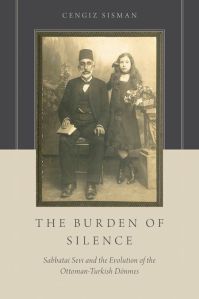
I should say that the two things in the title are unrelated.
My interview this week was with Toni Alaranta of the Finnish Institute of International Affairs, discussing his new book “National and State Identity in Turkey: The Transformation of the Republic’s Status in the International System” (Rowman). In the book, Alaranta traces how the entrenchment in power of authoritarian political Islam in Turkey after 2002 was critically aided by the West’s misguided search for a “moderate Muslim democracy” after the end of the Cold War and the 9/11 terror attacks.
Read the interview at the Hürriyet Daily News here.
And read my review of the book here.
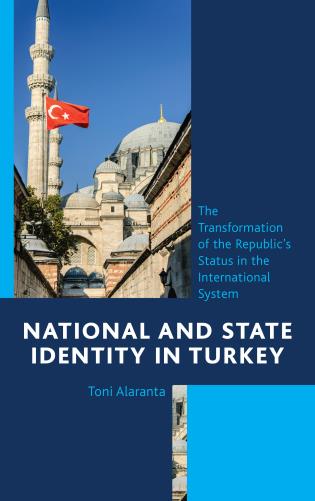
This also marks my first step into the world of podcasting. From now on I’ll be publishing these author interviews in audio as well as written form, through my new podcast “Turkey Book Talk.” The podcast will include some extra parts that didn’t make the written edit, as well as some fancy music, etc.
Click here to listen to the first episode (a work in progress as I’m still figuring out the best host, player, etc).
To subscribe to the feed, visit my PodBean page.
Please spread the word to anyone you think may be interested, and do get in touch with any suggestions on how I can improve the podcast!
Social engineering in Turkey from Atatürk to Erdoğan
May 30, 2015
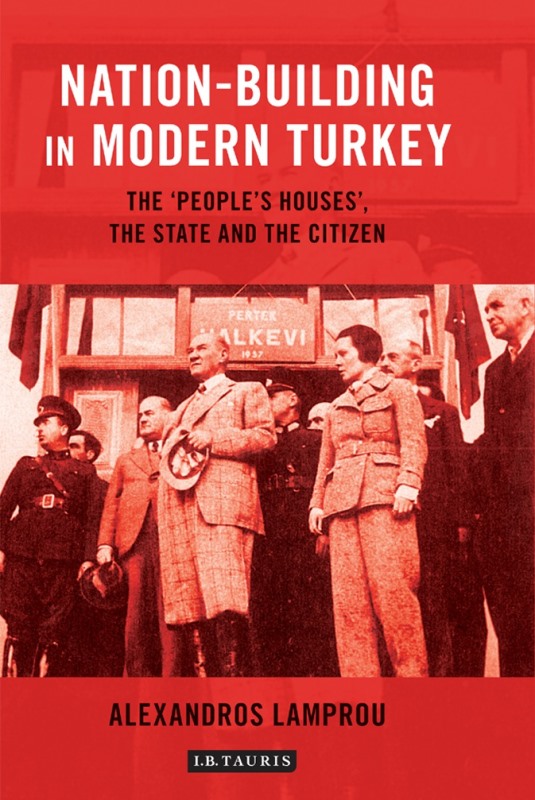
This week I spoke to Alexandros Lamprou, discussing his new book “Nation-Building in Modern Turkey: The People’s Houses, the State and the Citizen.”
The People’s Houses (Halkevleri) were established in 1932 by Turkey’s single-party regime to plant roots for modernising and secularising reforms in towns across the country. Almost 500 Houses were opened until their closure in 1951, and the traditional view has tended to see them as homogeneous institutions propagating reforms strictly according to Kemalist state ideals. Lamprou’s research showed a far more ambiguous picture, with diverse local conditions across Turkey profoundly altering the work of the People’s Houses.
Here’s the interview with Lamprou in the Hürriyet Daily News.
And here’s my review of the book, in which I explore the limits of such social engineering campaigns – from the early Turkish Republic to today.
For those interested in these things, here’s a link to my interview from last year with Mahmut Makal in Bülent Journal. Makal worked as a teacher in a central Anatolian Village Institute, which like the People’s Houses were opened to accelerate the modernization of traditional society. Makal’s books on life as a village teacher describe the uphill struggle to spread reforms in the harsh conditions of rural Turkey in the 1950s, and he was actually jailed by the authorities at the time for painting too bleak a picture.

As a final note, the publisher I.B. Tauris have provided a discount code for online purchases of Lamprou’s book. Details are at the bottom of the review and the interview.
Growing anti-Iranianism in the pro-AKP media
July 8, 2013
Not so many years ago, a strategic partnership between Turkey and Iran seemed to be developing into one of the region’s more unexpected modern developments. Turkey was vaunted as a mediator in negotiations between the West and Iran over the latter’s nuclear program, and the relationship was reinforced by crucial oil and gas sales from Iran to Turkey. Those days feel rather long ago. The two countries now find themselves at loggerheads backing opposite sides of the bloody civil war in neighboring Syria, with fears of a regional sectarian conflagration steadily turning into an apocalyptic reality. A marker of the Syrian crisis’ deleterious effect on the Turkey-Iran relationship came with the diplomatic spat that followed the deployment of NATO Patriot missiles on Turkey’s southern border earlier this year, which lead the Iranian army’s chief of staff to declare that the move could be a prelude to “world war.” Less spectacular, but also very important, is Iran’s clear unease with Turkey’s delicate ongoing peace process with the Kurdistan Workers’ Party (PKK), which involves the rebel group withdrawing its militants from Turkish soil to their bases in northern Iraq. Tehran is concerned that the withdrawal could result in the militants joining forces with the Party of Free Life of Kurdistan (PJAK), which is the PKK’s offshoot in Iran.
The schism between Turkey and Iran widened to such an extent that Patrick Cockburn recently described relations between the two as “poisonous,” and this is increasingly being reflected in the rising levels of anti-Iran sentiment in Turkey’s Islamist press. In addition to countless pieces targeting Iran for supporting the al-Assad regime in Syria , it has also been striking to see the AKP media include Iranians among the dark “outside forces” stoking the recent Gezi Park protests, supposedly out of discomfort with Turkey’s economic success. In the early days of the demonstrations, it was eagerly reported in all government-supporting media outlets that an “Iranian agent” had been arrested on suspicion of being a “provocateur” behind protests in Ankara. It later emerged in more sceptical news organisations that the individual concerned, Shayan Shamloo, was in fact a rapper who was living in Turkey as a refugee.
Soon afterwards – in one of those truly befuddling Today’s Zaman stories – Abdullah Bozkurt wrote a column titled “Iran plays a subversive role in Turkey,” in which he argued with a straight face (pardon the pun) that Iran was using the protests to infiltrate Turkey with spies disguised as LGBT people in an attempt to bring down the government:
“Recent protests exposed, among other things, the depth of Iranian infiltration into Turkey … [During the protests] about a dozen Iranian agents who were trying to turn rallies into violent anti-government demonstrations were caught by the police… Since it is difficult to distinguish legitimate non-Muslim minority or LGBT (lesbian, gay, bisexual and transgender) people from spies, Iranian intelligence often uses them as a cover to infiltrate Turkey and third countries.”
However weird, Bozkurt’s column wasn’t an outlier in pointing the finger at Iran for Turkey’s problems. Indeed, Zaman and Today’s Zaman have recently been publishing a steady stream of articles and columns critical of negative Iranian influence in the region, and it’s probably also worth noting here that the Today’s Zaman editor, Bülent Keneş, wrote a book on Iran’s links to international terrorism last year.
Much of the Iran-bashing in the Turkish press goes hand in hand with pieces on Turkey’s Alevi minority. The Alevis are an offshoot of Shiism, (distinct from the Alawites in Syria), and have historically been associated by some in Turkey as dangerous fifth columnists with divided loyalties to Iran. Indeed, that association goes back as far as Bosphorus bridge-commemorated Sultan Selim the Grim, whose decision to kill tens of thousands of Alevis was taken during a military campaign against the Persian Safavid Empire in the 16th century.
Some of the most enthusiastic and unpleasant examples negatively associating Alevis with Iran come from the extreme Islamist daily Yeni Akit. For two consecutive days in June, for example, Yeni Akit carried front page headline stories claiming that Iranian authorities had invited Alevi religious leaders across the border to visit Ayatollah Khamenei in an attempt to foment sectarian war in Turkey. The headline of the first day’s story, “Iran is playing with fire” (İran, ateşle oynuyor), was a stomach-turning play on the Turkish term for “flame” (ateş), in reference the fire often used in Alevi rituals. Of course, it should be stressed that Yeni Akit is far from representative of majority sentiment in Turkey, but it probably isn’t quite as marginal as most people like to think. In fact, a few months ago Erdoğan even put two of its writers – including editor-in-chief Hasan Karakaya – on his “Wise Men Commission,” charged with the august task of repeating whatever he said about the ongoing Kurdish peace process.
It all adds up to a worrying picture. With the Syrian crisis having exploded into a wider geopolitical struggle splitting the region on sectarian lines, it’s increasingly clear that the growing schism between majority-Sunni Turkey and majority-Shia Iran is more than just a temporary trend.
‘Insulting the religious beliefs held by a section of society’: Plenty of evidence in Turkish newspapers
April 19, 2013
Handing its 10-month jail sentence to Turkish pianist Fazıl Say on April 15, the Istanbul court stated that Say was guilty of “denigrating the religious beliefs held by a section of society” and had thus violated Article 216 of the Turkish Penal Code (TCK). Although “blasphemy laws” still officially remain in many states, they are now almost completely dormant in most democracies. The rare prosecutions that are attempted based on them almost always fail, either because of sensible legal interpretation or the fact that a guilty verdict would clash with legally enshrined principles of freedom of expression.
Say’s prosecution was based on his retweeting of couplets attributed to medieval Persian poet Omar Khayyam last year, including lines such as: “You say its rivers will flow with wine. Is the Garden of Eden a drinking house? You say you will give two houris to each Muslim. Is the Garden of Eden a whorehouse?” He also posted a personal tweet, stating: “I don’t know whether you have noticed or not, but wherever there is a stupid person or a thief, they are believers in God. Is this a paradox?” However misguided Article 216 may be, there can be little doubt that Say deliberately intended to “denigrate the religious beliefs held by a section of society.” Of course, deliberate insult should never be criminalized, but as it is considered legitimate grounds for prosecution in Turkey it’s worth asking why cases aren’t regularly opened against material published in certain Turkish newspapers. The fact is that there are a number of Turkish dailies with considerable reputations for directing abuse at religious, ethnic, and sexual minorities.
Yeni Akit has a considerable track record of targeting respected journalists for aggressive and persistent smear campaigns, including Cengiz Çandar, Hasan Cemal, Ahmet Altan, and Amberin Zaman. It has even recently been waging a bizarre campaign against the “deviant spirituality” of yoga. Although it and fellow hard-line Islamist newspaper Milli Gazete (affiliated to the minor Felicity Party) have both been fined on numerous occasions for slander and libel, they have never to my knowledge been prosecuted for “insulting a section of society.” That may seem odd after considering the following examples, dredged up on their websites by a simple search of the words “Christian,” “Jew,” “Alevi,” and “homosexual”:
– Milli Gazete’s April 18 front page headline focused on the “scandal” that the EU was “making the Turkish state pay” the costs for lighting non-Muslim places of worship “such as churches and synagogues.”
– On the same front page, it was also disbelievingly reported that New Zealand had become the latest country to legalise gay marriage. The article was headlined, “Your destruction is near,” and was accompanied on the printed page by a picture of two fossilised victims from Pompeii.
– The same paper also carried a headline story in January warning about the dangers of “Zoroastrian missionaries” spreading “terrorist propaganda” in Turkey’s southeast.
– Again Milli Gazete, this time declaring as its Jan. 8 front page: “Here’s the Jewish mind.” The story was about Jewish religious jewellery being sold by a U.S.-based company, which donated some of its profits to the Israeli army.

Milli Gazete, Jan. 8, 2013: ‘Here’s the Jewish mind’
– On the same day that Milli Gazete was warning about “the Jewish mind,” Yeni Akit reported news of an old church in the Black Sea province of Giresun making “Christian propaganda.” Despite the fact that the church had been converted into a library in 2001, the article bemoaned that crosses and Stars of David were still to be found inside the building, “blurring young minds.”
– Yeni Akit on Feb. 3: “Support for perverts from the CHP and BDP,” regarding attempts in January by opposition deputies to reform the law stating that “dirty” and “deviant” homosexuality is legitimate justification for expulsion from the Turkish military.
– Yeni Akit: “The 19 Year Lie,” in which a host of slanderous claims were made about the massacre of over 30 Alevis in the central Anatolian town of Sivas in 1993.
On any given day you can open either Milli Gazete or Yeni Akit and be sure to find similar stories, written in the most unpleasant, insulting language. Should it really be surprising that Article 216 isn’t extended to these cases?
Even if the necessary sections of the Turkish penal code were reformed, they would still undoubtedly be liable to misuse through selective interpretation. However decent a country’s set of laws may be, and however enshrined they are in decent-sounding constitutions, problems generally come from the interpretation of those laws. If Article 216 was always applied as rigorously as it was against Say, then all the above examples would be investigated. In the end, the most important factor behind scandals such as the Say case is the mentality behind them, which is not something that can be transformed by a simple change in legal language.
Zaman’s circulation figures – the Gülen effect?
January 9, 2013
Daily Zaman is often described as Turkey’s most read newspaper, with its circulation having recently tipped over the 1 million mark. It was therefore rather interesting to see a recent chart on medyatava.com indicating that this figure is made up almost entirely of subscribers, with only around 20,000 copies actually bought in shops every day.
This isn’t a complete surprise – for all its faults Zaman has never really been a “populist” newspaper, always self-consciously higher brow than the average fare on the Turkish newsstands. It’s pretty rare to see the local simitçi walking around Istanbul with a copy of Zaman tucked under his arm – at least in comparison with Sabah, Posta, Hürriyet, etc.
The high proportion of subscriptions can almost certainly be ascribed to Zaman’s links to the Fethullah Gülen religious movement (cemaat). Copies of the paper are delivered to most businesses/schools/individuals/hotels associated with the cemaat, which would account for the disproportionately high subscription number. As the “wikileaked” Stratfor intelligence agency cable explained back in 2009:
“FGC [Fethullah Gülen Community] businesses advertise heavily on FGC media, while FGC-owned media runs human interest stories and profiles of FGC sympathisers, businesses and schools. FGC members and sympathisers take holidays in FGC-owned hotels and shop at FGC-owned stores and invest in FGC financial institutions. Graduates of FGC cramming schools funded by FGC businesses often serve as teachers in FGC schools overseas. Finally, FGC media, funded by FGC businesses, reacts sharply to any criticism directed at Fethullah Gulen.”
A similar pattern can be observed at Today’s Zaman, the English-language arm of Zaman, which has 8,500 subscribers to just 1,900 sales.
***
While on the dull subject of newspaper circulation figures, it’s worth taking the opportunity to note that since last month’s shock resignations from Taraf, the paper has seen its circulation increase substantially. While Taraf had previously hovered around 50,000, this figure is now approaching close to 70,000. Whether or not the resignations were good from a journalistic perspective, they certainly seem to have made economic sense.
Yeni Akit shaping the debate?(!)
December 6, 2012
It’s been a while since I last wrote about my favourite hard-line Islamic newspaper, Yeni Akit. It would be wrong to overemphasize Akit’s significance in the overall scheme of things, but a couple of its recent news items are certainly worth mentioning, and indicate that it might have rather more influence than many give it credit for(!)
On Nov. 22, Akit published a story headlined, “Immorality at High School,” containing photographs that it said showed teachers drinking alcohol with their students at a picnic. This photos were taken in the southern province of Antalya, (“known as a castle of the secularists,” according to the article), and were apparently uploaded to Facebook by one of the teachers. “It has been claimed that the teachers are members of the ‘Eğitim Sen’ union, which opposes the headscarf as well as classes on the Quran and the life of the Prophet,” Akit helpfully stated. The Antalya branch of the National Education Directorate opened an investigation into the 11 teachers upon the publishing of the story, but this was quickly dropped after it was established that the photos were in fact taken by a teacher at a family picnic three years ago, and that no students were present. Unbowed, on Dec. 2 Akit went on to publish a photo of a female teacher at the same Antalya school, part of a group at a bar celebrating a friends’ birthday (with glasses of beer on the table). “Do these photographs suit a teacher?” said the headline. However, rather than the Education Directorate setting up an inquiry, the teacher in question is now opening a legal case against Akit.
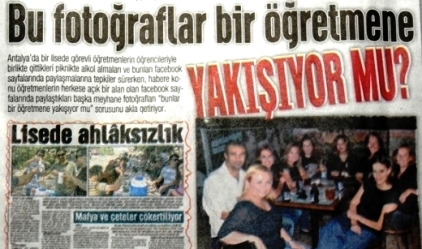
It’s worth mentioning these “photo scandals” because very recently Prime Minister Recep Tayyip Erdoğan used similarly tendentious photographs published in Akit to attack his political opponents. The pictures used by Erdoğan showed deputies of the pro-Kurdish Peace and Democracy Party (BDP) sitting around a table eating kebab, despite the fact that over 600 Kurdish prisoners were entering their 49th day on hunger fasts: “Lamb kebab for us, death fasts for you,” read Akit’s headline. On the same day (Oct. 30) Erdoğan told a meeting of his parliamentary party: “On one hand [they] are eating lamb kebab, on the other [they] are telling those in prison, ‘Die on hunger strike.’” In fact, it soon emerged that the photos had been taken two months before at the wedding of a BDP member in the southeastern province of Mardin.
Erdoğan’s harsh words got a lot of coverage at the time, (here’s the Reuters story on it), but the fact that his source was Yeni Akit obviously received rather less attention. Commentary suggesting that the prime minister is turning Turkey into an “Islamic state” is simplistic and misguided, (a piece in the Wall Street Journal last month claimed that he was “ramming Shariah law into practice.”), but it can’t be a good sign that he’s turning to Yeni Akit for rhetorical fodder to use against his opponents.
(Some) Turkish newspapers report on the AKP Congress
October 2, 2012
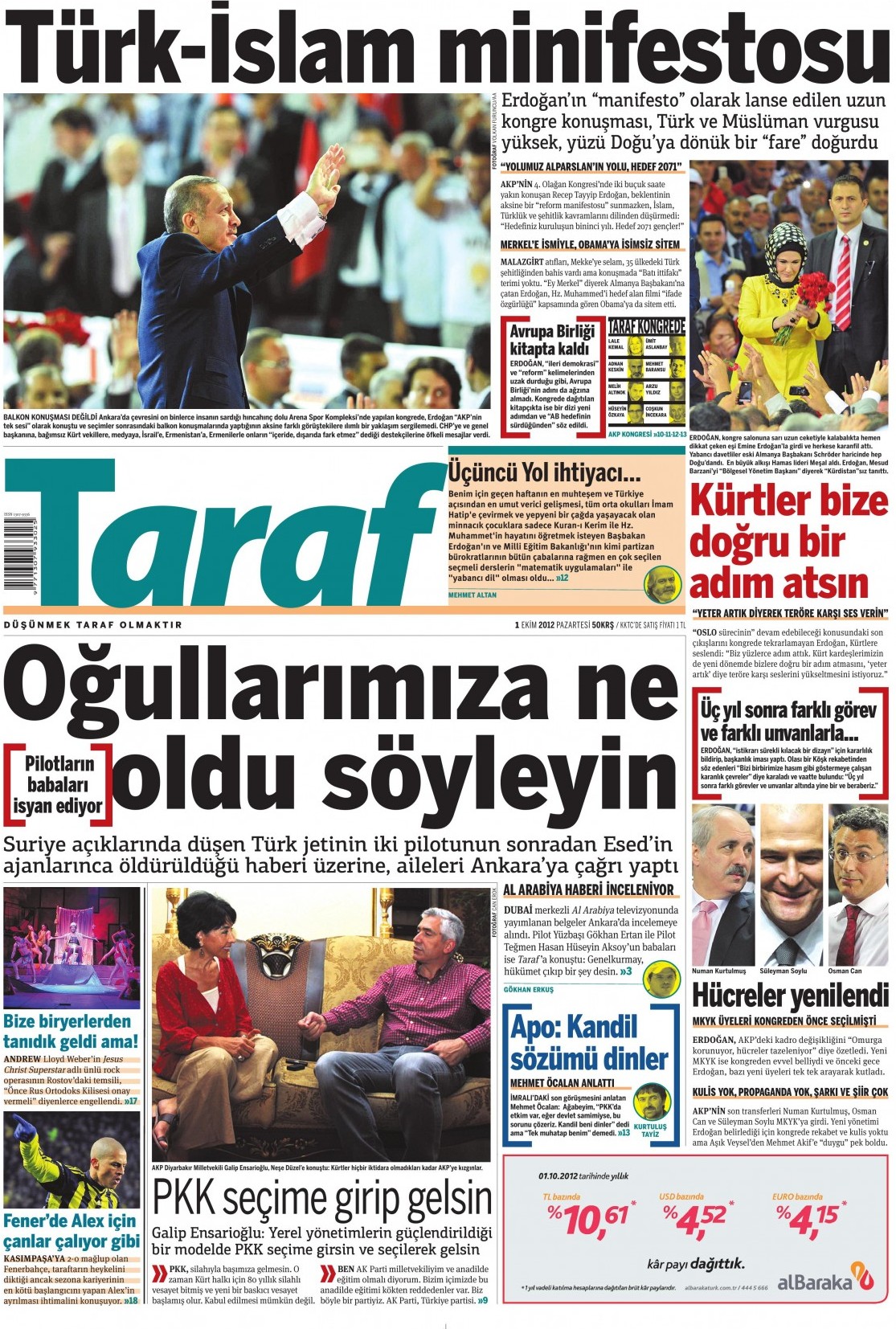
The ruling Justice and Development Party (AKP) held its key congress on Sunday (Sept. 30), the slogan of which was “Büyük Millet, Büyük Güç, Hedef 2023” (Great Nation, Great Strength, Target 2023). Throughout his emotional two-and-a-half hour speech, Prime Minister Recep Tayyip Erdoğan was in full neo-Ottoman mode. He told the 10,000 delegates packed into the Ankara arena that the government was following the same path as Sultan Mehmet II (the conqueror of Constantinople) and Selim I (“The Grim,” who expanded Ottoman territories to the east during the 16th century). He even went so far as to declare – tongue only half in cheek – that the AKP’s new target was 2071, linking the party back to the first Turkish Anatolian state-builders of the 11th century, 2071 being the 1,000th anniversary of Seljuk Turkish leader Alp Arslan’s entry into Anatolia.
It was a speech high in stirring rhetoric. The day after, government supporting newspapers fawned over the “renewal” and “refreshing” emphasis of a new “ustalık” (mastership) era. Daily Sabah focused on what it called the embracing, inclusive nature of Erdoğan’s speech and his words on the Kurdish issue: “Let’s draw a new roadmap together.” Zaman’s front page headline enthusiastically quoted a line from Erdoğan’s speech: “Come, let’s open a new page, let’s say ‘no to terror.’”

The contentious presence of Iraqi Kurdistan Regional leader Massoud Barzani at the congress was rather less trumpeted by Sabah and Zaman. He even gave a speech to the delegates, but the announcer in the arena refrained from using the word “Kurdistan” when introducing him. Indeed, rather than Barzani, it was Erdoğan’s words on the Kurds that received most attention in the pro-government press. This reminded me of one of Nuray Mert’s recent columns in the Hürriyet Daily News:
“The idea of the Ottoman Empire has induced a nostalgic longing for the days when Turkish sultans ruled diverse people in vast lands. For Ottomanists, the idea of the Ottoman Empire as a multi-ethnic haven for diverse cultures and populations is rather misleading, since the basic idea has always been to recall the times when diverse populations lived under ‘Turkish rule.’”
The conspicuously Islamic nature of the congress was also much discussed in the Turkish press – both by those approving and those dissenting. Beside its headline declaring “Great Strength Manifesto,” Islamist daily Yeni Şafak featured an admiring front page box quoting Hamas leader Khaled Meshaal, controversially (or perhaps not) invited to speak at the event: “‘You are not just the leader of Turkey, but also the leader of the Islamic world,’ Meshaal said, receiving extended applause from the crowd.” Indeed, when announced to the audience Mashaal received some of the loudest cheers of the day, (the EU dignitary who was introduced after him didn’t stand a chance!)
Liberal daily Taraf agreed that the congress constituted a Turkish-Islamic “minifesto,” but struck a rather more sceptical tone: “There was a strong Turkish and Muslim emphasis, a mouse with its face turned to the East was born,” (in Turkish, “a mouse was born” means that something underwhelming took place). The paper also noted plaintively that Erdoğan had failed to mention the European Union even once during his speech.
Meanwhile, seven national newspapers were refused accreditation to attend: Cumhuriyet, Sözcü, Evrensel, Birgün, Aydınlık, Yeniçağ, and Özgür Gündem. These publications have diverse sympathies: from left to right wing, from Turkish to Kurdish nationalism. The only thing shared by all is antipathy towards the government.
In response, Monday’s Cumhuriyet included a front page editorial titled “From Cumhuriyet to Public Opinion,” which said some unsurprisingly harsh things:
“Established six months after the founding of the Turkish Republic, our newspaper has been published for 88 years. During periods in the past when democracy has been suspended by the ruling powers our newspaper has been closed down, but outside of this we have always published under the principles of freedom of the press, in the name of people’s right to know. In 21st century Turkey, our newspaper is now exposed to censorship by the ruling powers.
“We will not stay quiet in the face of the anti-democratic implementations applied against us that violate both the constitution and the law.”
The piece went on to detail two constitutional and legal articles that it alleges the congress ban violated: Article no. 69 of the Turkish constitution, which states that internal political party activities, arrangements, and workings must not run counter to the principles of democracy; and Article no. 93 of the Law on Political Parties, which states that decisions taken and actions performed by party central administrations and affiliated groups must not run counter to the principles of democracy.
The International Press Institute’s Turkish National Committee issued a statement about the issue on the day of the AKP Congress, on behalf of the Freedom for Journalists Platform, an umbrella group representing local and national media organisations in Turkey:
“The news that reporters and journalists from some press organs are not allowed to enter the AK Party’s Congress is very worrying.
“Monitoring this historical event of the ruling government party on the spot and transferring it to its readers and viewers are primary duties of news media.
“We have previously protested the accreditation limitations at other institutions. But now, it is very disappointing that the same accreditation is being applied by a political party whose existence depends on democracy.”
Yeni Şafak and ‘the world’s richest Jew’
September 20, 2012
It is not particularly gratifying to scratch around the dregs of the Turkish press, but here’s the latest sludge I have been able to dredge up from the bottom of the barrel.
Islamist daily Yeni Şafak’s front page headline on Monday Sept. 17 focused on the reported recent meeting between Turkish Prime Minister Recep Tayyip Erdoğan and a “famous Jewish businessman.” The businessman, Ronald Lauder, was apparently sent as an intermediary by Israel to try to help restore its broken relations with Turkey. Following the meeting, Yeni Şafak’s headline stated: “The world’s richest Jew was the mediator.”

Perhaps I’ve become desensitized to this kind of thing after reading so many Turkish newspapers, but such casual playing on lazy Jewish stereotypes seems mild now that I write it down. Far worse examples can be found elsewhere every day (the front page of my favourite daily Akit recently included a graphic of a serpent sliding through a Star of David alongside that day’s requisite story about Israel). However, what was particularly striking to me about Yeni Şafak’s headline was that it came at a time when much of the Muslim Middle East was in violent uproar against the (similarly squalid) film produced in America, “The Innocence of Muslims.”
You only have to do a quick search on Google or YouTube to easily find thousands of articles and videos insulting Christianity (and Christians), Judaism (and Jews), or Islam (and Muslims). None of it is very nice, but thank God the world’s Jews don’t rise up in violent protests every time an offensive headline or story appears in a Turkish or Arabic newspaper.
A competition for the ‘giant’ Çamlıca Mosque
August 1, 2012
In May, Prime Minister Recep Tayyip Erdoğan announced to the Turkish media his desire to see a “giant” mosque built on Istanbul’s Çamlıca Hill. In his latest “crazy plan” for the city, Erdoğan said he wanted it to be a mosque that could “be seen from everywhere,” and declared that construction would begin within two months. Çamlıca is situated on the Asian side of the city, and despite currently being the site of a number of enormous television and radio reception towers, the hill is one of Istanbul’s few remaining green, unpopulated spaces. On June 8 the Environment and City Planning Ministry announced that a 250,000 square metre area on Çamlıca Hill had been identified for the project.
The Turkish press is predictably divided along secular/religious lines on the issue. There are, however, a few voices amongst government-supporting newspapers questioning the necessity of a mosque when there are no residents nearby for it to serve. Such objections miss the point that a new mosque on Çamlıca would undoubtedly afford TOKİ developers a golden opportunity to roll up their sleeves in the area(!)

An appropriately crude impression of how a mosque on Çamlıca Hill might look.
Late in June, liberal daily Radikal featured an interview with Ahmet Turan Köksal, professor of architecture at Gaziantep’s Zirve University, to discuss modern tendencies in mosque-building and his thoughts on the Çamlıca plans. He is skeptical: “A mosque should be for the community, not for show. For me, being a mosque architect means only doing work that has a function for the community …. If they want to make a mosque like an Olympic stadium on Çamlıca Hill and want to show off to their friends and rivals, then I’m against this,” he said.
Nevertheless, at the beginning of July, Milliyet included an interview with architect “Hacı” Mehmet Güler, who said he had been charged by the prime minister to make preparations for the new mosque. Güler said it would be designed in a “classical style,” and – in a fine example of “Muslim modesty” – that plans were being drawn up to have it feature the world’s tallest minarets, even surpassing those of the Mosque of the Prophet in Medina.
Following this interview, the issue seemed to fall off the agenda. It was thus quite a surprise to find a number of Turkey’s religion-friendly newspapers recently carrying advertisements announcing: “Çamlıca is searching for its architect!” The advertisements appeal to architects to submit their design ideas, in a competition to find an architect for the new mosque.

The competition opened on July 23, and will be accepting submissions until Sept. 3. According to the website of the organization in charge of the project – the rather clumsily named “Association to Build and Maintain Istanbul Mosques and Educational-Cultural Services” – the winning design will be “suitable for Istanbul’s silhouette and texture, reflect the Ottoman-Turkish style, extend traditions to the future, add value to Istanbul, and become one of Istanbul’s symbols.” The winner, the association has announced, will be awarded the honour of designing the ‘Recep Tayyip Erdoğan’ as yet unnamed mosque, as well as 300,000 Turkish Liras in prize money.
As declared in advertisements for the ruling AKP at the last parliamentary elections, alongside a picture of a vatic looking Erdoğan: “It was a dream, it came true!”
The Sivas Massacre is a ‘19 year lie’: Yeni Akit
July 27, 2012
The massacre that took place in the Central Anatolian town of Sivas in 1993 is one of the darkest episodes in modern Turkish history. On the morning of July 2, a large group of radical Sunni Islamists descended on the Madımak Hotel in Sivas town center, protesting its hosting of an Alevi cultural festival. The mob attacked and set fire to the hotel, which resulted in the deaths of 37 people. Autopsies at the time concluded that the deceased had either died of burns or smoke inhalation.
Radical Islamist daily Yeni Akit’s July 23, 2012 front page carried a large headline declaring “The 19 Year Lie,” accompanied by two photos tastefully showing the morgue full of corpses from the massacre. Aside from the pleasure the paper obviously derived from showing off the photos on its front page once again, the ostensible reason the story was to expose what it called the “lie” that those in the hotel had been killed by the flames. In one of the pictures, a young girl lying on a morgue table, Belkıs Çakır, bears what the paper says is “clearly” a gunshot wound in the chest. This apparently proves that most of the deceased actually killed each other inside the hotel.Unfortunately for Akit, closer inspection reveals that the “blood” from Çakır’s “bullet wound” is simply a braid of hair hanging down from her head.

Akit’s charming July 23 front page
Akit’s piece aroused immediate opprobrium from a number of other Turkish dailies. The next day’s Taraf responded with the headline: “Akit sets fire to Madımak again,” Cumhuriyet said: “One more black publication from Akit,” while leftist-nationalist Yurt bluntly stated on its front page: “A Bigoted Lie.” All included the dismayed reactions from the families of those who died in the tragic incident, as well as their representatives.
Akit said the morgue photos had been hidden for 19 years before passing into their hands, but lawyer Şenal Sarıhan explained to Taraf that the photos were in fact included in a book on the event written by herself, “Madımak Yangını Sivas Davası.” “This book was published in 2002, and it had its third print run in 2011. Akit’s reporter Murat Alan clearly has it. The photos are included on page 97, 100, and 102. To claim that this is the first time they have been seen is completely untrue,” Sarıhan said. Çakır’s original autopsy, she added, was conducted at Sivas’s Numune Hospital, under strict observation. It unambiguously concluded that she had died of burns and from carbon monoxide poisoning. “The definite cause of death was burns and smoke inhalation. There is no dispute on this subject … Neither bullet wounds nor knife wounds can be seen in the photos,” Sarıhan said, adding that the only two people who died of bullet wounds on the day were shot outside the hotel by the demonstrators.
Zeynep Altıok, daughter of the poet Metin Altıok who was killed in the Madımak attack, was quoted as saying that the news did not come as a surprise from Akit. “They have written similar things before. They used to say it was the work of the [outlawed Kurdistan Workers’ Party] PKK. Their aim is to distort the truth. Before, they said it was the PKK, now they’ve gone in completely the opposite direction. I can’t take it seriously.”
Unfortunately, it’s not easy to reason with fanatical Islamists, and Akit’s July 24 front page headline followed on from the previous day, declaring: “Let the autopsies be conducted again”! On July 25, following the condemnations that the earlier pieces had aroused, the paper retreated into comforting victimhood,complaining that the other newspapers constituted a “dirty alliance against Akit … a panicking cartel.”
Yeni Akit is notorious in Turkey as the most vitriolic of the country’s Islamist newspapers. It was established in 2010 after its forerunner, “Anadolu’da Vakit,” was closed down following its failure to pay a fine incurred in 2003 for a piece deemed “insulting to the Turkish Armed Forces” (still officially a crime). Sane-minded observers view Akit with a mixture of incredulity and contempt, and think of it as not much more than a marginal voice on the lunatic fringe. Nevertheless, the fact that it enjoys significantly higher circulation figures than a number of far more respected newspapers must be chastening indeed!
[Hürriyet Daily News (15th June 2012): http://www.hurriyetdailynews.com/ataturk-an-intellectual-biography.aspx?pageID=500&eid=101]
M. Şükrü Hanioğlu – Atatürk: An Intellectual Biography, Princeton University Press, 2011, 280pp
One of the first things guaranteed to strike any newcomer to Turkey is the inescapability of Mustafa Kemal Atatürk – the statues, the portraits in every shop, the street names, the fact that every bookshop has an “Atatürk section,” the fact that every classroom has an “Atatürk Corner.” Whatever truth there is in the concern amongst secular Turks that the founder of the Turkish Republic’s memory is being eroded by a new religious order, it certainly – at least superficially – doesn’t feel that way to the Turkey neophyte.

Of course though, if that neophyte is going to stay for a longer stretch of time, he or she will sooner or later have to get a firmer handle on the Atatürk fundamentals, and Professor M. Şükrü Hanioğlu of Princeton University is the latest to take on the daunting task of producing a biography on the man. As Hanioğlu himself says in the preface to the book, it’s daunting because in Turkey: “For many years, the scholar who aspired to portray Atatürk as he really was resembled the pre-modern historian rash enough to attempt a depiction of the historical Jesus.” Though restricted in scope to the influences that shaped the “intellectual” character of its subject, (rather than filling in details of the personal life story), “Atatürk: An Intellectual Biography” is a sane, fair-minded primer to the ideological forces that shaped the “Father of the Turks.” Unlike so many titles in that “Atatürk section” of the local bookshops, it is resolutely a biography – not a hagiography.
The first step to challenging any holy text is to read it as a product of its historical context. The major objective of this book is to do the same with Atatürk, presenting him as an intellectual and social product of the late nineteenth and early twentieth century Ottoman Empire. The influences affecting the elites of the late Ottoman period are thus given ample space, demonstrating the essential continuity that Mustafa Kemal represented. Even though politically he was to become the symbolic figurehead of the sudden rupture between the old imperial order and the new republic, in crucial respects Atatürk was simply the inheritor of the late Ottoman reformist legacy. This historical continuity is one of the central themes that emerges from almost all serious contemporary historical writing on the period. Hanioğlu summarises:
“it is imperative to realize that Mustafa Kemal emerged from within a specific social milieu … many of the radical ideas destined to become central planks in his reform program were widely held in intellectual circles at the turn of the century … Despite the radical changes that it brought about, the Turkish transformation led by Atatürk was not a rupture with the Late Ottoman past but, in important respects, its continuation.”
While official Turkish historiography considers the founder of the TurkishRepublica kind of omniscient leader for all times, untrammelled by the age in which he emerged, this book paints a convincing alternative picture.
In this respect, the discussion of nineteenth century German military theorist Colmar van der Goltz’s idea of “the Nation in Arms” is particularly illuminating. Goltz held that a state’s military elite should be afforded an exalted role as the ultimate guide of society, a “superior position” being “the natural due of officers as a class.” Such ideas found fertile ground in the lateOttoman Empire, and Goltz was chosen to lead a restructuring of the Ottoman Royal Military in 1883-84. His theories had an obvious effect on the Committee of Union and Progress, (the group of military officers later known as the Young Turks), which swept to power in 1908, and were clearly significant in justifying the military’s later elite position in the Turkish Republic. Equally important to Ottoman thinking of the time – and consequently to Atatürk – was another German import, the concept of Vulgarmaterialismus:
“a vulgarized version of the doctrine of materialism, fusing popular notions of materialism, scientism, and Darwinism into a simplistic creed that upheld the role of science in society. The late Ottoman version of this materialism was a further simplification of the German original and a medley of highly disparate ideas.”
Hanioğlu remarks on the inherent irony of the self-contradictory, one-dimensional worship of scientific materialism by the era’s elites, a secular creed held on to with as much unquestioning zeal as the most pious of religious believers. The early republican fetish for the all-encompassing power of science was clearly a direct inheritance from this late Ottoman tendency.
Such oversimplification also gave rise to some of the more eccentric, often troubling republican intellectual predilections. The scientistic cult logically led to scientific racism and theories of exclusivist Turkish racial superiority, (the body of 16th century imperial Ottoman architect Mimar Sinan was exhumed in 1925 to confirm the brachycephalic shape of his skull, in order to prove beyond all doubt that he was, indeed, an ethnic Turk). It also fed into the aberration of the various Turkist language theories – which resulted in the brutal purging of all “foreign elements” in order to form a new “purified” Turkish language, with artificial replacements dredged up from ancient Turkic languages. In the words of Geoffrey Lewis, the reforms were a “catastrophic success,” and meant that Atatürk’s famous 36-hour speech of 1926 had already become unintelligible and had to be rendered into modern usage by 1963. There was also the new Turkish history thesis that found its way into official Turkish textbooks, which involved a comprehensive effort to prove that all ancient civilisations, including Greece and Rome, came from a central Asian Turkish wellspring. Despite obviously being nonsense, this revisionist interpretation of human history was seductive because it served a number of practical purposes. Firstly, it helped bypass the awkwardly religious Ottoman past; secondly, it helped pre-empt claims by rival nationalisms that Turks were latecomers to Anatolia; and thirdly, in the Turks’ mission civilisatrice, it also sought to solidify Turkey’s position as an integral part of the West, (although even this may have been a step down for some, with one contemporary text claiming that “Turks lived clothed during the stone age in 12000 BC, while Europeans reached that stage 5,000 years later.”) Atatürk never feels further from the figure of the high Enlightenment – and closer to his own, authoritarian age – than when we read of these quixotic social engineering projects. (I was struck recently when my neighbourhood plumber, Ali, while repairing some piping in my bathroom, began expounding something that sounded suspiciously close to the “Sun Language Theory.” I used to think of such things as being not much more than an eccentric footnote, representing the lunatic fringe of the early republican age, but perhaps I was being too generous.)
Nevertheless, despite the fact that it was personally one of his central intellectual pillars, Atatürk tended not to emphasise the more esoteric expressions of his Turkism until the future of the republic had been properly secured. Until this time, Hanioğlu stresses, Atatürk displayed an often underappreciated pragmatism as a politician. This is especially the case with regard to religion, which is far from the black and white picture that is often assumed. Atatürk was never averse to invoking Islam, particularly early on, when seeking to mobilise the masses in the struggle against the Allies and the non-Muslim populations, which were seen as a mortal threat to the very independence of the nation. Despite his contempt for communism, he also made use of a “purely rhetorical Socialism,” largely aiming to maintain the young republic’s alliance of convenience with theSoviet Union. “This pattern of dissimulation,” Hanioğlu writes:
“was undoubtedly part of a deliberate strategy to align the nationalists with the most powerful and broad-based ideologies of resistance, while obfuscating the exclusionary objectives of the movement. This ideological mishmash was crucial to Mustafa Kemal as he performed his difficult role as political leader, diplomat, and supreme military commander.”
Although he was the leading figure behind the abolition of the Ottoman Sultanate and, soon after, the Islamic Caliphate, this too was achieved in an extremely careful, gradualist way. As is often the case, what seems now like a sudden jolt and break with the past can, in many senses, be seen as merely the logical culmination of tendencies that had been developing for decades.
Westerners tend to view the Turkish adoration of Atatürk in rather narrow, technocratic terms, without understanding that the emotional resonance his image has across Turkish society couldn’t possibly be accounted for by his intellectual convictions alone. Like all icons, his image is still powerful in today’s Turkey because it has been effectively divested of all meaning, and the viewer can invest it with whatever symbolism he or she wishes to. As in any personality cult, Atatürk’s image must necessarily mean different things to different people. Depending on the context, Hanioğlu says, Atatürk “may be invoked in support of ideas that are étatist or liberal, nationalist or socialist, religious or scientistic, elitist or populist.” A westernised Turk on the Aegean coast might revere him for his secularizing, modernising vision, whilst a religious conservative in Central Anatolia can selectively ignore this, and instead place the emphasis elsewhere – perhaps instead respecting the strongman who successfully defended his homeland and gave the West a bloody nose. He probably sees no contradiction at all in praying five times a day while also passionately admiring Atatürk.
Shared by both caricatures is a veneration for the redeemer of the nation, and it is this aspect more than anything else that lends Atatürk the emotional impact needed to endure. This is the reason why detached and technical books like this, while welcome, can really only ever have a minor impact. The majority are guided by impulses rather less rational and rather more emotional. Atatürk himself understood that, even though it is this paradox that perhaps ultimately illustrates the limits of his ultra-rational, positivist intellectual convictions.


 Turkey Book Talk