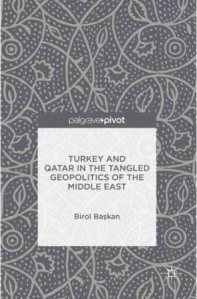
Amid the ongoing face-off in the Arab Gulf, a particularly topical new podcast episode with BIROL BAŞKAN, an assistant professor at the Georgetown University School of Foreign Service in Qatar. We discuss his book TURKEY AND QATAR IN THE TANGLED GEOPOLITICS OF THE MIDDLE EAST (Palgrave Macmillan).
Download the episode or listen below.
Here’s my Hürriyet Daily News review of the book.
Subscribe to Turkey Book Talk : iTunes / PodBean / Stitcher / Acast / RSS
*SPECIAL OFFER*
You can support Turkey Book Talk by taking advantage of a 33% discount plus free delivery (cheaper than Amazon) on five different titles, courtesy of Hurst Publishers:
- ‘Jihad and Death: The Global Appeal of Islamic State’ by Olivier Roy
- ‘The Circassian: A Life of Eşref Bey, Late Ottoman Insurgent and Special Agent’ by Benjamin Fortna
- ‘The New Turkey and its Discontents’ by Simon Waldman and Emre Çalışkan
- ‘The Poisoned Well: Empire and its Legacy in the Middle East’ by Roger Hardy
- ‘Out of Nowhere: The Syrian Kurds in Peace and War’ by Michael Gunter
Follow this link to get that discount from Hurst Publishers.
Another way to support the podcast, if you enjoy or benefit from it: Make a donation to Turkey Book Talk via Patreon. Many thanks to current supporters Michelle Zimmer, Steve Bryant, Jan-Markus Vömel, Celia Jocelyn Kerslake and Aaron Ataman.
Ryan Gingeras on Turkey’s ‘deep state of crisis’
May 19, 2017
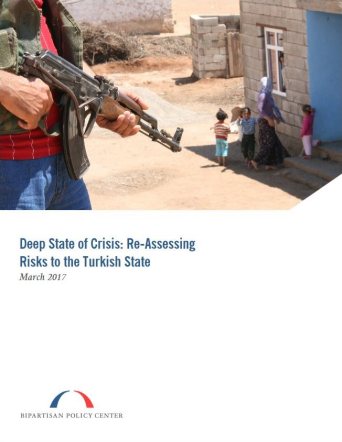
RYAN GINGERAS, associate professor at the Naval Postgraduate School in California, joins Turkey Book Talk once again. This time he is discussing his report, penned for Washington’s Bipartisan Policy Center, “DEEP STATE OF CRISIS: RE-ASSESSING RISKS TO THE TURKISH STATE.”
Download the episode or listen below.
Here’s a link to the PDF of the report we are discussing.
Subscribe to Turkey Book Talk : iTunes / PodBean / Stitcher / Acast / RSS
Ryan previously appeared on the podcast last year to discuss his book “The Fall of the Sultanate: The Great War and the End of the Ottoman Empire, 1908-1922” (Oxford University Press):
He also joined to discuss his biography of Atatürk: “Mustafa Kemal Atatürk: Heir to an Empire” (Oxford University Press):
*SPECIAL OFFER*
You can support Turkey Book Talk by taking advantage of a 33% discount plus free delivery (cheaper than Amazon) on five different titles, courtesy of Hurst Publishers:
- ‘Jihad and Death: The Global Appeal of Islamic State’ by Olivier Roy
- ‘The Circassian: A Life of Eşref Bey, Late Ottoman Insurgent and Special Agent’ by Benjamin Fortna
- ‘The New Turkey and its Discontents’ by Simon Waldman and Emre Çalışkan
- ‘The Poisoned Well: Empire and its Legacy in the Middle East’ by Roger Hardy
- ‘Out of Nowhere: The Syrian Kurds in Peace and War’ by Michael Gunter
Follow this link to get that discount from Hurst Publishers.
Another way to support the podcast, if you enjoy or benefit from it: Make a donation to Turkey Book Talk via Patreon. Many thanks to current supporters Michelle Zimmer, Steve Bryant, Jan-Markus Vömel, Celia Jocelyn Kerslake and Aaron Ataman.
I’ve written a piece for the New York Times to mark President Erdoğan’s visit to Washington on the blockbuster series “Diriliş: Ertuğrul,” broadcast on Turkish state TV channel TRT.
A few years ago at the height of so-called neo-Ottomanism there were loads of articles published about Turkish TV serials being exported all over the world. It became quite a tired cliche but the popularity of various shows is in fact a good bell-weather for the political mood. And audiences take the messages that these serials pump out seriously. On a visit to Polatlı, a small town outside Ankara a couple of years ago, I vividly remember how a local coffee house arranged its seats in rows at night once a week to screen the latest episode of the ultra-macho action serial “Valley of the Wolves.” In a provincial town with little else to do, it was clearly a major weekly event.
Get a flavour of Diriliş: Ertuğrul by watching the intro:
If you’ve got too much time on your hands you can stream every episode on the TRT website 🍿🍿🍿
If you missed it, here’s an article I wrote about another dubious cultural product: The Erdoğan biopic “Reis” (The Chief), which flopped at box offices in March.
‘Reis,’ Turkey’s referendum, new book offer
March 20, 2017
A bit late in posting this. But last week I wrote for War on the Rocks about Turkey’s upcoming referendum and a trip to the cinema to see “Reis” (The Chief), the bonkers biopic/hagiography of President Erdoğan.
Here’s a trailer:
The film is really bad – not even so bad it’s good, just bad.
In other news, there’s a new addition to the special 1/3 off discount for Turkey Book Talk listeners on selected books from Hurst Publishers: Renowned sociologist Olivier Roy’s new book “Jihad and Death: The Global Appeal of Islamic State.”

So now you can support the podcast by ordering any of the following titles for at least 33% off plus free delivery (cheaper than Amazon!):
- “The New Turkey and its Discontents” by Simon Waldman and Emre Çalışkan
- “The Poisoned Well: Empire and its Legacy in the Middle East” by Roger Hardy
- “Out of Nowhere: The Syrian Kurds in Peace and War” by Michael Gunter
- “The Circassian: A Life of Eşref Bey, Late Ottoman Insurgent and Special Agent” by Benjamin Fortna
- “Jihad and Death: The Global Appeal of Islamic State” by Olivier Roy
Order through this page on the Hurst website.
Cheers!
(I will post a new podcast episode with Basharat Peer on his book “A Question of Order: India, Turkey, and the Return of Strongmen” later this week.)
Post-coup attempt
August 6, 2016
I’m currently on holiday, but posted below are a couple of things I wrote on the coup attempt and its aftermath.
The view from Taksim Square – Times Literary Supplement.
I also spoke on the TLS podcast about that piece. Listen here (my bit is from 30.22). I wouldn’t have framed the whole thing as the presenters do, but they’re not the only ones who got the balance wrong in the aftermath of the coup, as I describe here:
Turkey and the West are heading for a breakup – War on the Rocks.

I took this photo in Taksim Square at around midnight on the night of July 15/16, just before anti-coup protesters started to amass.
I’ll be posting the next Turkey Book Talk podcast in two weeks. Thanks for your patience.
Cihan Tuğal on the fall of the ‘Turkish model’
April 16, 2016
Cihan Tuğal, a sociologist at UC Berkeley, chats about “The Fall of the Turkish Model: How the Arab Uprisings Brought Down Islamic Liberalism” (Verso), charting how Turkey went from a model “Muslim democracy” for the Middle East to an increasingly authoritarian state.
Download the podcast or listen below:
Subscribe: iTunes / PodBean / Stitcher / Facebook / RSS
Here’s my review of the book at Hürriyet Daily News.

Support the Turkey Book Talk podcast via my Patreon account. You can help me keep producing the podcast by making a monetary donation, big or small, on a per episode basis! Many thanks to current supporters Sera Aleksandra Marshall and Andrew Cruickshank.
I should say that the two things in the title are unrelated.
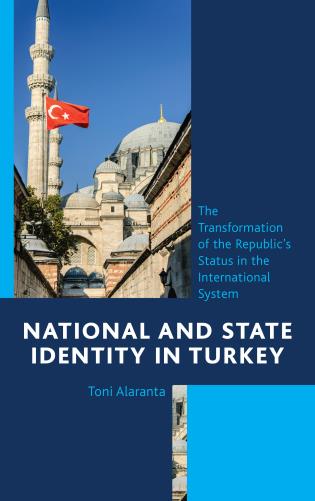
My interview this week was with Toni Alaranta of the Finnish Institute of International Affairs, discussing his new book “National and State Identity in Turkey: The Transformation of the Republic’s Status in the International System” (Rowman). In the book, Alaranta traces how the entrenchment in power of authoritarian political Islam in Turkey after 2002 was critically aided by the West’s misguided search for a “moderate Muslim democracy” after the end of the Cold War and the 9/11 terror attacks.
Read the interview at the Hürriyet Daily News here.
And read my review of the book here.
This also marks my first step into the world of podcasting. From now on I’ll be publishing these author interviews in audio as well as written form, through my new podcast “Turkey Book Talk.” The podcast will include some extra parts that didn’t make the written edit, as well as some fancy music, etc.
Click here to listen to the first episode (a work in progress as I’m still figuring out the best host, player, etc).
To subscribe to the feed, visit my PodBean page.
Please spread the word to anyone you think may be interested, and do get in touch with any suggestions on how I can improve the podcast!
I’ve written a piece for Politico about Turkey’s critical general election. Specifically, the article looks at the shift by President Erdoğan and the government in recent months from emphasising economic competence to peddling bombastic conspiracy theories:
“While signs of this paranoiac shift have long been evident, the AKP’s earlier years in power mostly focused on making an economy-based pitch to voters. Economic competence and extending services to the poorer sections of society – along with an appeal to the conservative religious values held by many Turkish citizens – proved a winning combination for a string of crushing election victories. But while the party still pledges to spur development, its rhetoric leading up to Sunday’s election has tilted decisively in favor of a combination of conspiracy theories laced with historic posturing about reconnecting Turkey with the glory of the Ottoman Empire. When you’re on a glorious path, the AKP’s leaders suggest, you will inevitably have enemies.”
Read the whole thing over at Politico.

A brief history of Central Bank independence in Turkey
March 19, 2015
I’ve written a short piece taking a longer view of the ongoing tug-of-war between the government and Turkey’s Central Bank.
The piece argues that current speculation about the Bank’s independence should not be seen in isolation, but considered within the context of the government’s long-flagging enthusiasm for the economic reforms passed after the meltdown of Turkey’s financial sector in 2000-01. The jettisoning of long-term economic planning is one side effect of President Erdoğan’s bid to centralise all power in his own hands, and could herald a period of severe economic turbulence in the country.
Click here to read the whole thing on the Hürriyet Daily News.
The Turkish gov’t takes on the foreign media
December 10, 2014
I’ve written a piece for Foreign Policy on the deterioration of the Turkish government’s image in the international media, and Turkey’s aggressive response:
The foreign media image of President Recep Tayyip Erdoğan and the Turkish government has shattered over the past 18 months, and in response Turkey has ramped up an international information blitzkrieg.
The tone is becoming increasingly bitter, motivated by a conviction that the foreign media is a propaganda weapon deployed by the West to attack the ruling Justice and Development Party (AKP). Patriotic Turks are called on to rally behind their government in the name of national sovereignty.
This sense of embattled defiance is important to understand, and reveals much about the resentful mindset gripping the state. Suspicion about the foreign press is hardly new in Turkey, but it’s unfortunate to see the worst of such sentiments returning – openly sponsored by Erdoğan and the AKP’s top brass. The president himself is even managing to turn international criticism to his own advantage, as evidence that the West is implacably hostile to Turkey and its fearless, truth-telling leader — a useful populist line ahead of next June’s crucial parliamentary elections.
Read the full article here.
PM Erdoğan’s jet
July 24, 2014
As Prime Minister Recep Tayyip Erdoğan flies around on his apparently never-ending election campaign, the symbolism of “Erdoğan’s jet” and who he invites onboard is coming under increasing scrutiny. These days, only reporters from the most craven pro-government media outlets – the usual suspects of Sabah, Yeni Şafak, Star, Akşam, Türkiye, Yeni Akit – tend to be given the golden ticket to fly on Erdoğan’s private “ANA” jet; a place on board is almost used as a carrot to reward docile behaviour. As daily Hürriyet’s ombudsman Faruk Bildirici wrote in a piece last month, the reporters accepted onto the plane are guaranteed not to ask difficult questions, choosing to do little more substantial than perform as the AKP’s media arm, “as assistants to help Erdoğan comfortably transmit whatever message he wants to the public.”
An increasingly narrow coterie of trusted media figures is being granted access to the prime minister. The effect isn’t only seen in who Erdoğan accepts onto his plane; it is also there in the TV stations and newspapers that he and other prominent government figures choose to grant interviews to, and in the hand-picking of interlocutors during these exchanges. Of course, democratic governments across the world have media groups to which they are closer and which, to some extent, they rely on; indeed, the opposition parties in Turkey also have their own “reliable” media camps. But there’s something blatantly unfair about the mutually supportive state-private network that is reinforcing the AKP government in power today. The cosiness of the prime minister and the media accepted onto his jet is just one of the most obvious examples of this favouritism.

A familiar scene: Erdoğan surrounded by loyal scribes on his private jet. (Photo credit: Milliyet)
Last week, the Nielsen Company’s AdEx advertising information report caused quite a stir in Turkey, revealing how advertising provided by state companies was weighted heavily in favour of government-friendly media groups. According to the report, of the 18 national newspapers examined, the three that received the most public advertising slots in the first six months of 2014 were the pro-government Sabah, Star and Milliyet dailies. The bottom five, meanwhile, were all broadly AKP sceptics, despite two of them – Posta and Zaman – having the highest circulation figures in the country. The two newspapers known as being close to the movement of ally-turned-bête noir Fethullah Gülen – Bugün and Zaman – received almost zero advertising from state institutions. Similarly, TV stations that are known to be closer to the government received far more advertising from public bodies in the first half of the year. Two pro-Gülen television channels – Samanyolu and Bugün TV – received no advertising revenue whatsoever from state companies. While much of the recent focus has been on public broadcaster TRT’s hugely imbalanced coverage in favour of Erdoğan ahead of next month’s presidential election, the way that state institutions are marching in lock-step with government-friendly private companies also has perilous consequences.
The issue of who gets to travel on the prime minister’s private jet is only one symptom of a Turkish media stuck in a broader partisan malaise. Indeed, while those who get invited onto the PM’s plane see their role as only being to transmit whatever the prime minister says, the myopic fixation on every word uttered by Erdoğan is unfortunately shared across pro- and anti-government outlets (as I have previously written). With important exceptions, all sides are sucked into an endless, meaningless argument about where they stand on whatever Erdoğan’s latest utterances and positions are – those positions are the fuel motoring 80 percent of Turkish media’s shallow news agenda. “Important Statements from the Prime Minister” stories are only becoming more common as power becomes more centralized around one man, and the situation isn’t likely to improve after Erdoğan is elected president next month.
Germany becomes pro-AKP media’s latest bête noire
May 28, 2014
The Justice and Development Party (AKP) government’s recent tactic to feed its supporters a steady diet of enemies has turned its focus on Germany over the last few weeks. The green light came with the verbal joust between German President Joachim Gauck and Turkish Prime Minister Recep Tayyip Erdoğan, during the former’s visit to Ankara at the end of April. After Gauck sharply criticised the state of press freedom and freedom of expression in Turkey, Erdoğan responded in reliably pugnacious style, declaring that the Lutheran Gauck “still thinks of himself as a pastor” and “cannot interfere in our country’s internal affairs.”
Equally reliably, the pro-government media has zealously taken up Erdoğan’s cause, gorging itself on anti-German material over the last couple of weeks including moronic, depressingly predictable Nazi analogies. Germany has thus taken its place alongside Jews, Masons, Atheists, Britain, the U.S., the “interest rate lobby,” the “parallel state,” and assorted domestic collaborators, in a “dirty alliance” to bring down Erdoğan and his government. This media campaign has been thrown a fair amount of red meat by a few ill-advised stories and headlines in Germany. Ahead of the prime minister’s much-anticipated rally in Cologne on May 24, for example, popular tabloid Bild carried a front page headline addressed to Erdoğan, declaring: “You’re not welcome.” The AKP-friendly media took full advantage, describing this as the latest evidence that Germany is frightened of Turkey’s unstoppable rise and is trying to sabotage Erdoğan’s political career (and thus Turkey’s path to a glorious future). Some of this stuff has been harmless tabloid fare, while some of it has been more worrying. Last week, German news magazine Der Speigel announced that it was withdrawing its Turkey correspondent, Hasnain Kazim, after he received over 10,000 threatening messages from online pro-government trolls, including death threats. His crime was to quote in a headline the reaction of a protesting miner in the disaster-struck town of Soma, who reportedly said, “Go to hell, Erdoğan.”

Akşam newspaper claims that “Turkish-Europe” lobbies in Germany – including Turkish media tycoon Aydın Doğan – are working in partnership in a slander campaign against the AKP government.
One of the more thoughtful interventions in this sad state of affairs came in the short interview given to T24 by Cem Özdemir, the Turkish-origin co-leader of Germany’s Green Party, on May 26. Putting aside his questionable sideburns, Özdemir had some eminently reasonable things to say, but PM Erdoğan still found things to object to. During his typically tub-thumping weekly AKP parliamentary group speech on Tuesday, he slammed Özdemir as a “so-called Turk, a co-head of a political party over there. The words he used before and after our meeting were very ugly. How are you a democrat? … Are you so disturbed by the prime minister of the Turkish Republic going there? You have no right to talk to the prime minister of your country of origin, of which you are a member, in this way. It doesn’t matter where you are an MP, first you will know your place.” You can decide for yourself whether that was a proportional response to Özdemir’s measured words to T24, which I’ve translated below:
How do you assess Prime Minister Erdoğan’s speech in Cologne?
From now on, no matter what he does, unfortunately we’ve come to the point where it can’t really change anything … The Soma mine disaster and his earlier speeches have formed such a bad picture. From now on, Erdoğan won’t easily be able to change this image. He’s also negatively affecting Turkey’s image. In recent years here, there was a positive image. But that has completely collapsed, it has reversed and a negative image of Turkey has been formed. Erdoğan has become a symbol of this negative image.
Isn’t the German public’s reaction to Erdoğan very exaggerated?
Both his supporters and his critics are exaggerating. His supporters completely idolize him, and see him as a completely faultless, flawless person; while a section of his critics are making a big mistake by comparing him to Hitler. The comparison with Vladimir Putin is better because Erdoğan really is transforming Turkey into an authoritarian regime. But the Hitler comparison is very excessive. So, without generalizing, both sides are making mistakes. These exaggerated approaches are having a very negative effect on the perception of Turkey here in Germany.
In Erdoğan’s speech, Angela Merkel was booed in the hall.
This booing of Merkel’s name leaves a very bad impression. It was very ugly, and it will stay in people’s minds. We will be the ones to pay the price for this. It gives the message: You’re living here, you’re eating its bread, your taxes are paid here, your children are going to school here, you’re benefiting from the welfare state. At the same time, you are booing this country’s prime minister and worshipping another country’s prime minister. It brings the question of loyalty back onto the agenda. We have been struggling for 50 years. “We are loyal citizens,” we say. “Trust us, there’s no need to worry.” This is brought down by the image left by those who went to that rally.
Erdoğan actually had a lot of different groups booed in the rally.
The crowd was transformed as if it was living on enemy soil. There is no such partisanship in German politics; they support politicians but they don’t worship. In the end we are just people; all of us will depart this world one day. To worship someone in such a way both amazes and scares people. In addition, those German Turks who were demonstrating against Erdoğan’s visit pumped up fears about whether “Turkey’s internal problems are being brought here.” In the past there was polarisation between Turk and Kurd, right and left; now the worry is spreading about whether the new polarisation is between Erdoğan’s supporters and his opponents.
Erdoğan’s image in Europe was very positive for many years. How is it now after this speech?
He’s destroying his own successes.
As a Turkish-origin politician, what do you say to the German public?
In the past, we used to say things like, “Probably he meant to say this; if he knew the details he would have spoken differently.” But we’ve gone beyond that, there’s nothing we can defend anymore. Even those ministers in Germany who were previously most positive [about Turkey] are now saying, “This is more than enough.” Erdoğan has 100 percent lost Germany.


 Turkey Book Talk