‘Reis,’ Turkey’s referendum, new book offer
March 20, 2017
A bit late in posting this. But last week I wrote for War on the Rocks about Turkey’s upcoming referendum and a trip to the cinema to see “Reis” (The Chief), the bonkers biopic/hagiography of President Erdoğan.
Here’s a trailer:
The film is really bad – not even so bad it’s good, just bad.
In other news, there’s a new addition to the special 1/3 off discount for Turkey Book Talk listeners on selected books from Hurst Publishers: Renowned sociologist Olivier Roy’s new book “Jihad and Death: The Global Appeal of Islamic State.”

So now you can support the podcast by ordering any of the following titles for at least 33% off plus free delivery (cheaper than Amazon!):
- “The New Turkey and its Discontents” by Simon Waldman and Emre Çalışkan
- “The Poisoned Well: Empire and its Legacy in the Middle East” by Roger Hardy
- “Out of Nowhere: The Syrian Kurds in Peace and War” by Michael Gunter
- “The Circassian: A Life of Eşref Bey, Late Ottoman Insurgent and Special Agent” by Benjamin Fortna
- “Jihad and Death: The Global Appeal of Islamic State” by Olivier Roy
Order through this page on the Hurst website.
Cheers!
(I will post a new podcast episode with Basharat Peer on his book “A Question of Order: India, Turkey, and the Return of Strongmen” later this week.)
Shadi Hamid on ‘Islamic exceptionalism’
June 4, 2016
Brookings Institution senior fellow Shadi Hamid joins the pod to discuss his new book ‘Islamic Exceptionalism: How the Struggle Over Islam is Reshaping the World’ (St Martins).
Download the episode or listen below:
Subscribe to Turkey Book Talk: iTunes / PodBean / Stitcher / Facebook / RSS
And here’s my review of the book at HDN.

Support the podcast with a per episode donation via Patreon! Many thanks to current supporters Özlem Beyarslan, Steve Bryant and Andrew Cruickshank.
I should say that the two things in the title are unrelated.
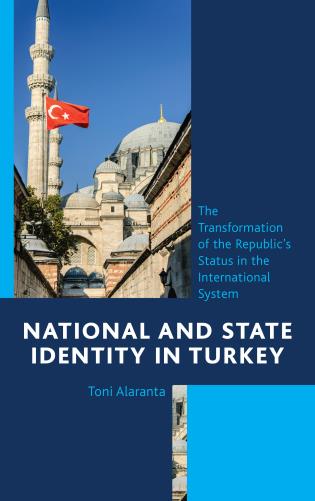
My interview this week was with Toni Alaranta of the Finnish Institute of International Affairs, discussing his new book “National and State Identity in Turkey: The Transformation of the Republic’s Status in the International System” (Rowman). In the book, Alaranta traces how the entrenchment in power of authoritarian political Islam in Turkey after 2002 was critically aided by the West’s misguided search for a “moderate Muslim democracy” after the end of the Cold War and the 9/11 terror attacks.
Read the interview at the Hürriyet Daily News here.
And read my review of the book here.
This also marks my first step into the world of podcasting. From now on I’ll be publishing these author interviews in audio as well as written form, through my new podcast “Turkey Book Talk.” The podcast will include some extra parts that didn’t make the written edit, as well as some fancy music, etc.
Click here to listen to the first episode (a work in progress as I’m still figuring out the best host, player, etc).
To subscribe to the feed, visit my PodBean page.
Please spread the word to anyone you think may be interested, and do get in touch with any suggestions on how I can improve the podcast!
The rise of political Islam in Turkey
March 7, 2015
My review/interview double-header this week was based on “The Rise of Political Islam in Turkey: Urban Poverty, Grassroots Activism and Islamic Fundamentalism” by Kayhan Delibaş, who works at Kent University and Turkey’s Adnan Menderes University.
The book is well worth reading for anyone looking for a deeper look into the political context of the emergence of Islamist parties in Turkey in the 1980s and 1990s. While it’s true that political Islam is an intrinsically transnational phenomenon, it’s always worth remembering the specific conditions that have facilitated it’s emergence, which of course differ everywhere.
Here’s my review of the book in the Hurriyet Daily News.
And here’s my conversation with its author Kayhan Delibaş.

‘Pan-Islamist PM Davutoğlu’ thesis ruffling feathers
September 3, 2014
Is Turkey’s new Prime Minister Ahmet Davutoğlu a pan-Islamist ideologue, with imperialist ambitions to reshape the Middle East into a post-national order based on Turkish and Sunni religious supremacy? That is the blockbuster thesis currently turning heads both inside and outside Turkey, thanks to a series of recent articles by Marmara University Assistant Professor Behlül Özkan.
Özkan, a one-time student of Davutoğlu’s from the latter’s time as an international relations professor, bases his provocative conclusion on close study of 300 articles penned by Davutoğlu in the 1980s and 90s. He first made his case in an essay for the August-September edition of the International Institute for Strategic Studies’ journal“Survival,” before introducing it to a wider English audience with pieces on Al-Monitor and in the New York Times.
In his NYT op-ed “Turkey’s Imperial Fantasy” published last week, Özkan remembered Professor Davutoğlu as a hard-working and “genial figure” who “enjoyed spending hours conversing with his students.” In contrast with his academic peers, however, he believed that Turkey would “soon emerge as the leader of the Islamic world by taking advantage of its proud heritage and geographical potential … encompass[ing] the Middle East, the Caucasus and Central Asia, and include Albania and Bosnia”:
Mr. Davutoglu’s classroom pronouncements often sounded more like fairy tales than political analysis. He cited the historical precedents of Britain, which created a global empire in the aftermath of its 17th-century civil war, and Germany, a fragmented nation which became a global power following its 19th-century unification. Mr. Davutoglu was confident that his vision could transform what was then an inflation-battered nation, nearly torn apart by a war with Kurdish separatists, into a global power.
He crystallized these ideas in the book ‘Strategic Depth,’ in 2001, a year before the Justice and Development Party, or A.K.P., came to power. In the book, he defined Turkey as a nation that does not study history, but writes it — a nation that is not at the periphery of the West, but at the center of Islamic civilization … Mr. Davutoglu saw himself as a grand theorist at the helm of his country as it navigated what he called the ‘river of history.’ He and his country were not mere pawns in world politics, but the players who moved the pieces.
Özkan rejects that Davutoğlu’s ideas amount to “neo-Ottomanism,” as often accused. Instead, he gives Turkey’s new prime minister the even heftier label of “pan-Islamist”:
The movement known as Ottomanism emerged in the 1830s as the empire’s elites decided to replace existing Islamic institutions with modern European-style ones, in fields from education to politics. By contrast, Mr. Davutoglu believes that Turkey should look to the past and embrace Islamic values and institutions.
But, ironically, he bases his pan-Islamist vision on the political theories that were used to legitimize Western imperial expansion prior to 1945. While purporting to offer Turkey a new foreign policy for the 21st century, his magnum opus draws on the outdated concepts of geopolitical thinkers like the American Alfred Thayer Mahan, the Briton Halford Mackinder and the German Karl Haushofer, who popularized the term “Lebensraum,” or living space, a phrase most famously employed by Germany during the 1920s and 1930s to emphasize the need to expand its borders.
According to Mr. Davutoglu, the nation states established after the breakup of the Ottoman Empire are artificial creations and Turkey must now carve out its own Lebensraum — a phrase he uses unapologetically. Doing so would bring about the cultural and economic integration of the Islamic world, which Turkey would eventually lead. Turkey must either establish economic hegemony over the Caucasus, the Balkans and the Middle East, or remain a conflict-riven nation-state that risks falling apart.
After becoming Turkey’s foreign minister from 2009, Davutoğlu had the opportunity to put these ideas into practice – with disastrous results:
As foreign minister, Mr. Davutoglu fervently believed that the Arab Spring had finally provided Turkey with a historic opportunity to put these ideas into practice. He predicted that the overthrown dictatorships would be replaced with Islamic regimes, thus creating a regional ‘Muslim Brotherhood belt’ under Turkey’s leadership.
He sought Western support by packaging his project as a ‘democratic transformation’ of the Middle East. Yet today, instead of the democratic regimes promised three years ago, Turkey shares a border with ISIS’s self-proclaimed caliphate. Two months ago, its fighters raided the Turkish consulate in the Iraqi city of Mosul, and is still holding 49 Turkish diplomats hostage. Mr. Davutoglu, who has argued that Turkey should create an Islamic Union by abolishing borders, seems to have no idea how to deal with the jihadis in Syria and Iraq, who have made Turkey’s own borders as porous as Swiss cheese.
To repair this dire situation as prime minister, Özkan says Davutoğlu needs to pragmatically reconnect Turkey’s regional policy with reality:
The new prime minister is mistaken in believing that the clock in the Middle East stopped in 1918 — the year the Ottoman Empire was destroyed — or that Turkey can erase the region’s borders and become the leader of an Islamic Union, ignoring an entire century of Arab nationalism and secularism. What Mr. Davutoglu needs to do, above all, is to accept that his pan-Islamist worldview, based on archaic theories of expansionism, is obsolete.
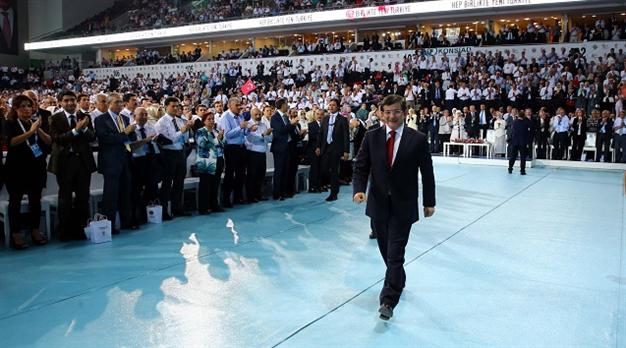
Turkey’s new prime minister, Ahmet Davutoğlu (Photo: Anadolu Agency)
Özkan’s thesis certainly seems to have struck a chord, with plenty of prominent figures declaring their admiration. Still, the reception has not been universally positive. In Radikal, political scientist Fuat Keyman expressed skepticism about the use of any catch-all term such as “pan-Islamist” to accurately describe Davutoğlu’s worldview:
As someone who has read many – if not all – of Davutoğlu’s works, it’s difficult to understand how Dr. Özkan has drawn the conclusion that Davutoğlu is a pan-Islamist (which is problematic as a term anyway).
It shouldn’t be forgotten that such expressions have only recently started to be used for Erdoğan and Davutoğlu. It could be said that irresponsible, anti-Semitic writings and comments made [by others] in Turkey recently have contributed to the increased use of terms like ‘pan-Islamism’ abroad.
Still, I don’t think terms such as ‘neo-Ottoman,’ ‘sectarian,’ or ‘pan-Islamist’ are useful or appropriate when describing Davutoğlu’s worldview, or his approach to foreign and domestic politics … Criticism of Turkish foreign policy should instead focus on the strategic errors that have been made, the exaggeration of Turkey’s power, and recently its distancing from democracy.
In Zaman, meanwhile, Şahin Alpay similarly questioned the validity of any term that sought to place a rigid label on the often multi-dimensional policies of Davutoğlu and the AKP:
The foreign policies pursued by Erdoğan and Davutoğlu do not fit into the mold of ‘neo-Ottoman,’ ‘pan-Islamist,’ or ‘Sunni sectarian.’ It’s difficult to apply a single ideological label for a foreign policy that started negotiations to join the EU, gave NATO permission for its Kürecik bases, received prizes from the Israeli lobby, struck up a personal friendship with Bashar al-Assad, recommended secularism to Egypt, and felt Tehran to be its own home. Rather than being based on certain principles, the policies pursued by the AKP, domestically and abroad, can be said to be either pragmatic, populist, opportunistic, or aimed at securing or protecting power. But if an ideological tag is necessary, Islamic Kemalism or religious nationalism could be used.
A deeper and more academic critique of Özkan’s work that has attracted particular attention was posted on the personal website of Ali Balcı, an associate professor at Sakarya University. Balcı doesn’t take issue with Özkan’s use of such a blanket term as “pan-Islamist,” but voices more substantial reservations about the underlying fundamentals of his work:
Özkan argues that the ‘pan-Islamic’ conclusions and analyses made by Davutoğlu as an academic in the second half of the 1980s and the 1990s can be used to understand Davutoğlu’s later foreign policy. This strongly indicates a ‘once an Islamist always an Islamist’ assumption, suggesting that Davutoğlu’s essential core is unchanging in the face of different times and conditions … The work’s fundamental problem is that despite all of the changes in conditions [since Davutoğlu wrote], it still puts forward that a pan-Islamist is always a pan-Islamist – a reductionist and essentialist reading.
Balcı says it isn’t clear why Özkan searches for proof of Davutoğlu’s “pan-Islamism” in his old academic articles, while he supports the “neo-Ottoman” label for former Turkish President Turgut Özal using evidence from the latter’s period in office:
Examples of Özal’s neo-Ottomanism given by the writer can also be given for the AK Parti’s time in power and in Davutoğlu’s period as foreign minister. As stated by the writer, Özal applied for EU membership in 1987, worked to broaden influence in the Caucasus and the Balkans, tried to solve the Kurdish problem through reforms, and worked to establish control in its relations with Iraq. If all of these practical realities have also emerged during the AK Parti and Davutoğlu eras, how can Özal be considered a neo-Ottoman while Davutoğlu is a pan-Islamist? In answer to this question the writer only presents certain criticisms of Özal made by Davutoğlu. But while proving Özal’s neo-Ottomanism with practical examples, [Özkan] doesn’t answer why he looks for examples of Davutoğlu’s pan-Islamism in articles written while he was an academic.
Some of these criticisms are valid, but some are wide of the mark. It may not be true that “once a pan-Islamist is always a pan-Islamist,” but there is plenty of evidence that today’s Davutoğlu still sympathizes with the views expressed in his old academic work. While he certainly has demonstrated a keen sense of pragmatism and adaptability in the past, there’s can be little doubt that he has steadily moved away from this realism and back to a far more dogmatic and ideological approach in recent years. It may be less articulate than Balcı’s blog post, but the government’s hagiographical short film that accompanied Davutoğlu’s recent nomination as prime minister was equally germane to the issue: “He is the awaited spirit of Abdülhamid,” the lyrics say at one point, referencing the 19th century sultan who deployed Islamism to combat the collapse of the Ottoman Empire. “For the nation, for the ummah, for Allah.”
Now that Davutoğlu is in the prime minister’s chair, the question is whether he will continue to be seduced by his ideological convictions and lose touch with his former pragmatism. If he does, then Özkan’s thesis will look even more prescient.
Growing anti-Iranianism in the pro-AKP media
July 8, 2013
Not so many years ago, a strategic partnership between Turkey and Iran seemed to be developing into one of the region’s more unexpected modern developments. Turkey was vaunted as a mediator in negotiations between the West and Iran over the latter’s nuclear program, and the relationship was reinforced by crucial oil and gas sales from Iran to Turkey. Those days feel rather long ago. The two countries now find themselves at loggerheads backing opposite sides of the bloody civil war in neighboring Syria, with fears of a regional sectarian conflagration steadily turning into an apocalyptic reality. A marker of the Syrian crisis’ deleterious effect on the Turkey-Iran relationship came with the diplomatic spat that followed the deployment of NATO Patriot missiles on Turkey’s southern border earlier this year, which lead the Iranian army’s chief of staff to declare that the move could be a prelude to “world war.” Less spectacular, but also very important, is Iran’s clear unease with Turkey’s delicate ongoing peace process with the Kurdistan Workers’ Party (PKK), which involves the rebel group withdrawing its militants from Turkish soil to their bases in northern Iraq. Tehran is concerned that the withdrawal could result in the militants joining forces with the Party of Free Life of Kurdistan (PJAK), which is the PKK’s offshoot in Iran.
The schism between Turkey and Iran widened to such an extent that Patrick Cockburn recently described relations between the two as “poisonous,” and this is increasingly being reflected in the rising levels of anti-Iran sentiment in Turkey’s Islamist press. In addition to countless pieces targeting Iran for supporting the al-Assad regime in Syria , it has also been striking to see the AKP media include Iranians among the dark “outside forces” stoking the recent Gezi Park protests, supposedly out of discomfort with Turkey’s economic success. In the early days of the demonstrations, it was eagerly reported in all government-supporting media outlets that an “Iranian agent” had been arrested on suspicion of being a “provocateur” behind protests in Ankara. It later emerged in more sceptical news organisations that the individual concerned, Shayan Shamloo, was in fact a rapper who was living in Turkey as a refugee.
Soon afterwards – in one of those truly befuddling Today’s Zaman stories – Abdullah Bozkurt wrote a column titled “Iran plays a subversive role in Turkey,” in which he argued with a straight face (pardon the pun) that Iran was using the protests to infiltrate Turkey with spies disguised as LGBT people in an attempt to bring down the government:
“Recent protests exposed, among other things, the depth of Iranian infiltration into Turkey … [During the protests] about a dozen Iranian agents who were trying to turn rallies into violent anti-government demonstrations were caught by the police… Since it is difficult to distinguish legitimate non-Muslim minority or LGBT (lesbian, gay, bisexual and transgender) people from spies, Iranian intelligence often uses them as a cover to infiltrate Turkey and third countries.”
However weird, Bozkurt’s column wasn’t an outlier in pointing the finger at Iran for Turkey’s problems. Indeed, Zaman and Today’s Zaman have recently been publishing a steady stream of articles and columns critical of negative Iranian influence in the region, and it’s probably also worth noting here that the Today’s Zaman editor, Bülent Keneş, wrote a book on Iran’s links to international terrorism last year.
Much of the Iran-bashing in the Turkish press goes hand in hand with pieces on Turkey’s Alevi minority. The Alevis are an offshoot of Shiism, (distinct from the Alawites in Syria), and have historically been associated by some in Turkey as dangerous fifth columnists with divided loyalties to Iran. Indeed, that association goes back as far as Bosphorus bridge-commemorated Sultan Selim the Grim, whose decision to kill tens of thousands of Alevis was taken during a military campaign against the Persian Safavid Empire in the 16th century.
Some of the most enthusiastic and unpleasant examples negatively associating Alevis with Iran come from the extreme Islamist daily Yeni Akit. For two consecutive days in June, for example, Yeni Akit carried front page headline stories claiming that Iranian authorities had invited Alevi religious leaders across the border to visit Ayatollah Khamenei in an attempt to foment sectarian war in Turkey. The headline of the first day’s story, “Iran is playing with fire” (İran, ateşle oynuyor), was a stomach-turning play on the Turkish term for “flame” (ateş), in reference the fire often used in Alevi rituals. Of course, it should be stressed that Yeni Akit is far from representative of majority sentiment in Turkey, but it probably isn’t quite as marginal as most people like to think. In fact, a few months ago Erdoğan even put two of its writers – including editor-in-chief Hasan Karakaya – on his “Wise Men Commission,” charged with the august task of repeating whatever he said about the ongoing Kurdish peace process.
It all adds up to a worrying picture. With the Syrian crisis having exploded into a wider geopolitical struggle splitting the region on sectarian lines, it’s increasingly clear that the growing schism between majority-Sunni Turkey and majority-Shia Iran is more than just a temporary trend.
‘Insulting the religious beliefs held by a section of society’: Plenty of evidence in Turkish newspapers
April 19, 2013
Handing its 10-month jail sentence to Turkish pianist Fazıl Say on April 15, the Istanbul court stated that Say was guilty of “denigrating the religious beliefs held by a section of society” and had thus violated Article 216 of the Turkish Penal Code (TCK). Although “blasphemy laws” still officially remain in many states, they are now almost completely dormant in most democracies. The rare prosecutions that are attempted based on them almost always fail, either because of sensible legal interpretation or the fact that a guilty verdict would clash with legally enshrined principles of freedom of expression.
Say’s prosecution was based on his retweeting of couplets attributed to medieval Persian poet Omar Khayyam last year, including lines such as: “You say its rivers will flow with wine. Is the Garden of Eden a drinking house? You say you will give two houris to each Muslim. Is the Garden of Eden a whorehouse?” He also posted a personal tweet, stating: “I don’t know whether you have noticed or not, but wherever there is a stupid person or a thief, they are believers in God. Is this a paradox?” However misguided Article 216 may be, there can be little doubt that Say deliberately intended to “denigrate the religious beliefs held by a section of society.” Of course, deliberate insult should never be criminalized, but as it is considered legitimate grounds for prosecution in Turkey it’s worth asking why cases aren’t regularly opened against material published in certain Turkish newspapers. The fact is that there are a number of Turkish dailies with considerable reputations for directing abuse at religious, ethnic, and sexual minorities.
Yeni Akit has a considerable track record of targeting respected journalists for aggressive and persistent smear campaigns, including Cengiz Çandar, Hasan Cemal, Ahmet Altan, and Amberin Zaman. It has even recently been waging a bizarre campaign against the “deviant spirituality” of yoga. Although it and fellow hard-line Islamist newspaper Milli Gazete (affiliated to the minor Felicity Party) have both been fined on numerous occasions for slander and libel, they have never to my knowledge been prosecuted for “insulting a section of society.” That may seem odd after considering the following examples, dredged up on their websites by a simple search of the words “Christian,” “Jew,” “Alevi,” and “homosexual”:
– Milli Gazete’s April 18 front page headline focused on the “scandal” that the EU was “making the Turkish state pay” the costs for lighting non-Muslim places of worship “such as churches and synagogues.”
– On the same front page, it was also disbelievingly reported that New Zealand had become the latest country to legalise gay marriage. The article was headlined, “Your destruction is near,” and was accompanied on the printed page by a picture of two fossilised victims from Pompeii.
– The same paper also carried a headline story in January warning about the dangers of “Zoroastrian missionaries” spreading “terrorist propaganda” in Turkey’s southeast.
– Again Milli Gazete, this time declaring as its Jan. 8 front page: “Here’s the Jewish mind.” The story was about Jewish religious jewellery being sold by a U.S.-based company, which donated some of its profits to the Israeli army.

Milli Gazete, Jan. 8, 2013: ‘Here’s the Jewish mind’
– On the same day that Milli Gazete was warning about “the Jewish mind,” Yeni Akit reported news of an old church in the Black Sea province of Giresun making “Christian propaganda.” Despite the fact that the church had been converted into a library in 2001, the article bemoaned that crosses and Stars of David were still to be found inside the building, “blurring young minds.”
– Yeni Akit on Feb. 3: “Support for perverts from the CHP and BDP,” regarding attempts in January by opposition deputies to reform the law stating that “dirty” and “deviant” homosexuality is legitimate justification for expulsion from the Turkish military.
– Yeni Akit: “The 19 Year Lie,” in which a host of slanderous claims were made about the massacre of over 30 Alevis in the central Anatolian town of Sivas in 1993.
On any given day you can open either Milli Gazete or Yeni Akit and be sure to find similar stories, written in the most unpleasant, insulting language. Should it really be surprising that Article 216 isn’t extended to these cases?
Even if the necessary sections of the Turkish penal code were reformed, they would still undoubtedly be liable to misuse through selective interpretation. However decent a country’s set of laws may be, and however enshrined they are in decent-sounding constitutions, problems generally come from the interpretation of those laws. If Article 216 was always applied as rigorously as it was against Say, then all the above examples would be investigated. In the end, the most important factor behind scandals such as the Say case is the mentality behind them, which is not something that can be transformed by a simple change in legal language.
Yeni Akit shaping the debate?(!)
December 6, 2012
It’s been a while since I last wrote about my favourite hard-line Islamic newspaper, Yeni Akit. It would be wrong to overemphasize Akit’s significance in the overall scheme of things, but a couple of its recent news items are certainly worth mentioning, and indicate that it might have rather more influence than many give it credit for(!)
On Nov. 22, Akit published a story headlined, “Immorality at High School,” containing photographs that it said showed teachers drinking alcohol with their students at a picnic. This photos were taken in the southern province of Antalya, (“known as a castle of the secularists,” according to the article), and were apparently uploaded to Facebook by one of the teachers. “It has been claimed that the teachers are members of the ‘Eğitim Sen’ union, which opposes the headscarf as well as classes on the Quran and the life of the Prophet,” Akit helpfully stated. The Antalya branch of the National Education Directorate opened an investigation into the 11 teachers upon the publishing of the story, but this was quickly dropped after it was established that the photos were in fact taken by a teacher at a family picnic three years ago, and that no students were present. Unbowed, on Dec. 2 Akit went on to publish a photo of a female teacher at the same Antalya school, part of a group at a bar celebrating a friends’ birthday (with glasses of beer on the table). “Do these photographs suit a teacher?” said the headline. However, rather than the Education Directorate setting up an inquiry, the teacher in question is now opening a legal case against Akit.
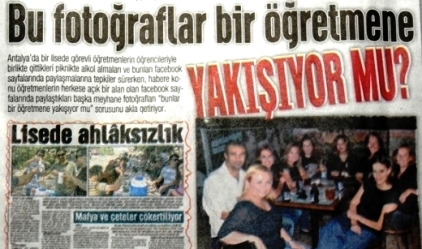
It’s worth mentioning these “photo scandals” because very recently Prime Minister Recep Tayyip Erdoğan used similarly tendentious photographs published in Akit to attack his political opponents. The pictures used by Erdoğan showed deputies of the pro-Kurdish Peace and Democracy Party (BDP) sitting around a table eating kebab, despite the fact that over 600 Kurdish prisoners were entering their 49th day on hunger fasts: “Lamb kebab for us, death fasts for you,” read Akit’s headline. On the same day (Oct. 30) Erdoğan told a meeting of his parliamentary party: “On one hand [they] are eating lamb kebab, on the other [they] are telling those in prison, ‘Die on hunger strike.’” In fact, it soon emerged that the photos had been taken two months before at the wedding of a BDP member in the southeastern province of Mardin.
Erdoğan’s harsh words got a lot of coverage at the time, (here’s the Reuters story on it), but the fact that his source was Yeni Akit obviously received rather less attention. Commentary suggesting that the prime minister is turning Turkey into an “Islamic state” is simplistic and misguided, (a piece in the Wall Street Journal last month claimed that he was “ramming Shariah law into practice.”), but it can’t be a good sign that he’s turning to Yeni Akit for rhetorical fodder to use against his opponents.
(Some) Turkish newspapers report on the AKP Congress
October 2, 2012
The ruling Justice and Development Party (AKP) held its key congress on Sunday (Sept. 30), the slogan of which was “Büyük Millet, Büyük Güç, Hedef 2023” (Great Nation, Great Strength, Target 2023). Throughout his emotional two-and-a-half hour speech, Prime Minister Recep Tayyip Erdoğan was in full neo-Ottoman mode. He told the 10,000 delegates packed into the Ankara arena that the government was following the same path as Sultan Mehmet II (the conqueror of Constantinople) and Selim I (“The Grim,” who expanded Ottoman territories to the east during the 16th century). He even went so far as to declare – tongue only half in cheek – that the AKP’s new target was 2071, linking the party back to the first Turkish Anatolian state-builders of the 11th century, 2071 being the 1,000th anniversary of Seljuk Turkish leader Alp Arslan’s entry into Anatolia.
It was a speech high in stirring rhetoric. The day after, government supporting newspapers fawned over the “renewal” and “refreshing” emphasis of a new “ustalık” (mastership) era. Daily Sabah focused on what it called the embracing, inclusive nature of Erdoğan’s speech and his words on the Kurdish issue: “Let’s draw a new roadmap together.” Zaman’s front page headline enthusiastically quoted a line from Erdoğan’s speech: “Come, let’s open a new page, let’s say ‘no to terror.’”

The contentious presence of Iraqi Kurdistan Regional leader Massoud Barzani at the congress was rather less trumpeted by Sabah and Zaman. He even gave a speech to the delegates, but the announcer in the arena refrained from using the word “Kurdistan” when introducing him. Indeed, rather than Barzani, it was Erdoğan’s words on the Kurds that received most attention in the pro-government press. This reminded me of one of Nuray Mert’s recent columns in the Hürriyet Daily News:
“The idea of the Ottoman Empire has induced a nostalgic longing for the days when Turkish sultans ruled diverse people in vast lands. For Ottomanists, the idea of the Ottoman Empire as a multi-ethnic haven for diverse cultures and populations is rather misleading, since the basic idea has always been to recall the times when diverse populations lived under ‘Turkish rule.’”
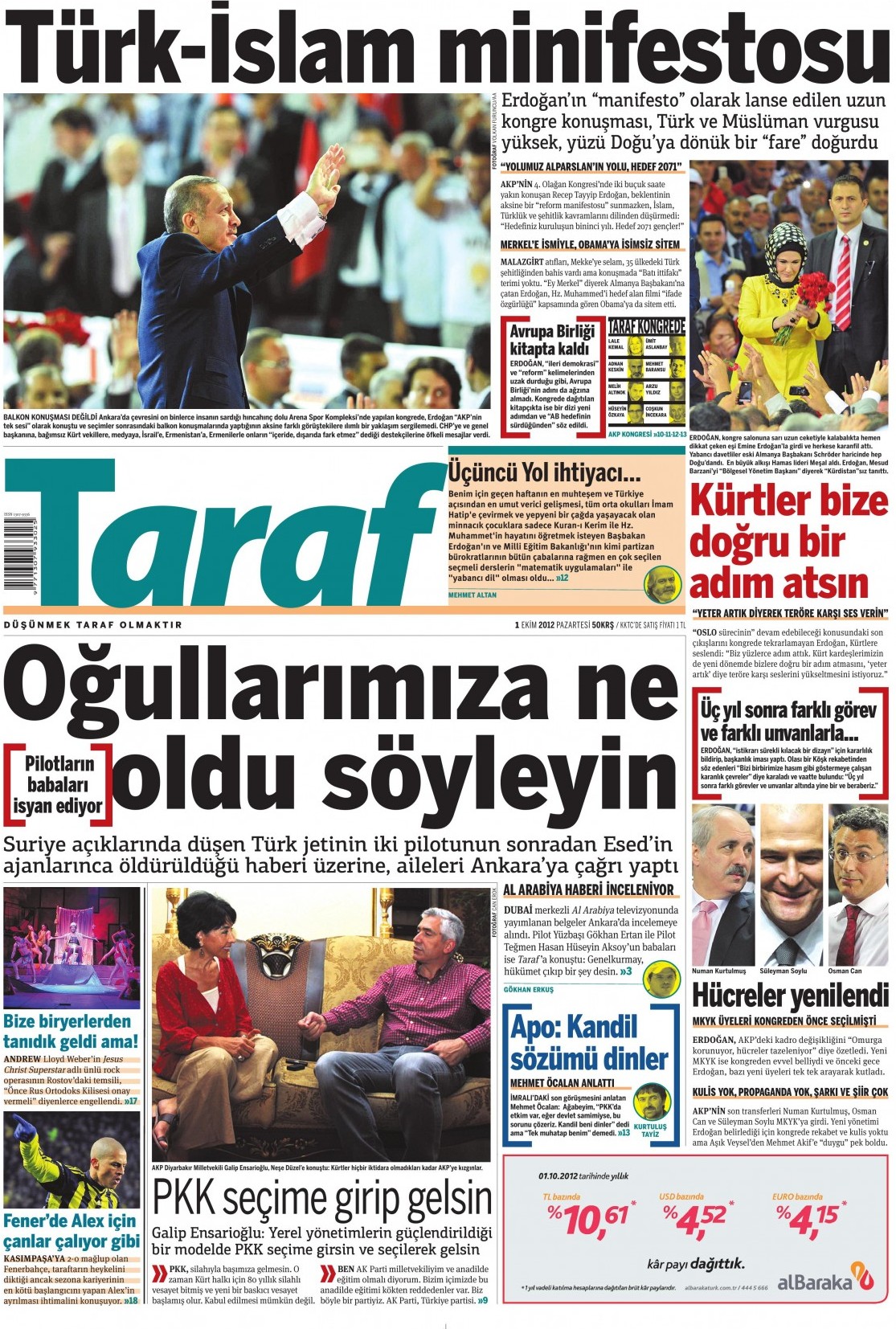
The conspicuously Islamic nature of the congress was also much discussed in the Turkish press – both by those approving and those dissenting. Beside its headline declaring “Great Strength Manifesto,” Islamist daily Yeni Şafak featured an admiring front page box quoting Hamas leader Khaled Meshaal, controversially (or perhaps not) invited to speak at the event: “‘You are not just the leader of Turkey, but also the leader of the Islamic world,’ Meshaal said, receiving extended applause from the crowd.” Indeed, when announced to the audience Mashaal received some of the loudest cheers of the day, (the EU dignitary who was introduced after him didn’t stand a chance!)
Liberal daily Taraf agreed that the congress constituted a Turkish-Islamic “minifesto,” but struck a rather more sceptical tone: “There was a strong Turkish and Muslim emphasis, a mouse with its face turned to the East was born,” (in Turkish, “a mouse was born” means that something underwhelming took place). The paper also noted plaintively that Erdoğan had failed to mention the European Union even once during his speech.
Meanwhile, seven national newspapers were refused accreditation to attend: Cumhuriyet, Sözcü, Evrensel, Birgün, Aydınlık, Yeniçağ, and Özgür Gündem. These publications have diverse sympathies: from left to right wing, from Turkish to Kurdish nationalism. The only thing shared by all is antipathy towards the government.
In response, Monday’s Cumhuriyet included a front page editorial titled “From Cumhuriyet to Public Opinion,” which said some unsurprisingly harsh things:
“Established six months after the founding of the Turkish Republic, our newspaper has been published for 88 years. During periods in the past when democracy has been suspended by the ruling powers our newspaper has been closed down, but outside of this we have always published under the principles of freedom of the press, in the name of people’s right to know. In 21st century Turkey, our newspaper is now exposed to censorship by the ruling powers.
“We will not stay quiet in the face of the anti-democratic implementations applied against us that violate both the constitution and the law.”
The piece went on to detail two constitutional and legal articles that it alleges the congress ban violated: Article no. 69 of the Turkish constitution, which states that internal political party activities, arrangements, and workings must not run counter to the principles of democracy; and Article no. 93 of the Law on Political Parties, which states that decisions taken and actions performed by party central administrations and affiliated groups must not run counter to the principles of democracy.
The International Press Institute’s Turkish National Committee issued a statement about the issue on the day of the AKP Congress, on behalf of the Freedom for Journalists Platform, an umbrella group representing local and national media organisations in Turkey:
“The news that reporters and journalists from some press organs are not allowed to enter the AK Party’s Congress is very worrying.
“Monitoring this historical event of the ruling government party on the spot and transferring it to its readers and viewers are primary duties of news media.
“We have previously protested the accreditation limitations at other institutions. But now, it is very disappointing that the same accreditation is being applied by a political party whose existence depends on democracy.”
Yeni Şafak and ‘the world’s richest Jew’
September 20, 2012
It is not particularly gratifying to scratch around the dregs of the Turkish press, but here’s the latest sludge I have been able to dredge up from the bottom of the barrel.
Islamist daily Yeni Şafak’s front page headline on Monday Sept. 17 focused on the reported recent meeting between Turkish Prime Minister Recep Tayyip Erdoğan and a “famous Jewish businessman.” The businessman, Ronald Lauder, was apparently sent as an intermediary by Israel to try to help restore its broken relations with Turkey. Following the meeting, Yeni Şafak’s headline stated: “The world’s richest Jew was the mediator.”

Perhaps I’ve become desensitized to this kind of thing after reading so many Turkish newspapers, but such casual playing on lazy Jewish stereotypes seems mild now that I write it down. Far worse examples can be found elsewhere every day (the front page of my favourite daily Akit recently included a graphic of a serpent sliding through a Star of David alongside that day’s requisite story about Israel). However, what was particularly striking to me about Yeni Şafak’s headline was that it came at a time when much of the Muslim Middle East was in violent uproar against the (similarly squalid) film produced in America, “The Innocence of Muslims.”
You only have to do a quick search on Google or YouTube to easily find thousands of articles and videos insulting Christianity (and Christians), Judaism (and Jews), or Islam (and Muslims). None of it is very nice, but thank God the world’s Jews don’t rise up in violent protests every time an offensive headline or story appears in a Turkish or Arabic newspaper.
The Sivas Massacre is a ‘19 year lie’: Yeni Akit
July 27, 2012
The massacre that took place in the Central Anatolian town of Sivas in 1993 is one of the darkest episodes in modern Turkish history. On the morning of July 2, a large group of radical Sunni Islamists descended on the Madımak Hotel in Sivas town center, protesting its hosting of an Alevi cultural festival. The mob attacked and set fire to the hotel, which resulted in the deaths of 37 people. Autopsies at the time concluded that the deceased had either died of burns or smoke inhalation.
Radical Islamist daily Yeni Akit’s July 23, 2012 front page carried a large headline declaring “The 19 Year Lie,” accompanied by two photos tastefully showing the morgue full of corpses from the massacre. Aside from the pleasure the paper obviously derived from showing off the photos on its front page once again, the ostensible reason the story was to expose what it called the “lie” that those in the hotel had been killed by the flames. In one of the pictures, a young girl lying on a morgue table, Belkıs Çakır, bears what the paper says is “clearly” a gunshot wound in the chest. This apparently proves that most of the deceased actually killed each other inside the hotel.Unfortunately for Akit, closer inspection reveals that the “blood” from Çakır’s “bullet wound” is simply a braid of hair hanging down from her head.

Akit’s charming July 23 front page
Akit’s piece aroused immediate opprobrium from a number of other Turkish dailies. The next day’s Taraf responded with the headline: “Akit sets fire to Madımak again,” Cumhuriyet said: “One more black publication from Akit,” while leftist-nationalist Yurt bluntly stated on its front page: “A Bigoted Lie.” All included the dismayed reactions from the families of those who died in the tragic incident, as well as their representatives.
Akit said the morgue photos had been hidden for 19 years before passing into their hands, but lawyer Şenal Sarıhan explained to Taraf that the photos were in fact included in a book on the event written by herself, “Madımak Yangını Sivas Davası.” “This book was published in 2002, and it had its third print run in 2011. Akit’s reporter Murat Alan clearly has it. The photos are included on page 97, 100, and 102. To claim that this is the first time they have been seen is completely untrue,” Sarıhan said. Çakır’s original autopsy, she added, was conducted at Sivas’s Numune Hospital, under strict observation. It unambiguously concluded that she had died of burns and from carbon monoxide poisoning. “The definite cause of death was burns and smoke inhalation. There is no dispute on this subject … Neither bullet wounds nor knife wounds can be seen in the photos,” Sarıhan said, adding that the only two people who died of bullet wounds on the day were shot outside the hotel by the demonstrators.
Zeynep Altıok, daughter of the poet Metin Altıok who was killed in the Madımak attack, was quoted as saying that the news did not come as a surprise from Akit. “They have written similar things before. They used to say it was the work of the [outlawed Kurdistan Workers’ Party] PKK. Their aim is to distort the truth. Before, they said it was the PKK, now they’ve gone in completely the opposite direction. I can’t take it seriously.”
Unfortunately, it’s not easy to reason with fanatical Islamists, and Akit’s July 24 front page headline followed on from the previous day, declaring: “Let the autopsies be conducted again”! On July 25, following the condemnations that the earlier pieces had aroused, the paper retreated into comforting victimhood,complaining that the other newspapers constituted a “dirty alliance against Akit … a panicking cartel.”
Yeni Akit is notorious in Turkey as the most vitriolic of the country’s Islamist newspapers. It was established in 2010 after its forerunner, “Anadolu’da Vakit,” was closed down following its failure to pay a fine incurred in 2003 for a piece deemed “insulting to the Turkish Armed Forces” (still officially a crime). Sane-minded observers view Akit with a mixture of incredulity and contempt, and think of it as not much more than a marginal voice on the lunatic fringe. Nevertheless, the fact that it enjoys significantly higher circulation figures than a number of far more respected newspapers must be chastening indeed!
[Published on openDemocracy (20th June 2012): http://www.opendemocracy.net/william-armstrong/turkey-as-test-case-in-multipolar-post-cold-war-order]
Much is made of Turkey’s ‘difference’ in the Middle East. Why is it being identified an inspiration to the region? Why is there talk of Turkey as a model for Egypt, and not the other way around? In a recent interview with Turkish Policy Quarterly, historian Bernard Lewis makes much of Turkey’s republican history of independence and self-criticism since the Ottoman era, which he says accounts for the country’s regional pre-eminence today. Whilst these differences are indeed significant, a reasonable case can be made that they were not nearly so pronounced as Lewis claims. In fact, after the Second World War, Turkey was no more immune to the hard choices that had to be made in a bipolar world order than other Eastern European and Middle Eastern states. As such, like many others, it was only ever nominally independent.The difference between Turkey and the other countries in the region, however, is that it was able to emerge much more quickly in the post-Cold War era, when states previously under Soviet influence became independent, and the ‘protection’ of those under U.S. sway was rendered unnecessary. This emergence can be ascribed to Turkey’s higher economic, educational, industrial and institutional development, as well as its important narrative of national sovereignty and proud republican history. Its regional pre-eminence today is therefore closely linked to its status as a pioneer of the new, multi-polar post-Cold War era. The sense that the country is now defining itself, as opposed to being defined by outsiders, is a crucial psychological hurdle.
For the duration of the Cold War, the Middle East was an object region acted upon by outside forces, rather than a subject acting for itself. In practice, this meant states being pulled into the influence of either the U.S. or the Soviet Union. Turkey was no different in this sense, and was considered by Washingtonan essential bulwark against communism on the south-eastern fringe of Europe. In order to anchor Turkey to the west, the U.S. bankrolled the Turkish military through the Truman Doctrine in the post-war era, and it was made a full member of NATO in 1952 (at the same time as Greece, the other subject state of the Truman Doctrine). U.S. support – tacit or otherwise – was crucial in the three military coups of 1960, 1971, and 1980, all of which helped to maintain the status quo order. Like so many others, during the Cold War period Turkey was barely democratic, with its western allies preferring a stable, reliable partner to one that genuinely reflected its people’s unpredictable wishes. The 1980 coup is particularly instructive, being seen by the U.S. at the time as necessary to prevent any danger of the country sliding towards communism, as the Turkish left was extremely mobilised throughout the 1970s. CIA Ankara station chief at the time, Paul Henze, is on record as saying that he cabled Washington – shortly after the coup had been carried out by the Turkish military – to say ‘our boys did it’. Gossip perhaps, but illuminating gossip.
The 1980 coup therefore illustrates the old Turkish model, and its similarities with the systems that have also characterised the Arab world in the recent past: U.S./western support for an essentially non-democratic state, in return for the guarantee of stability. Turgut Özal, who became Prime Minister in 1982, could therefore be seen as a kind of non-military Turkish version of General Pinochet. Coming to power shortly after an American-backed coup, Özal was pro-U.S., anti-communist, and neo-liberal – significantly opening up the Turkish economy to international market forces with U.S. support. It’s an interesting irony that in many ways it was these very reforms that helped prepare Turkey to develop economically in the post-Cold War era.
After the Soviet Union collapsed, it also – perhaps paradoxically – became increasingly clear that the old U.S.-dominant model had also become redundant, with much of the previous justification for U.S. support to stable but undemocratic regimes having been lost. Slowly, it became possible for new, popular movements to emerge in the region, and this goes some way to explaining both the revolts sweeping across the Arab world today as well as Turkey’s (less violent) development of a strongly independent government representing popular will. There are, however, significant differences that may legislate against post-Cold War Arab countries following the same trajectory as Turkey. Not least of these is the multi-ethnic, multi-linguistic, multi-confessional nature of most of these countries – none can really be considered ‘nation states’ in anything like the organically-evolving western European sense of the world. Turkey’s own early 20th century nation-building project relied on an enormous amount of violently imposed state-directed social reorganisation, essentially imitating the western model, (in terms of the uniform cultural, ethnic, linguistic, religious cohesiveness that was stressed). On its own terms, the Turkish model of modernisation was successful – taking a multi-linguistic, multi-ethnic population and forging out of it a unitary, monolingual, officially mono-cultural state. In the modern nation states of the Arab world, with their fragmented and multifarious social, ethnic, religious, linguistic, sectarian structures, it is difficult to see how the same results can be achieved in the early 21st century – or even how such results would be desirable. The new Middle East is perhaps more likely to be one where – instead of two great outside powers seeking to impose their influence and maintain an unthreatening stability – a regional struggle will play out between multiple competing local forces. This struggle will be based on old fissures that the old Cold War order had previously kept an uneasy lid on.


 Turkey Book Talk