I should say that the two things in the title are unrelated.
My interview this week was with Toni Alaranta of the Finnish Institute of International Affairs, discussing his new book “National and State Identity in Turkey: The Transformation of the Republic’s Status in the International System” (Rowman). In the book, Alaranta traces how the entrenchment in power of authoritarian political Islam in Turkey after 2002 was critically aided by the West’s misguided search for a “moderate Muslim democracy” after the end of the Cold War and the 9/11 terror attacks.
Read the interview at the Hürriyet Daily News here.
And read my review of the book here.
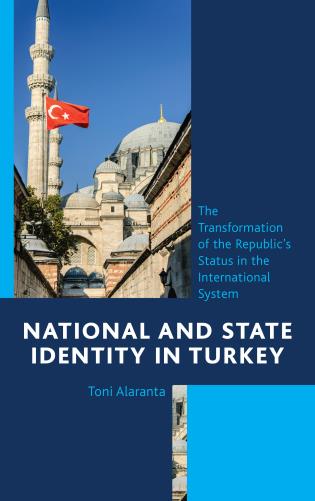
This also marks my first step into the world of podcasting. From now on I’ll be publishing these author interviews in audio as well as written form, through my new podcast “Turkey Book Talk.” The podcast will include some extra parts that didn’t make the written edit, as well as some fancy music, etc.
Click here to listen to the first episode (a work in progress as I’m still figuring out the best host, player, etc).
To subscribe to the feed, visit my PodBean page.
Please spread the word to anyone you think may be interested, and do get in touch with any suggestions on how I can improve the podcast!
I’ve written a piece for Politico about Turkey’s critical general election. Specifically, the article looks at the shift by President Erdoğan and the government in recent months from emphasising economic competence to peddling bombastic conspiracy theories:
“While signs of this paranoiac shift have long been evident, the AKP’s earlier years in power mostly focused on making an economy-based pitch to voters. Economic competence and extending services to the poorer sections of society – along with an appeal to the conservative religious values held by many Turkish citizens – proved a winning combination for a string of crushing election victories. But while the party still pledges to spur development, its rhetoric leading up to Sunday’s election has tilted decisively in favor of a combination of conspiracy theories laced with historic posturing about reconnecting Turkey with the glory of the Ottoman Empire. When you’re on a glorious path, the AKP’s leaders suggest, you will inevitably have enemies.”
Read the whole thing over at Politico.

The rise of political Islam in Turkey
March 7, 2015
My review/interview double-header this week was based on “The Rise of Political Islam in Turkey: Urban Poverty, Grassroots Activism and Islamic Fundamentalism” by Kayhan Delibaş, who works at Kent University and Turkey’s Adnan Menderes University.
The book is well worth reading for anyone looking for a deeper look into the political context of the emergence of Islamist parties in Turkey in the 1980s and 1990s. While it’s true that political Islam is an intrinsically transnational phenomenon, it’s always worth remembering the specific conditions that have facilitated it’s emergence, which of course differ everywhere.
Here’s my review of the book in the Hurriyet Daily News.
And here’s my conversation with its author Kayhan Delibaş.

The Turkish gov’t takes on the foreign media
December 10, 2014
I’ve written a piece for Foreign Policy on the deterioration of the Turkish government’s image in the international media, and Turkey’s aggressive response:
The foreign media image of President Recep Tayyip Erdoğan and the Turkish government has shattered over the past 18 months, and in response Turkey has ramped up an international information blitzkrieg.
The tone is becoming increasingly bitter, motivated by a conviction that the foreign media is a propaganda weapon deployed by the West to attack the ruling Justice and Development Party (AKP). Patriotic Turks are called on to rally behind their government in the name of national sovereignty.
This sense of embattled defiance is important to understand, and reveals much about the resentful mindset gripping the state. Suspicion about the foreign press is hardly new in Turkey, but it’s unfortunate to see the worst of such sentiments returning – openly sponsored by Erdoğan and the AKP’s top brass. The president himself is even managing to turn international criticism to his own advantage, as evidence that the West is implacably hostile to Turkey and its fearless, truth-telling leader — a useful populist line ahead of next June’s crucial parliamentary elections.
Read the full article here.
‘Pan-Islamist PM Davutoğlu’ thesis ruffling feathers
September 3, 2014
Is Turkey’s new Prime Minister Ahmet Davutoğlu a pan-Islamist ideologue, with imperialist ambitions to reshape the Middle East into a post-national order based on Turkish and Sunni religious supremacy? That is the blockbuster thesis currently turning heads both inside and outside Turkey, thanks to a series of recent articles by Marmara University Assistant Professor Behlül Özkan.
Özkan, a one-time student of Davutoğlu’s from the latter’s time as an international relations professor, bases his provocative conclusion on close study of 300 articles penned by Davutoğlu in the 1980s and 90s. He first made his case in an essay for the August-September edition of the International Institute for Strategic Studies’ journal“Survival,” before introducing it to a wider English audience with pieces on Al-Monitor and in the New York Times.
In his NYT op-ed “Turkey’s Imperial Fantasy” published last week, Özkan remembered Professor Davutoğlu as a hard-working and “genial figure” who “enjoyed spending hours conversing with his students.” In contrast with his academic peers, however, he believed that Turkey would “soon emerge as the leader of the Islamic world by taking advantage of its proud heritage and geographical potential … encompass[ing] the Middle East, the Caucasus and Central Asia, and include Albania and Bosnia”:
Mr. Davutoglu’s classroom pronouncements often sounded more like fairy tales than political analysis. He cited the historical precedents of Britain, which created a global empire in the aftermath of its 17th-century civil war, and Germany, a fragmented nation which became a global power following its 19th-century unification. Mr. Davutoglu was confident that his vision could transform what was then an inflation-battered nation, nearly torn apart by a war with Kurdish separatists, into a global power.
He crystallized these ideas in the book ‘Strategic Depth,’ in 2001, a year before the Justice and Development Party, or A.K.P., came to power. In the book, he defined Turkey as a nation that does not study history, but writes it — a nation that is not at the periphery of the West, but at the center of Islamic civilization … Mr. Davutoglu saw himself as a grand theorist at the helm of his country as it navigated what he called the ‘river of history.’ He and his country were not mere pawns in world politics, but the players who moved the pieces.
Özkan rejects that Davutoğlu’s ideas amount to “neo-Ottomanism,” as often accused. Instead, he gives Turkey’s new prime minister the even heftier label of “pan-Islamist”:
The movement known as Ottomanism emerged in the 1830s as the empire’s elites decided to replace existing Islamic institutions with modern European-style ones, in fields from education to politics. By contrast, Mr. Davutoglu believes that Turkey should look to the past and embrace Islamic values and institutions.
But, ironically, he bases his pan-Islamist vision on the political theories that were used to legitimize Western imperial expansion prior to 1945. While purporting to offer Turkey a new foreign policy for the 21st century, his magnum opus draws on the outdated concepts of geopolitical thinkers like the American Alfred Thayer Mahan, the Briton Halford Mackinder and the German Karl Haushofer, who popularized the term “Lebensraum,” or living space, a phrase most famously employed by Germany during the 1920s and 1930s to emphasize the need to expand its borders.
According to Mr. Davutoglu, the nation states established after the breakup of the Ottoman Empire are artificial creations and Turkey must now carve out its own Lebensraum — a phrase he uses unapologetically. Doing so would bring about the cultural and economic integration of the Islamic world, which Turkey would eventually lead. Turkey must either establish economic hegemony over the Caucasus, the Balkans and the Middle East, or remain a conflict-riven nation-state that risks falling apart.
After becoming Turkey’s foreign minister from 2009, Davutoğlu had the opportunity to put these ideas into practice – with disastrous results:
As foreign minister, Mr. Davutoglu fervently believed that the Arab Spring had finally provided Turkey with a historic opportunity to put these ideas into practice. He predicted that the overthrown dictatorships would be replaced with Islamic regimes, thus creating a regional ‘Muslim Brotherhood belt’ under Turkey’s leadership.
He sought Western support by packaging his project as a ‘democratic transformation’ of the Middle East. Yet today, instead of the democratic regimes promised three years ago, Turkey shares a border with ISIS’s self-proclaimed caliphate. Two months ago, its fighters raided the Turkish consulate in the Iraqi city of Mosul, and is still holding 49 Turkish diplomats hostage. Mr. Davutoglu, who has argued that Turkey should create an Islamic Union by abolishing borders, seems to have no idea how to deal with the jihadis in Syria and Iraq, who have made Turkey’s own borders as porous as Swiss cheese.
To repair this dire situation as prime minister, Özkan says Davutoğlu needs to pragmatically reconnect Turkey’s regional policy with reality:
The new prime minister is mistaken in believing that the clock in the Middle East stopped in 1918 — the year the Ottoman Empire was destroyed — or that Turkey can erase the region’s borders and become the leader of an Islamic Union, ignoring an entire century of Arab nationalism and secularism. What Mr. Davutoglu needs to do, above all, is to accept that his pan-Islamist worldview, based on archaic theories of expansionism, is obsolete.
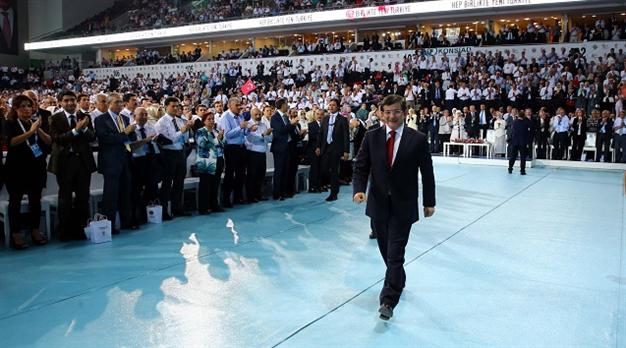
Turkey’s new prime minister, Ahmet Davutoğlu (Photo: Anadolu Agency)
Özkan’s thesis certainly seems to have struck a chord, with plenty of prominent figures declaring their admiration. Still, the reception has not been universally positive. In Radikal, political scientist Fuat Keyman expressed skepticism about the use of any catch-all term such as “pan-Islamist” to accurately describe Davutoğlu’s worldview:
As someone who has read many – if not all – of Davutoğlu’s works, it’s difficult to understand how Dr. Özkan has drawn the conclusion that Davutoğlu is a pan-Islamist (which is problematic as a term anyway).
It shouldn’t be forgotten that such expressions have only recently started to be used for Erdoğan and Davutoğlu. It could be said that irresponsible, anti-Semitic writings and comments made [by others] in Turkey recently have contributed to the increased use of terms like ‘pan-Islamism’ abroad.
Still, I don’t think terms such as ‘neo-Ottoman,’ ‘sectarian,’ or ‘pan-Islamist’ are useful or appropriate when describing Davutoğlu’s worldview, or his approach to foreign and domestic politics … Criticism of Turkish foreign policy should instead focus on the strategic errors that have been made, the exaggeration of Turkey’s power, and recently its distancing from democracy.
In Zaman, meanwhile, Şahin Alpay similarly questioned the validity of any term that sought to place a rigid label on the often multi-dimensional policies of Davutoğlu and the AKP:
The foreign policies pursued by Erdoğan and Davutoğlu do not fit into the mold of ‘neo-Ottoman,’ ‘pan-Islamist,’ or ‘Sunni sectarian.’ It’s difficult to apply a single ideological label for a foreign policy that started negotiations to join the EU, gave NATO permission for its Kürecik bases, received prizes from the Israeli lobby, struck up a personal friendship with Bashar al-Assad, recommended secularism to Egypt, and felt Tehran to be its own home. Rather than being based on certain principles, the policies pursued by the AKP, domestically and abroad, can be said to be either pragmatic, populist, opportunistic, or aimed at securing or protecting power. But if an ideological tag is necessary, Islamic Kemalism or religious nationalism could be used.
A deeper and more academic critique of Özkan’s work that has attracted particular attention was posted on the personal website of Ali Balcı, an associate professor at Sakarya University. Balcı doesn’t take issue with Özkan’s use of such a blanket term as “pan-Islamist,” but voices more substantial reservations about the underlying fundamentals of his work:
Özkan argues that the ‘pan-Islamic’ conclusions and analyses made by Davutoğlu as an academic in the second half of the 1980s and the 1990s can be used to understand Davutoğlu’s later foreign policy. This strongly indicates a ‘once an Islamist always an Islamist’ assumption, suggesting that Davutoğlu’s essential core is unchanging in the face of different times and conditions … The work’s fundamental problem is that despite all of the changes in conditions [since Davutoğlu wrote], it still puts forward that a pan-Islamist is always a pan-Islamist – a reductionist and essentialist reading.
Balcı says it isn’t clear why Özkan searches for proof of Davutoğlu’s “pan-Islamism” in his old academic articles, while he supports the “neo-Ottoman” label for former Turkish President Turgut Özal using evidence from the latter’s period in office:
Examples of Özal’s neo-Ottomanism given by the writer can also be given for the AK Parti’s time in power and in Davutoğlu’s period as foreign minister. As stated by the writer, Özal applied for EU membership in 1987, worked to broaden influence in the Caucasus and the Balkans, tried to solve the Kurdish problem through reforms, and worked to establish control in its relations with Iraq. If all of these practical realities have also emerged during the AK Parti and Davutoğlu eras, how can Özal be considered a neo-Ottoman while Davutoğlu is a pan-Islamist? In answer to this question the writer only presents certain criticisms of Özal made by Davutoğlu. But while proving Özal’s neo-Ottomanism with practical examples, [Özkan] doesn’t answer why he looks for examples of Davutoğlu’s pan-Islamism in articles written while he was an academic.
Some of these criticisms are valid, but some are wide of the mark. It may not be true that “once a pan-Islamist is always a pan-Islamist,” but there is plenty of evidence that today’s Davutoğlu still sympathizes with the views expressed in his old academic work. While he certainly has demonstrated a keen sense of pragmatism and adaptability in the past, there’s can be little doubt that he has steadily moved away from this realism and back to a far more dogmatic and ideological approach in recent years. It may be less articulate than Balcı’s blog post, but the government’s hagiographical short film that accompanied Davutoğlu’s recent nomination as prime minister was equally germane to the issue: “He is the awaited spirit of Abdülhamid,” the lyrics say at one point, referencing the 19th century sultan who deployed Islamism to combat the collapse of the Ottoman Empire. “For the nation, for the ummah, for Allah.”
Now that Davutoğlu is in the prime minister’s chair, the question is whether he will continue to be seduced by his ideological convictions and lose touch with his former pragmatism. If he does, then Özkan’s thesis will look even more prescient.
A long and revealing interview with Doğan Ertuğrul, the former senior news editor of the staunchly pro-government daily Star, appeared on the news website T24 on May 5. Ertuğrul resigned from the newspaper in March, issuing a statement complaining that it had descended into the realm of “black propaganda”:
In the state of insanity that Turkey is currently experiencing, the media has suffered more than its share. ‘News’ papers and TV stations that don’t observe news values and instead aim for perception management – or, more accurately, black propaganda – have become routine.I have held the same position at Star for years, but I feel there is no longer any possibility there to do responsible and balanced journalism.
One wonders why it took so long to come to this conclusion, but Ertuğrul candidly explained his thoughts to T24‘s Hazal Özvarış.
Star is one of the pillars of the friendly new media establishment that has developed around Turkey’s ruling Justice and Development Party (AKP) since it came to power in 2002. As comes through in the interview with Ertuğrul, it sees itself as more intellectual that the higher-circulation Sabah, though you have to ask just how highbrow a title featuring bi-weekly columns from PM Erdoğan’s economic advisor and telekinesis-detector Yiğit Bulut can be. Along with its sister TV station, Kanal 24, Star was bought by businessman Ethem Sancak in 2007, with Sancak declaring soon afterwards that he had entered the media sector “to serve the prime minister.” Kanal 24 is now equally devoted to the government as Star, and is probably even more influential, reaching a much wider audience while remaining just as partisan. After selling both off in 2009 (having made the necessary editorial adjustments), Sancak bought them back last month.

Star’s front page headline on May 4, slamming Washington-based think tank Freedom House for it’s recent press freedom report describing the Turkish media as “Not free.” The subheading says Freedom House has links to “Israel lobbies” as well as “famous speculator George Soros,” while the text underneath emphasises that its president, David Kramer, is a Jew.
Back in 2007, Sancak declared himself “lovesick for the prime minister,” adding that Erdoğan was his “most important idol.” He is one of the wealthiest and most prominent members of the AKP’s new constructocracy, with economic interests intertwining closely with the political interests of the government. Money can’t be made from owning a newspaper, but Sancak knows that owning an AKP-friendly media company is a necessary overhead to win contracts in other areas, (just last week his firm won the tender for armoured vehicle and bus manufacturer BMC).
He first bought the Star Media Group at a time when Turkey’s “old elite” was applying a huge amount of pressure against Erdoğan and the AKP over Abdullah Gül’s presidential candidacy in 2007, and just one year before the closure case against the party was to be brought to the Constitutional Court. The AKP became convinced that a new, friendly media was needed to defend it against such attacks, so it actively went about fostering this. In light of the harsh atmosphere of the period and as part of the narrative of Turkey’s “normalisation,” there was actually a defendable case to be made for such a move. However, as in many other areas, it has all gone too far. Pressure is now being applied to media across the spectrum, and the core group of pro-government titles has descended into blatant distortion, parrot-like repetition of AKP public statements, and vitriolic character assassinations. As Henri Barkey recently wrote, Turkey’s slavishly devoted pro-government media now resembles “Pravda on steroids.”
T24’s interview with Ertuğrul highlights his revelation about how an interview with President Gül was censored by Star in order to not disturb PM Erdoğan. However, it is perhaps more interesting for the glimpse that Ertuğrul gives into the inner workings of the newspaper; none of it comes as a surprise, but it is quite unusual for an “insider” to go public in such a way. Translated below are some of the most important points, which I think speak for themselves:
My colleagues at Star used to jokingly call me “Brother ethics” because of my concern about journalistic principles. I used to hold many of the same ideals as the AK Parti government, but when the party started to abandon these principles, the media that is close to the government also started to follow the same path. My first realisation of this was during the Gezi protests. I went to Gezi and so did my children. I had the opportunity to see both the groups using violence, and also those with ordinary, democratic demands. For this reason I found the attitude taken against Gezi by the government and the government media very disturbing.
….
There was a complicated process during the “Kabataş assault” story during Gezi. At the editorial meeting I came out and said this story was fantastical and unconvincing. Many other editors expressed similar views. I said it was wrong to publish news without any evidence at all, based only on the claims of the young headscarved mother. But I couldn’t prevent the story from being published … After the camera footage emerged showing what really happened in Kabataş we even debated writing a formal apology at the editorial meeting; but as the prime minister’s attitude became clearer, this became impossible to publish.
….
I had already been objecting to a lot of things, and my objections were always taken into consideration. However, by the end the number of these objections being considered dropped … We had a responsibility to the public before our responsibility to Erdoğan. But that threshold was passed long ago.
…
The prime minister doesn’t see anyone’s position as “enough.” This happened in a lot of incidents with us. After saying to ourselves, “This [language] is very tough, let’s not put it in the headline,” we then saw Sabah’s headline the next day and we said to ourselves jokingly, “Ah, the prime minister will now criticize us by saying, ‘Look, have you seen this?’”
…
In the government’s media there is no need for “Alo Fatih” calls interfering in the editorial process. There, people already know the reflexes of the prime minister and the government. In this sense, Star is a comfortable newspaper … The editors know what they have to do, what will or will not upset the government. There’s a kind of shared mind-set that doesn’t exist in somewhere like Habertürk, for example … I can’t speak for elsewhere, but I can speak clearly about the situation in Star. [PM Erdoğan’s economic advisor] Yiğit Bulut is a writer there, and before he was a TV station’s director; [Erdoğan’s political advisor] Yalçın Akdoğan also writes in Star. Both of them very regularly visit the newspaper. Therefore, caricature-like “Alo Fatih” phone calls are not even necessary at Star.
…
The issue isn’t just about patronage. These newspapers also have directors. If we look at just bosses, we can see that Yeni Şafak’s boss has his own personal agenda. For example, despite the prime minister’s support, Yeni Şafak ran a campaign to prevent Mehmet Görmez from becoming the Religious Affairs minister. For some reason or another, the paper’s boss doesn’t like Görmez. In other newspapers, the most important thing is to consider which minister or which prime minister’s assistant they are close to, and what kind of closeness they have.
…
It’s possible that many journalists are supporting the government both out of the opportunities this offers and also because they share its ideology. The AK Parti has created its own ideology; call it AK Parti-ism or Erdoğanism. The business environment is connected to the government, so is the media, so is the judiciary, so is the bureaucracy. This is a summary of the Turkey of Tayyip Erdoğan’s dreams.
A coterie has developed that uses the political and economic opportunities provided by the government. In the media at the moment there are people supporting the government, but a large number of these will curse Erdoğan when his government declines. There are a lot of people behind him who have no real sympathy for him.
…
During the Gezi protests and especially after Dec. 17 [corruption probe] there were dozens of headlines that unfortunately didn’t conform with proper news criteria and were published for propaganda purposes. It’s no longer difficult to see how the government is the source behind a lot of news and a lot of journalists. Sabah, Yeni Şafak, Star, and Akşam haven’t published a single line about the claims in the Dec. 17 investigations. There hasn’t been a single piece of news about what the claims actually were. At the same time, we read propaganda in the government media about the Gezi protesters’ “global terror links,” about Israel being behind Dec. 17, and even debates about the Gülen movement’s Islamic-ness.
…
There were a lot of former police chiefs, bureaucrats, and politicians found guilty in the Ergenekon and Balyoz cases who started to feature in Star headline stories just because they took the same positions as the prime minister. People like Emin Aslan, Sabri Uzun, Hanefi Avcı. Once upon a time the accusations against them were widely reported in the newspaper. As that was the case, what were we doing back then? And what are we doing now?
…
While I still worked at Star, I struggled to keep doing the things that I believed were correct in the name of journalism. I asked myself whether I should quit, or stay and struggle. In order to change things you must struggle. I objected to what was being done, I did what I could, and when I saw that I wouldn’t be able to do it any more I quit. I wondered about whether the insane atmosphere in Turkey would end after the local elections in March … But I saw how the country and Star became even harsher after the elections.
Yiğit Bulut: PM Erdoğan’s Flavor Flav
April 16, 2014
Prime Minister Recep Tayyip Erdoğan’s chief economic advisor, Yiğit Bulut, is both the Flavor Flav to his Chuck D, and the Aristotle to his Alexander the Great; both the “hype man” on stage and “theorist” behind the throne. His appointment to the PM’s inner circle caused mirth last July, amid his suggestion that foreign powers were seeking to kill Erdoğan using telekinesis, but that was just one of many odd theories he has come up with since last summer’s Gezi Park protests. He recently made headlines by declaring that the EU, (Turkey’s number one trading partner), was “finished” and would be superseded by the “new world order” of the “Turkey-Eurasia/Russia-Middle East equation”; while last year he told a TV programme that he would “die for Erdoğan if necessary.” Bulut’s rise is both a symptom and a cause of Erdoğan’s gradual departure from reality, and the Justice and Development Party’s (AKP) steady descent into paranoia.
People often speculate about whether Erdoğan “really believes” the conspiracy theories that he comes out with, or whether they are just a cynical way of playing to his electoral base in tough times. In fact, both can be true, and insisting only on the latter ignores the deep traces of such currents through the history of Turkey’s Islamist movements, (not least in Necmettin Erbakan’s Refah Party, where Erdoğan cut his political teeth). When times were easier during the AKP’s first couple of terms, such rhetoric generally remained latent; but it was always ready to surface again when things took a turn for the worse. This was clearly the case after last year’s Gezi protests and the Dec. 17 corruption probe. Erdoğan did indeed play to his base out of electoral calculation, but when the stakes were so high and the alternative was political disaster (and possibly jail), those conspiracies must also have been a lot more convincing to him. It’s probably significant that Bulut was named advisor to Erdoğan shortly after the Gezi protests erupted. It was in those difficult circumstances that his warnings of a Turkey besieged by foreign powers and his political vision of fantasy neo-Ottomanism must have made the most sense to the prime minister.
Bulut was actually once a staunch, nationalist-flavoured critic of the AKP, critical of privatisations, its inability to deal with the Kurdistan Workers’ Party (PKK), and Turkey’s growing debt stock. The Damascus moment came some time before his 2010 divorce from former wife Şule Zeybek, the niece of secularist media tycoon Aydın Doğan, and ever since he has defended Erdoğan with the zeal of a true convert. In June 2012 he became the editor of pro-government 24TV, after which he was rewarded for his now-unswerving loyalty with an appointment to the prime minister’s brain trust. He now juggles his new role with his regular column in daily Star and political talk show appearances on pro-government TV. Indeed, Bulut was at the centre of one of the more amusing episodes from the wiretap leaks released before Turkey’s March 30 local elections: A conversation between the editor of private broadcaster NTV, Nermin Yurteri, and PM Erdoğan’s chief political advisor, Yalçın Akdoğan. In it, Akdoğan demands that Bulut be included as a guest on a news discussion programme, which is desperately resisted by Yurteri, who says her station is willing to accept any other pro-government figure but not the widely ridiculed Bulut.

Advert for Yiğit Bulut’s pre-election “National Will” lecture tour, arriving in Istanbul’s Esenler district.
The crude populism of Bulut’s thrice weekly Star column is reminiscent of Erdoğan’s bombastic public speeches, but the wild adolescent theorising about the “NEW WORLD ORDER” may be less familiar. It’s chilling to think that it’s not the ranting of a frustrated teenage shop assistant in Yozgat, but that of the Turkish prime minister’s chief economic confidant, who has a personal office in Istanbul’s Dolmabahçe Palace.
Translated below is one of Bulut’s columns in Star. Hard to believe, it isn’t one of his most spectacular pieces, but it does give a good idea of his surreal intellectual hinterland. It appeared on March 28, as Turkey’s political atmosphere was at fever pitch just two days before the critical local election. In it, we see Aristotle turning his attention to the future challenges facing the “New Turkey” and how the government’s defense policies can best meet these new challenges:
What is the biggest danger for the ‘new great Turkey’?
In the days before 2003, when Turkey was still covered up, the question that was asked was this: Which is the biggest threat for Turkey, “fundamentalism” or “separatist terrorism”?
My dear friends, today the question is different: What is the biggest threat for a Turkey that is making peace with itself and expanding? Is it possible to ignore or even destroy the National Will? I repeat: Is it possible to ignore or even destroy the National Will?
This country had many days, months and years of viewing and being forced to view its own values as a threat. The way we looked at issues was mistaken, and so were the solutions we put forward! Until 2003 we lived in this “blind well,” and with our “mistaken entrances” we always produced “mistaken results”!
Dear friends, today the situation is very different, and when is to be done is clear: Turkey is establishing a new threat perception, appropriate to its understanding of the “new world order”; as a necessity it is forming a “national defense-military technology-production” strategy. It’s not difficult to detail this: Turkey is advancing to become a country capable of reaching the maximum fire power with minimal “human resources,” conducting operations in all areas and – most importantly – meeting its “defense needs” with indigenous technology and even producing “concepts.”
Dear friends, there were once built-in internal and external focuses were imposed on us for years, and the “built-in media” vehicle didn’t even allow us to question this! We even helplessly believed that our own Muslim citizens could be our biggest threat, that our Kurdish-origin citizens could want to divide us… It wasn’t right, it was never right, but we could never remove “this sack from our heads” and realise the true “threat definition”! Today we have ripped off the sacks, and the path we will now embrace is apparent!
Result 1: As Turkey grows, it will see; enemies are not just internal and external. As Turkey GROWS, it will see that its enemies are not only inside the nation, but they also hide and focus in the twists in the path of Turkey’s expansion.
Result 2: Our minds must be very sharp and our thesis must be very clear: In the last 10 years, Turkey has ripped off the “sacks,” saved itself from the “diseased structure” of previous civil-military relations, and is progressing on the path of “becoming a universal state” in the new world order.
Result 3: Turkey is defining a “new national defense concept suitable for a universal state” and is also detailing the technical aspects! Turkey has now revealed itself and there are those who are uncomfortable about this; therefore, a suitable new “NATIONAL STRATEGY” must be very carefully and quickly developed.
Result 4: The NEW TURKEY’s use of military force in diplomacy is inevitable! Instead of a military focusing its perceptions on vicious internal threats, a country on the path to becoming a global player must have a military that is redefined to deal with global threats.
Result 5: A NEW CONCEPT OF NATIONAL DEFENSE will benefit the Armed Forces in great and strong diplomacy, and can only be revealed with a new political vision.
Result 6: A new concept for the Turkish Armed Forces must be formed. This new concept would replace the one which searched for virtual enemies wanting to drag the country to fundamentalism and which followed its own citizens on suspicion of dividing Turkey. Instead, it would be a concept that would be strong enough to operate in the world arena, to rival America, the EU, Israel, Russia and China. The local defense industry is currently developing, modernisation is increasing, and projects are being realised to build tanks, aircraft, and ships that can operate thousands of miles from Turkish soil. In short, the Turkish military is becoming a world force…
Result 7: All members of the Turkish Armed Forces who can “see the future” are aware that a new concept of the military will suit the concept of a new Turkey. In fact, when you look closely, you see that in this area there is a big clash between the “resisters” and those who want to “open the path.” The BUILT-IN PRESS is working to create the public impression that this is a POLITICAL AUTHORITY-ARMED FORCES clash…
Result 8: The current Global Attack is directly targeting the “national will” and seeks to surrender Turkey’s management to the hands of global governance. What we must do is very clear: Destroy these barriers and continue on our path…
Last word: The whole of Turkey – its people, its government, its state – it currently under a huge attack. Most importantly, it is standing against this attack as a whole and battling to exist. At this point, I ask you: all Turkish citizens must investigate the barriers that stand in the path of the GREAT TURKEY and, in a manner suitable to the new world order, stand as a single body against these attacks! “Fear not, the red flag blowing in the horizon won’t fade.”*
* The opening line of the Turkish national anthem.
Karşı and Turkey’s ‘opposition problem’
March 12, 2014
Swimming against all economic logic, another new national newspaper appeared on Turkey’s newsstands last month. Karşı means “against” or “anti” in Turkish, and this new daily has a slogan declaring it “Against lies, the newspaper of the truth,” apparently channelling the spirit of Çarşı, (the Beşiktaş football club supporters group whose motto is “against everything”). Karşı has quite a varied team of people working on it, but in many ways it embodies Turkey’s chronic “opposition problem.” The fragmented opponents of the Justice and Development Party (AKP) comprise leftists, liberals, Kemalists, nationalists, communists, environmentalists, anti-capitalist Muslims, and now Gülenists. But together these forces not only fail to make up a majority of the Turkish electorate, they are also handicapped by their diversity; the opposition is so disparate that it can agree on little other than that the AKP is a disaster.
The anti-government Gezi Park protests that raged throughout last summer made this point particularly clearly. The protests were full of energy and ideas, but it was the kind of energy that can’t be channelled through traditional political channels. The variety that made the Gezi movement so strong and impressive is exactly what prevents it from being an effective opposition force in more formal terms. What’s more, all Turkish opposition has to contend with a highly cohesive and disciplined incumbent government, confident in the loyalty of its core conservative constituency and backed by a well-oiled media and electoral machine.

Karşı’s first front page on Feb. 9. The headline reports PM Erdoğan’s order to hapless Habertürk controller Fatih Saraç, demanding that he cut a live broadcast in which Islamic theologian Yaşar Nuri Öztürk criticised the government.
In a recent Reuters piece about the durability of the AKP’s appeal, Hakan Altinay of the Brookings Institution is quoted as saying that there is “no political force to pick up the ingredients and cook a better meal, the opposition has no sense of direction.” Indeed, it is commonly assumed that the main opposition Republican People’s Party (CHP) is too clumsy and loaded with its own historical baggage to be effective. There’s some truth in this, but it’s hard to see how anyone could channel the disaffection of Turkey’s hugely varied opposition into a single coherent political party, while at the same time outlining a vision that can defeat the AKP at the ballot box. Similarly, Piotr Zalewski wrote last week that the CHP would “have to deliver more than just finger pointing for Turkish voters to entrust it with running the country.” That’s also true, but the party is paralysed by the fact that finger pointing is pretty much the only thing that unites those ranged against the government. A more constructive platform might target wavering AKP voters (however few they are), but that would likely risk losing the CHP’s own wavering voters. It’s an almost impossible balancing act. Of course, none of this is particularly new, but it has become particularly obvious in the lead up to the March 30 local elections.
The new newspaper Karşı – with its diverse but incoherent range of ideas about what is to be done – perhaps embodies the Gezi conundrum. As its editor-in-chief Eren Erdem has said: “The Gezi spirit excites us, and we are talking the same language as the people on the streets during the Gezi resistance. From our writers to our editors, from our printers to our correspondents, we all imagine a free world.” Of course, Karşı is a newspaper, not a political party, but its example does indicate the challenge facing any formal opposition hoping to capitalize on the AKP’s current problems.
The balkanisation of Turkey’s media
January 10, 2014
The Turkish press has presented a grimmer spectacle than usual since the corruption scandal broke last month. The tendency that I mentioned in my last post has accelerated, with the rival Erdoğan and Gülen-affiliated media gunning for each other, adding a fresh dimension to the more familiar division between pro-government and opposition titles. The Turkish media is becoming increasingly balkanised, separated into mutually exclusive information silos that can’t agree on even the most basic facts. The problem isn’t just that certain information is given through a distorting prism, but that often it is simply not reported. Facts are cheap in an environment of hearsay and rumour mongering, but often they’re not even present in the first place.
Take the case of the resignations from the ruling Justice and Development Party (AKP) that followed the breaking of the graft probe story. Five deputies have so far resigned from the AKP over the issue, an unprecedented number and a massive shock to a party that places such a high value on internal party discipline. But the editors of Erdoğanist mass circulation Sabah shielded their readers from the harsh truth as much as they could. While reporting the prime minister’s defiant speech at an opening ceremony in Sakarya on Dec. 27, Sabah simply ignored the resignations of three AKP deputies that were announced earlier on the same day. When it finally mentioned them in the following days, it portrayed them as acts of dishonourable betrayal influenced by nefarious foreign forces. Then there’s the story of the truck that was discovered in Hatay on Jan. 1 heading to Syria loaded with weapons, National Intelligence Organization (MİT) agents, and members of İHH, a humanitarian aid foundation. Again, the pro-government media initially refused to report the revelation, or the borderline-unconstitutional machinations that prevented local prosecutors from inspecting the truck on its discovery. While it made the headlines of many other media outlets, there was no coverage of the news in Sabah other than straight-faced denials from İHH officials and accusations of “black propaganda.” As a final example, I looked through Sabah on Jan. 9, after 15 provincial police chiefs were removed from their positions as part of the government’s purge of suspected disloyal officials. The news of the changes came at the bottom of page 21, and essentially just consisted of a list of those affected, with no indication of the purge’s wider significance, or mention of the 350 police officers that had been relocated the day before.
You might think that with modern technology there can be no covering up of such essential truths, and that eventually people must surely reach a balanced understanding of the facts. But there’s plenty of contrary evidence in Turkey to confound the Internet utopians. I doubt that people read or click more broadly online than they do in print; in fact, the opposite seems to be true. Of course, there are more opportunities to read about things that challenge one’s views online, but there is also more scope to indulge comforting illusions. Ultimately, the Internet is probably exacerbating Turkey’s polarisation. The last few years have seen the emergence of a huge number of popular news websites of questionable origin peddling aggressively pro-government lines. Like Sabah et al, these sites have a tendency to water down or simply ignore the awkward truths and move on. Similarly blinkered opposition news sites also exist, but it is the pro-government ones that have proliferated so noticeably of late. An unhealthy number of media outlets in Turkey are trapped in echo chambers where dubious facts are taken as unquestionable truths.
But I’d also be careful not to overestimate the ability of “facts” to have much of an impact in such a polarised atmosphere. Nobody’s forcing Sabah’s readers to buy it, and if they wanted something else there are plenty of alternatives to choose from. Rather, there’s a very natural human predilection to pay most attention to the information that coheres with one’s own worldview and screen out the rest. Political confirmation bias is a reality everywhere, but it’s particularly conspicuous in Turkey: people tend to work backwards to make the evidence fit their conclusion, rather than the other way around. It all seems to indicate that the country’s dangerously polarised public debate is only likely to become even more bitter and trenchant. More bad news, basically.
Rift with Gülen movement exposes rise of ‘Erdoğanist’ media
December 16, 2013
The spat between Prime Minister Recep Tayyip Erdoğan and the movement of Islamic preacher Fethullah Gülen has seen tension between erstwhile allies in the Turkish media boil over into open hostility. Among many other things, the public drawing of swords – ostensibly over the closure of private examination schools (dershanes) – has exposed the extent to which PM Erdoğan has successfully built himself a support network of personally loyal media outlets. This network was already clear to see, but its guns have never before been so openly turned on the Gülenists.
Of particular note is the staunchly pro-Erdoğan line taken these days by daily Akşam, which was among the assets seized from Çukurova Holding by the state-run Savings Deposit and Insurance Fund (TMSF) over debt issues in May. After the seizing of Akşam, former editor-in-chief İsmail Küçükkaya was fired and the TMSF appointed a former Justice and Development Party (AKP) deputy in his place, while major changes were also made to the paper’s wider editorial team. Its previously centrist tone changed immediately, and Akşam became one of the most reliable supporters of the government throughout the summer’s Gezi Park protests. After the prep school polemic exploded, Akşam again rallied behind Erdoğan, taking its place alongside Sabah, Star, Türkiye, Yeni Şafak, Yeni Akit, Takvim, and Habertürk, in the ranks of pro-government newspapers launching unprecedented attacks on the Gülen movement. As with the others, this is clear simply from the number of front page headlines repeating whatever belligerent words the prime minister said on the subject on the previous day.

Echoing Erdoğan: “No step back from dershane reform”
Although the new editorial board shifted Akşam’s position months ago, it was actually only sold to businessman Ethem Sancak last month, (along with TV station SkyTürk360, also seized from Çukurova Holding). Sancak once described himself as being “lovesick for the prime minister,” and openly declared that he had “entered the media sector to support Erdoğan.” He previously bought daily Star and news station Kanal TV back in 2006, transforming them into firmly pro-AKP voices before selling them on soon afterwards. Both processes resemble the way that Sabah, one of Turkey’s top-selling newspapers, was sold to the prime minister’s son-in-law in 2007, since when it has taken perhaps the most unswervingly pro-Erdoğan line of all mainstream newspapers. Through such moves, Erdoğan has gradually built up a media base completely loyal to himself, without which he would never have been able to achieve a position of such authority in the country. It has been a conscious effort; the bitter power struggles that have marked Erdoğan’s political career have convinced him of the need for a reliant and disciplined media support network, and the intertwining interests of business and political elites in Turkey allowed this network to be cultivated. This new, rigidly “Erdoğan-ist” media base has been more apparent than ever during the row with the Gülen movement.
The AKP government has sought to take the sting out of the dershane issue, announcing that the “transformation” of prep schools into private schools doesn’t have to be completed until September 2015 (conveniently after the three upcoming elections). The electoral effects of the Erdoğan-Gülen rift are still being speculated on, but it’s clear that although a detente has been declared for now, the knives will be even sharper when they inevitably come out again.
Commentary vs. Reporting
October 10, 2013
I’ve been meaning to post about the imbalance between undervalued journalists and overvalued commentators in the Turkish media landscape for a while. The aftermath of the Gezi Park protests saw an unprecedented purging of critical columnists from various newspapers, but such bloodspilling tends to receive attention only when it is a recognisable, big name figure who has been fired. Although it’s less discussed, intense pressure is also being exerted on the few embattled investigative reporters working these days, and in the long run this pressure may prove even more damaging to the country’s fourth estate than the silencing of some columnists.
A recent controversy involving daily Radikal reporter İsmail Saymaz illustrated this pressure with particular clarity. Saymaz had written a series of pieces in the aftermath of the killing of Gezi protester Ali İsmail Korkmaz in the Central Anatolian city of Eskişehir, about which he received an extraordinary email from the provincial governor in the early hours of Oct. 2. In the email, Governor Azim Tuna demanded that the “dishonourable” Saymaz stop his “vile and inglorious” reporting, adding that he “shouldn’t forget the underground” (after death), where they would both meet each other in the end.
Usually, pressure from the authorities doesn’t come so openly. Saymaz has done some excellent work in Radikal, but for him – like most others – there are plenty of untouchable subjects. He himself learnt that back in 2010, when he was charged with “interfering in the judicial process” over stories he had written on the notorious arrest of Erzincan’s chief prosecutor, İlhan Cihaner, an arrest that was widely seen as part of the government’s moves to combat the “deep state.” Shortly before being charged, Saymaz had published a book about the Gülen movement’s involvement in the prosecution of the Ergenekon coup plot case, and ended up facing charges that could have lead to 45 years in jail. Such cases seem to have had the desired effect; the major news organisations’ reporting of issues such as Ergenekon, official corruption, and the Gülen movement, has become increasingly tame, if not non-existent. As Saymaz himself has said, “We, as reporters, both censor our minds and bite our tongues while we are reporting.” Without a rigorous media doing its bit to hold the authorities to account, can it be surprising when the government behaves with such impunity?
The lack of corruption exposure in the Turkish media was also recently indicated after Milliyet published an interview with Ateş Ünal Erzen, the opposition Republican People’s Party’s (CHP) mayor for the Istanbul district of Bakırköy. In the interview, Erzen indirectly admitted to systematic corruption in his municipality, which caused a tiny stir before dropping off the agenda completely. The fact that the revelation effectively came as a result of a slip of the tongue, the handwringing that followed it, and the lack of any deeper subsequent investigation, all point to the Turkish media’s ineffectiveness when it comes to investigating corruption. It’s probably also worth mentioning again here the much-cited example of Hürriyet halting its reporting on the Deniz Feneri charity embezzlement scandal, after being landed with a multi-billion dollar tax fine in 2009. Through such measures, the investigative potential of journalists at major Turkish news outlets has been steadily hollowed out.
The emphasis on commentary over proper reporting should be considered in this context. Columns are indeed cheap and easy to churn out, but the prioritising of columnists over reporters is not just an economic calculation; opinions are not only cheaper, they are also less dangerous than deep reporting, less threatening than labour-intensive original journalism. Everyone has an opinion, and almost anyone can write out their views in a few hundred words, (and looking at the standard on offer, almost anyone does). This range of columnists in the Turkish media allows pro-government voices to claim with a straight face that the continued existence of the popular and rabidly anti-AKP commentary-heavy Sözcü, for example, is proof of the healthy variety of journalism on offer. Not only does this argument ignore the countless cases of sackings and news manipulation based on direct pressure from the authorities, but it also fails to address the crippling government-imposed handicaps on serious investigative journalism.
Of course, (here’s the usual disclaimer), it’s important not to look back on an imagined halcyon age of journalism in Turkey. Things have often been much worse: Jenny White recently described a visit to the offices of Milliyet in the 1990s, when she found that the paper was surviving on a grant from the state, which was handing “black lists” to the paper’s owners about who should be fired and promoted from the editorial staff. But while it’s true that things have never been perfect, it’s alarming to see the heavy hand of the amorphous deep state simply replaced by a similarly overbearing civilian authority.
Concerns about the health of the Turkish media are well-justified, but many expressions of this concern fail to appreciate that infringements on press freedom don’t just involve restrictions on what ten-a-penny columnists can write about. Equally damaging, if not more so, are restrictions on what can be reported, and the depth to which journalists can probe sensitive issues. The cacophony of news commentary in Turkey, while indicative of a vibrant and energetic society, does not in itself make for a healthy fourth estate.


